

EDITOR’S NOTE: This is Part II of a retrospective on the 50th anniversary of the Gina Bachauer International Piano Foundation. Part I (go to this link) highlights the origins and formative years while Part II summarizes The Bachauer’s multifaceted legacies on and off the concert stage. The Utah Review is grateful for the assistance of Bachauer officials as well as the staff in the L. Tom Perry Special Collections in the Harold B. Lee Library at Brigham Young University, in conducting research and gathering materials for this anniversary retrospective. The Utah Review also acknowledges the invaluable dissertation that Michael Dean completed in 2010 to earn the doctor of musical arts degree at The University of Oklahoma.
THE LEGACY OF BACHAUER LAUREATES
The Bachauer competitions have produced scores of laureates who have distinguished themselves both on the international concert stage and in the greatest conservatories and schools of music.
The first three gold medalists continue today as masters of piano pedagogy: Douglas Humpherys (1976) at the Eastman School of Music at the University of Rochester, Christopher Giles (1977) at Utah Tech University and Arthur Greene (1978) at The University of Michigan. Humpherys also has served as Bachauer’s artistic director since 2013, succeeding Pollei, the founder.

Other Bachauer medal laureates who have become teachers include Alec Chien at Allegheny College in Pennsylvania; Alan Chow, currently professor of piano and chair of the piano department at the Eastman School of Music, and formerly at University of Arkansas and Northwestern University; Michael Gurt, Paula Garvey Manship Distinguished Professor of Piano at Louisiana State University; Lori Sims, John T. Bernhard Professor of Music at Western Michigan University and Stephen Beus at Brigham Young University, among others.
World-class reputations for piano artistry
The level of piano artistry at Bachauer competitions has been exceptional on all counts and the evidence is found through the careers of many Bachauer laureates. Two years after winning the Bachauer gold medal in 1986, Alec Chien was selected by Steinway & Sons as one of 25 artists to perform at Carnegie Hall in the celebrations of the firm’s 135th anniversary as well as its 500,000th piano. A 75th descendant of Confucius, Xiang-Dong Kong, who won the gold medal in 1988, was 11 when he played for the late violinist Isaac Stern, as shown in the 1979 documentary From Mao to Mozart, directed by Murray Lerner. At 17, in 1986, he was the youngest prizewinner ever in the legendary Tchaikovsky competition in Moscow. As he said in a 1995 interview with The Los Angeles Times, “I got about 100 engagements in 17 countries from the Bachauer. The Tchaikovsky, that was rubles–and that was it, you know?”

In 2002, Cédric Pescia was 26 when he won the gold medal in the Bachauer international artists competition. It was the first and only competition for Pescia, a dual citizen of France and Switzerland, in which he participated. After he won the Bachauer gold medal, his debut recording in 2004 of Bach’s Goldberg Variations earned praise in many reviews. Andrey Gugnin, the 2014 gold medalist, saw immediate rewards from the Bachauer. Russian conductor Valery Gergiev invited him as a soloist in performances by the Mariinsky Orchestra and the London Philharmonic Orchestra.
Changyong Shin of Korea won the International Artists gold medal in 2018, at the age of 23, during an impressive run at international competitions. He took top honors in four international piano competitions within a two-year period. In addition to his 2018 gold medal at Bachauer, he won top prizes at the 2018 Rencontre Internationale des Pianistes Prix Zygmunt Zaleski in Paris, the 2017 Seoul International Piano Competition and the 2016 Hilton Head International Piano Competition. In 2022, he won the Raymond E. Buck Jury Discretionary Award at the Van Cliburn International Piano Competition. Two of Shin’s competition wins also led to recording contracts with the Steinway & Sons label. After winning the Hilton Head Competition, he recorded an album of works by Bach, Mozart, Haydn and Beethoven. After winning Bachauer, he recorded pieces by Beethoven, Chopin and Liszt.
With the longevity of five decades, inter-generational branches of the family tree of Bachauer laureates have been formed. From China, Hong Xu, who took third prize at Bachauer in 2001, was later admitted to the Eastman School of Music in Rochester, New York, where he studied with Douglas Humpherys. Xu’s career rocketed quickly after his American competition debut. In 2004, he won second prize at the Hilton Head International Piano Competition. A year later, he won the Mozart Prize in Cleveland, and in 2006, took Laureate honors at the Honens International Piano Competition in Canada. In addition to studying with Humpherys, he also was a student of Jerome Lowenthal and Robert McDonald, both teachers of other Bachauer laureates.

From Italy, Pasquale Iannone took fifth prize in the 1994 competition and then one of his students, Leonardo Colafelice, came to Salt Lake City 18 years later to take the top prize in Bachauer’s Young Artists Competition. Today, both men are on the faculty at the Niccolò Piccinni Conservatory of Music in Bari, Italy.
Many other Bachauer laureates have studied with some of the world’s most internationally renowned pianists. From Moscow, Vassily Primakov, who was a late bloomer who caught up quickly to the possibilities of a serious musical career, studied with Jerome Lowenthal at Juilliard. In 2002, won the Bachauer silver medal and the audience prize at the age of 23. After his silver medal performance at Bachauer, he won first prize in the 2002 Young Concert Artists (YCA) International Auditions. Incidentally in Moscow, he studied with Vera Gornostayeva, a legendary Russian pianist and teacher who also was the grandmother of the 2010 Bachauer gold medalist— Lukas Geniušas.
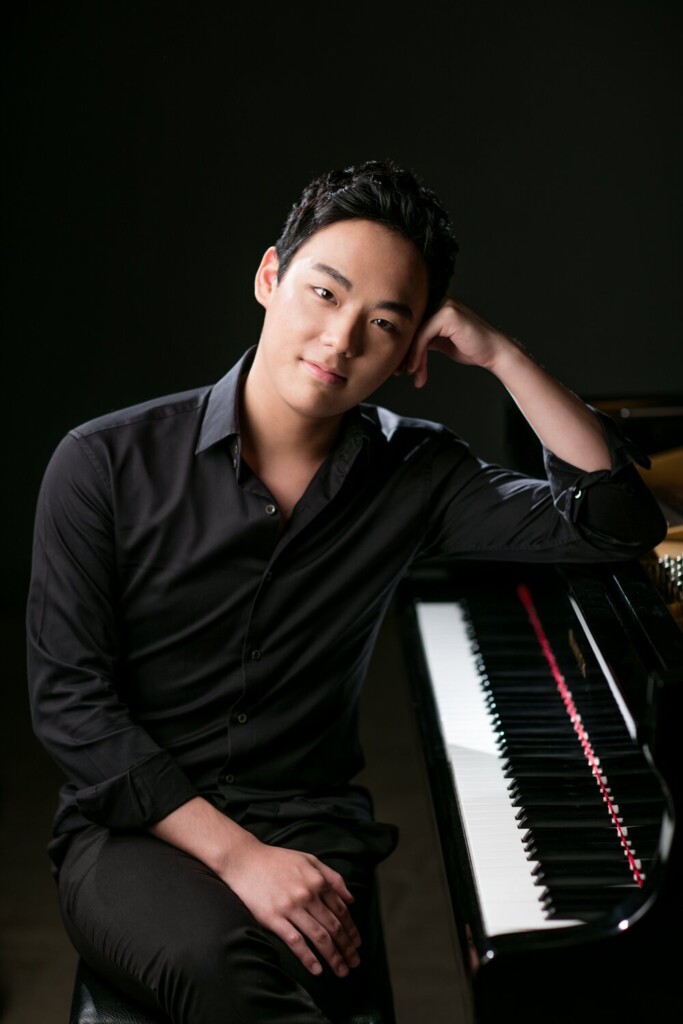
Success of Bachauer junior and young artists
Pianists who have competed in the junior and young artists competitions also have gone on to international fame, including some who returned to Bachauer for the international artists competitions and some of whom who won gold medals.
Representing pianists ranging in age from 11 to 18, the competitors in Bachauer’s junior and young artists categories, do not shy away from the world’s most commanding piano literature, which is heard at international competitions of artists who are twice or more their age. Pianists have chosen works by Beethoven, Chopin, Liszt, Prokofiev, Rachmaninov and Schumann as well as contemporary composers, including Elliott Carter.

A native of Othello, Washington, Stephen Beus, who is on the music faculty at Brigham Young University, won Bachauer’s international junior competition at the age of 14 in 1996 and ten years later, after graduating from Juilliard, was the only American finalist in Bachauer’s International Artists Competition. He won the 2006 gold medal with his performance of Prokofiev’s Third Piano Concerto. He also took first place in the Vendome Prize International Competition in Lisbon and was awarded the Max I. Allen Fellowship of the American Pianists Association in Indianapolis.
Four years later, Lukas Geniušas, who took second prize in Bachauer’s Young Artists Competition in 2005, won the gold on his 20th birthday with his performance of Rachmaninoff’s Third Piano Concerto. From Hong Kong, Aristo Sham won the silver medal in 2018 after winning the top prize 10 years earlier in the Bachauer junior competition. In 2025, he won the Gold Medal and the Audience Award at the Van Cliburn International Piano Competition.
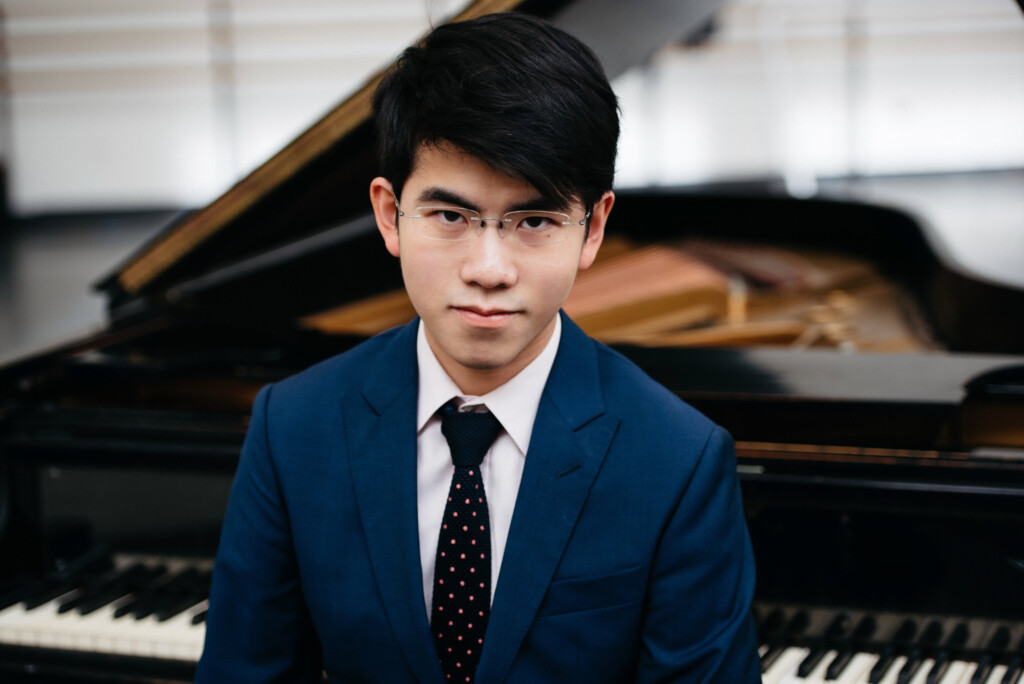
Colleen Lee, of Hong Kong, placed first in the 1993 International Junior Competition, returned for the Young Artists Competition in 1999 to receive the silver medal and performed in the 2006 International Artists Competition where she placed sixth. From Russia, Vsevolod Zavidov, who won the gold medal in 2021 for the junior portion of Bachauer international piano competitions which he entered at the age of 14, had his debut on the main stage of the Festival International dePiano de La Roque d’Anthéron in 2023. In 2024, he stepped in for Khatia Buniatishvili to perform Tchaikovsky’s First Piano Concerto with the Taiwan Philharmonic and in 2025, he substituted for Grigory Sokolov in a recital at La Chaux-de-Fonds. Living in Geneva, he also won the 2025 Prix UBS Jeunes Solistes, a prestigious biennial award granted to the most outstanding student enrolled at a Swiss music academy.
Nareh Arghamanyan, second place winner in the 2000 International Junior Piano Competition, earned the gold medal at the 2008 Montreal International Music Competition. Rachel Cheung, the winner in the 2004 Bachauer Junior Competition, received fifth place at the 2009 Leeds International Pianoforte Competition at the age of 17.
A Macau native, Kuok-Wai Lio, the 2005 top prize winner of Bachauer’s Young Artists Competition, has performed as a soloist and chamber ensemble player, with appearances at venues such as Weill Recital Hall at Carnegie Hall, Tonhalle Zürich, and Herkulessaal in Munich. Currently based in Berlin, Anna Han won prizes in the Naumburg International Piano Competition and National Federation of Music Clubs Young Artist Auditions, after competing in Bachauer’s junior artist competition. At 17, in 2012, Mackenzie Melemed took fifth prize in the junior artists competition and then returned in 2018, where he advanced to the international artists’ competition semifinals. Now living in Finland, he is in the midst of a three-year touring project Keys Across America, which continues through 2028 where he will perform a recital of all-American repertoire in every state in the nation.
BACHAUER CONCERT SERIES
Throughout Bachauer’s history, concert series, in various forms, have reinforced and magnified its commitment to the artistic growth of performers, teachers, students, and community. In 2009, Pollei told Dean, “We don’t bring back just the first prize. We bring back people we feel [the audience] wants to hear again.
In 1994, Iain B. McKay, chairman of the Temple Square Concert Series, wrote in a letter to Pollei, “As I travel the world meeting broadcasters and musicians, the awareness of the Competition is now almost on the same level as the Tabernacle Choir. The Festival was organized to perfection. It can do nothing but enhance the reputation of the Symphony and of music in our State. We owe you a debt of gratitude. BYU, the Utah Symphony and this State can count themselves fortunate to have you in our midst.”

From the first Bachauer piano festival and competition in 1976 and onward, concerts and recitals have been a staple in its programming. Eventually, concert series were expanded to ensure Bachauer was always on the radar of the Utah music ecosystem, especially in between competition cycles. Even during the COVID-19 pandemic when live performances were canceled, Bachauer produced a video-on-demand Concert Series. As one of the six resident performing arts organizations in the Rose Wagner Center for Performing Arts, which opened in 1997, Bachauer now regularly offers a yearly concert series of live performances, many of which also are filmed and recorded for viewing on streaming and social media platforms at a later date.
The Temple Square Concert Series became popular in the 1980s, when every June was proclaimed Bachauer Piano Month, thanks to Scott Matheson and Norm Bangerter who served, respectively, as governors of Utah during that time. Performers included former Bachauer jury members, gold medalists and other laureates.

Other venues with young artists and local piano students performing included malls, businesses, hotels, and outdoor plazas, which became Recitals in the Towne. In June 1989, for example, more than 150 local pianists participated, with concerts scheduled during the noon hour every weekday at seven Salt Lake City locations
For 1994-1995, a new concert series, Bachauer In-Betweens, was announced, which featured classical, pop and jazz artists and was coordinated with the Temple Square Concert Series. These series would eventually expand to year-round opportunities not just in the concert halls but also in communities and schools throughout the Salt Lake City and Wasatch Front metropolitan areas.
For three consecutive years, Bachauer selected themes for concert series that coincided with milestones important to music history as well as the Foundation. In 1999, to mark the sesquicentennial of Chopin’s death, the concert theme was The Reluctant Poet: Toil Sorrow and Triumph. In 2000, to mark the 300th anniversary of the invention of the piano by Bartolomeo Cristofori and the 250th anniversary of J. S. Bach’s death, Bachauer joined forces with the Temple Square Concert Series, the Cathedral of the Madeleine, and the Jewett Center at Westminster University in recitals featuring competition jurors and guest pianists that occurred throughout June that year. In 2001, to start the celebration marking its 25th anniversary, Bachauer organized a monthly concert series, starting in January with Arthur Greene, the 1978 gold medalist, who performed Scriabin’s ten piano sonatas in two concerts. Other artists in the series included Jeffrey Siegel, the American Piano Quartet and Frederic Chiu.

CONCERT SERIES AT THE ROSE
Once Bachauer was settled in its permanent home at The Rose, the concert series expanded into a cosmopolitan showcase where guest artists demonstrated their innovative takes on programming themes which effortlessly blended warhorses from the piano literature with contemporary works, including world and Utah premieres. The concerts have created a lovely setting for the pianists to connect closely with audiences. And, audiences watching live performances can observe also how body language and nonverbal communication shapes the playing into an experience not possible in listening to CDs or downloads or in watching videos.
For example, the 2009-2010 Bachauer Concert Series featured prominent international pianists such as Mirian Conti, Serhiy Salov and Vassily Primakov, who each performed two evening concerts as well as participated in the Music in the Schools program. At least 20,000 Utah students have been reached annually through the program.
Throughout the last 15 years, the annual concert series has opened a large window on the scene of 21st century piano excellence. For many pianists, artistry goes beyond performance, by combining music and storytelling into memorable experiences for both newcomers and seasoned listeners. Through thoughtfully curated programs that blend familiar works with rare discoveries, they create intimate connections with audiences, sharing insights that illuminate the music. Their vision extends beyond the concert hall, as they aims to spark curiosity for lesser-known composers while inspiring future pianists to explore uncharted repertoire, gradually expanding what we consider essential to the classical canon.

For the 2018-2019 season, for instance, the theme was Bach, Beethoven, Brahms … and Beyond, as the soloists put together programs that juxtaposed classical piano music with works from the contemporary era. The series sets a change of pace and tone from the intense competition rounds with which many Bachauer audiences are familiar. Soloists for the season included the 2002 Bachauer Gold Medalist, the 2005 Van Cliburn Gold Medalist, the 2015 Honens Competition winner and a 2012 Order of Canada recipient who also has served on the Bachauer jury.
During the COVID-19 pandemic, Bachauer decided to offer concerts filmed to be available for streaming on demand. Bachauer, which was celebrating its 45th anniversary in 2021, anticipated returning with live performances in October of that year but decided because of the availability of rich musical talent so close to Salt Lake City, the logistics of organizing virtual performances were safe and reasonable for a series of video-on-demand spring concerts. The series began with Stephen Beus, the 2006 Bachauer gold medalist and BYU faculty member, in a concert of works by Rachmaninoff, Liszt, Mendelssohn and Marion Bauer— titled Lyrical Landscapes. It concluded with Schubert Transformed, featuring local pianist Koji Atwood performing his transcription of the composer’s String Quartet No. 14 in D minor, familiarity known as Death and the Maiden.
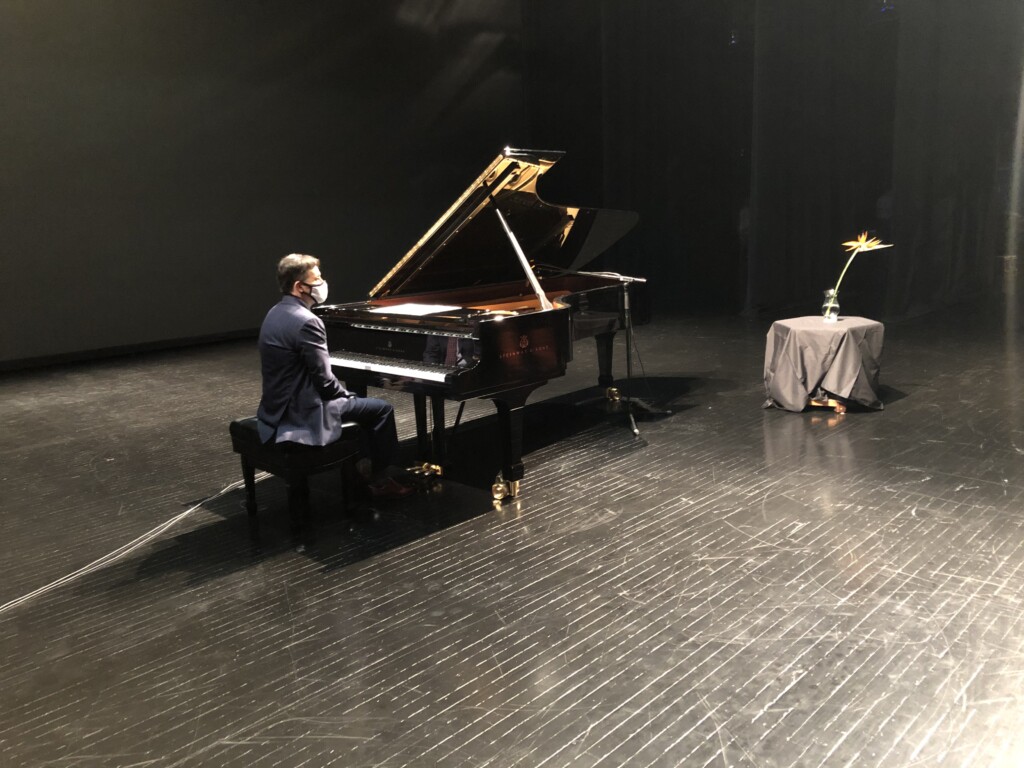
In the first season after the pandemic when live performances resumed, Bachauer brought together the gold and bronze medalists from the 2018 piano competition as well as a world premiere in a program of solo and four-hand piano compositions, an all-Liszt program and a clever “menagerie” of music inspired by the animal kingdom. The duo of Ran Dank and Soyeon Kate Lee, gave a world premiere by the Korean-born American composer Texu Kim. Making his first post-pandemic concert appearances outside of Europe in 2021, Sergey Belyavsky, the 2018 bronze medalist, set the theme as wanderer for his program. The season closed with Hsiang Tu, a Taiwanese native who also had taught at Utah Valley University and Snow College in Utah, playing selections from an album of recordings of works he selected from composers of many different eras that could represent animals.
In the seasons leading up to this 50th anniversary, Bachauer capitalized both on its legacy of internationally acclaimed laureates as well as gold medalists not only from Bachauer but also other prestigious piano competitions. These concerts included Kuok-Wai Lio, the 2005 top prize winner of Bachauer’s Young Artists Competition, who performed the final three piano sonatas which Franz Schubert composed near the end of his life. Andrey Gugnin, 2014 Bachauer gold medalist, offered a journey through some of Russia’s greatest musical masterpieces from the 20th century. Changyong Shin, 2018 Bachauer gold medalist, included sonatas by Mozart and Schubert as well as Liszt’s virtuosic take on Mozart’s Don Giovanni. That season closed with a concert by Olga Kern, the 2001 Cliburn Competition gold medalist.

Pianists offered clever program themes as well as music that expanded the audience’s connection to piano literature besides the most familiar. Aristo Sham, the Hong Kong artist who won the 2018 silver medal at Bachauer and then the Van Cliburn gold medal in 2025, fashioned the theme of Darkness Descends, with music by Handel, Schumann, Beethoven, Villa-Lobos, Chu Wang-Hua and Ravel. José Ramón Mendez, one of Spain’s most sought after pianists, opened with works by Chopin and then a second half featuring the music of Spanish composers Padre Antonio Soler (18th century), Isaac Albéniz (19th/20th century) and Enrique Granados (19th/20th century).
In the most recent season, Bachauer invited four laureates, including two gold medalists, the most recent bronze medalist from the 2024 international artist competition, and the fifth prize winner from the 2012 young artists competition. While known for his definitive recordings of Scriabin and as a proponent of contemporary music, Arthur Greene, the 1978 Bachauer gold medalist, decided on a theme of Passages, highlighting four of the greatest titans in keyboard literature— Bach, Beethoven, Chopin and Liszt— as essential to the lifetime experiences of great pianists. Mackenzie Melemed, who took fifth prize in the 2012 Bachauer young artists competition offered Americana, with music by Aaron Copland, Amy Beach, Arthur Foote. Edward MacDowell, Louis Moreau-Gottschalk, Florence Price and Ned Rorem, as well as commissions from contemporary composers Laura Kaminsky and Avner Dorman. Russian-Lithuanian pianists Lukas Geniušas, who won the gold medal in Bachauer’s 2010 international artists competition and is a laureate of the Chopin and Tchaikovsky Competition, and his wife, and Anna Geniushene, a 2022 Van Cliburn silver medalist, offered Heart to Heart, featuring two-piano arrangements of John Adams’ Hallelujah Junction. Copland’s El Salón México, and Colin McPhee’s Balinese Ceremonial Music.

FESTIVALS IN VARIOUS FORMATS
The community link between festivals and competitions was consistently strengthened. For instance, Promised Valley Playhouse, which hosted the preliminary round of the Gina Bachauer/Young Chang Piano Competition for Young Artists in 1987, was the site of a 16-day piano festival sponsored by Young Chang America, with master classes and workshops by leading artists and teachers. Young Chang America, Barrus Piano Company of Salt Lake, and Bert Murdock Music of Orem sponsored this junior edition of the competition, which was directed by Bachauer. The final round was held in Temple Square’s Assembly Hall, as pianists chose selections from their previous performances.
Sponsored by the Temple Square Concert Series, Promised Valley, Playhouse, Daynes Music Company, the Church of Jesus Christ of Latter-day Saints Foundation, and a variety of demonstrating music publishers, eleven free Temple Square concerts were offered as part of the 1989 Gina Bachauer International Piano Festival. Evening recitals and master classes included Bachauer favorites Joseph Banowetz, Alan Chow, Kong Xiang-dong and other notable artists, while workshop clinicians represented leading publishers of educational materials.
Themes for the piano festival became just as important as the roster of invited artists. Bachauer’s In-Between and Jazz Concert Series became so popular that, in 1996, Bachauer selected a festival theme of How Classical Music Affects Jazz and How Jazz Influences Classical Music. Jazz pianists Monty Alexander, Steven Mayer and others taught seminars on jazz performance and improvisational techniques while classical artists Massimiliano Frani, Arianna Goldina, Remy Loumbrozo, and N. Jane Tan presented sessions on solfeggio, theory, and collaborative performance. Festival artists performed free recitals at Assembly Hall in conjunction with the Temple Square Concert Series and once again, Recitals in the Towne occurred during noon hours at the Little America and Marriott hotels as well as the former Crossroads Plaza Mall (which is now the site of the City Creek Center in downtown Salt Lake City).

In 1997, the theme was The Pianist as Composer and the Composer as Pianist. Guest artists such as Seymour Bernstein, Stéphane Blet, Faina Lushtak and Alexander Peskanov gave lectures on famous pianist- composers and performed concerts of established works as well as original compositions. Given that the 1997 festival immediately followed the competition that year, junior participants attended master classes led by the festival artists. The Eccles Foundation, The Church of Jesus Christ of Latter-day Saints and the Utah Arts Council sponsored the competition and festival, along with support to continue the various recital programs in the community, schools and in private residences.
When the XIX Olympic Winter Games, in 2002, were held in Salt Lake City, the organizing committee created Musical Olympians in Concert, which was presented during the cultural festival. More than 60 laureates from seven North American international music competitions performed in concerts on February 14, 2002 in each o f the fifty states. The Bachauer Foundation hosted the Utah edition of the event at Abravanel Hall.

During the 1990s, Bachauer embraced many opportunities to establish new links with the community. In 1996, Bachauer put together Italian Nights, a weeklong event that sought to emulate the experience of a music festival in Italy. Introducing the event, Paul Pollei said, “We anticipate the rewards of listening, observing, dining and a complete saturation in all things Italian will whet our appetites for further indulgences in the tastes of this refined and elegant culture.”
Organized by Massimiliano Frani, who was associate artistic director at the time, the event was a paragon of community involvement— sponsored by the Italian Vice Consulate, Utah Opera, Delta Air Lines, Gastronomy Inc., Frank Granato Importing and the University of Utah. The husband-and-wife piano duo of Angela Cheng and Alvin Chow performed. Cheng and Chow were Bachauer laureates from 1984 and 1978, respectively. While the pianists performed music by composers not from Italy, the festival had plenty of Italian elements, including members of the Utah Opera Ensemble who performed selections from some of the country’s most beloved opera composers. Other events included dinner at a downtown Italian restaurant, a lecture on Italian art at the Utah Museum of Fine Arts and an Italian cuisine workshop. The closing event was a gala concert at Abravanel Hall with Frani conducting the Orchestra di Benevento e del Sannio, which also featured its own conductor, Paolo Ponsiano Ciardi, and pianist Eugenio De Rosa, a Bachauer jury member in 1994.

In years when the Bachauer does not hold the finals in Salt Lake City for its rotating schedule of competitions, more recent June piano festivals have included young pianists in their teens who have been taking lessons for anywhere between eight and 11 years. As they already have amassed impressive competition and performance portfolios in and out of the U.S, they participate in a series of master classes, led by guest artists along with Douglas Humpherys, who won the first Bachauer international competition and is current artistic director for the foundation.
Some festivals also have highlighted other musicians along with internationally known pianists. In 2019, Utah soprano Melissa Heath and the Fry Street Quartet, the internationally known string ensemble in residence at Utah State University. They joined Serhiy Salov, the Ukrainian-born pianist known for his phenomenal transcriptions of great orchestral works that keep every musical element intact who also won the Bachauer silver medal in 2010, as well as Hae Sun Paik, one of South Korea’s most sought after teachers who also helped adjudicate the 2018 Bachauer competition. Nine young pianists also participated in master classes, which were free and open to the public at Daynes Music Company.
As a resident company of the Rose Wagner Center for Performing Arts and a member of the Performing Arts Coalition, Bachauer has participated every year in the summer showcase featuring the resident companies, by providing the music which tied together everything the other companies offered. Among the pianists who have performed include Koji Atwood, Matthew Liu and Peter Klimo, a Hungarian-American pianist who was a finalist in the 2018 Bachauer International Artists Competition. In 2024, when the show was built around Modest Mussorgsky’s Pictures at an Exhibition, Serhiy Salov, the silver medalist for the 2010 Bachauer International Artists competition, was not just a pianist but also an actor, a role that he took with gusto and natural flair. In 2025, for Saint-Saëns’ The Carnival of Animals, Bachauer turned the spotlight toward Utah State University’s piano program as Cahill Smith, an internationally acclaimed pianist on the faculty, and graduate student Shannon Hirschi offered a cavalcade of keyboard pyrotechnics on four-hand arrangements of the music by Saint-Saëns, along with Khachaturian’s Sabre Dance and Rachmaninoff’s Vocalise, which brought a standing ovation. Both pianists were also joined by Aggie student pianists Adam Bowen and Chelsi Pulley (who added their own comedic touches) in a barn-burning eight-hands romp of Albert Lavignac’s Galop-Marche a huit mains.

EDUCATION
Whether it has been a festival or competition, Bachauer’s focus has always been on its educational purpose and impact. For example, in some years during the 1990s, Bachauer competition entrants who did not advance through preliminary rounds were invited to participate and perform for students in Utah, by way of the Recitals in the Schools program. Many pianists who have been invited to perform in the Bachauer Concert Series have offered lecture-demonstrations in school assemblies. Pollei recalled in 2010, “We haul in a Steinway grand piano to each one of these places. And the first thing we say when we walk into the school and we’re going to face sometimes 500 kids sitting on the cold floor in their gymnasium…I say to the principal, who will greet us and usually introduce us, ‘Can we meet your music teacher?’ and the answer almost always is, ‘What’s that?’ So, our program is very important, but we feel like we’re putting on a band-aid.”
Not to diminish the impact, caliber and well-deserved merit of the competitions, Micheal Dean summarized it well in 2010, when he wrote that “among the many facets of the Bachauer Foundation’s programming, it is the organization’s educational focus that has had the greatest influence on the local, regional, national, and global communities throughout its history. Rather, it suggests that the Bachauer Foundation’s commitment to the artistic growth of performers, teachers, students, and community has been the unifying factor in all of its endeavors, giving it fortitude even in the most challenging of times.”
Bachauer’s Piano Inspirato (Music in the Schools) program received the prestigious Best in State award for Excellence in Education in 2008. The program was initiated during the 1999-2000 school year and continues to this day. It has reached an estimated 500,000 students in Utah, in total.

The early years focused on music of a particular composer. Focusing on the music of Debussy for the 2002-2003 academic year, Bachauer presented programs in 35 Utah schools, which reached 21,000 students. Bachauer also organized 12 pianists presenting an all-Beethoven program to perform 48 assemblies in the 26 schools of Utah’s Jordan School District during 48 assemblies. The same program was presented in a series of free evening concerts. In the year featuring the music of Prokofiev, Bachauer reached almost 50,000 students in 64 schools in Utah.
The roster of distinguished pianists who performed either in the concert series, Music in the Schools program or in recitals in the homes of Bachauer patrons included, for example during the 2000s, Armen Babakhanian, Stephen Beus, Mirian Conti, Justin Kolb, David Korevaar, Jorge Luis Prats, Reginald Robinson, Bryan Stanley, Jeff Shumway, Willem Van Schalkwyk, and William Wolfram.
The Deseret News cited the Piano Inspirato (Music in the Schools) program as the major force in transforming the Bachauer from its visible presence every June into a thriving phenomenon that continues throughout the year.
A FEW EXAMPLES OF KEY FIGURES IN BACHAUER’S FORMATIVE YEARS
One of Paul Pollei’s many legacies as founder of the Bachauer was to bring people onboard (as staff, directors, Board members, etc.) who have shared the visionary potential of a thriving Foundation and the value of building credibility and reputation for an international piano competition celebrating its golden anniversary. Pollei continued as artistic director until 2013, when he retired and Douglas Humpherys was named artistic director, a position that Bachauer’s first winner continues to hold to this day, and as chair of the jury.
The current staff includes Kary Billings, the executive director who attended his first Bachauer competition at the age of 15. A student of Pollei, he began volunteering for the competitions in 1982. He was named executive director in 2006. The education director is Joanne Rowland, who also serves as the artist liaison. Jennifer Way Zemp serves as development director. Since 2006, Scott Pollei has been director of corporate engagement. Curtis McClain serves as the foundation’s art director.
Among the many who believed in and gave their unwavering support, especially in Bachauer’s formative years include the following:
BARBARA TANNER: A lover of music, Barbara Tanner served on the Utah Symphony Board, was president of the Utah Symphony Guild and was the chair of the Gina Bachauer International Piano Competition during some of its most dramatic changes in the first decade of its existence. She was appointed to chair in the late fall of 1981 just after the Bachauer had been accepted under the umbrella of the Utah Symphony. This partnership necessitated moving the headquarters of the competition from Provo to Salt Lake City and building the strong support system for the newest iterations of the competitions. The public support grew as well in every area— attendance at the programs, public awareness, acceptance, and finally a recognition of the Bachauer as an integral part of Utah’s art program. Tanner led a giant step taken after the 1986 competition when it was mutually agreed between the Utah Symphony and the Bachauer executive board that the competition was secure enough to be able to stand on its own. She died in 2020 at the age of 103, Tanner was a community leader, humanitarian, human rights activist, philanthropist and elementary education alumna of the University of Utah. She was actively involved with the O.C. Tanner manufacturing company, where her late husband, Norman, propelled the company to worldwide success.

GERALD ‘SKIP’ DAYNES: “Without Skip, not just the Bachauer but so many arts organizations in Utah would not have existed. He knows a fine instrument — he has a good ear. He knows when a piano is not ready for the task. He relies on musicians — he’s a smart businessman,” Kary Billings, Bachauer’s executive director, said in a 2017 interview. Skip became a Bachauer supporter in its earliest years. For the first few years, he donated a Steinway grand to the competition winner. To the end of his life in 2024, he provided pianos for the competitions, piano festivals, concert series and school lecture-demonstrations. Sometimes, he personally moved the pianos. Skip’s legacy was music. In 2026, when the company closed two years after his death, it was Utah’s oldest company—founded 34 years before Utah formally joined the nation as a state. Daynes was among Utah’s most prominent musical names since 1862, when John Daynes crossed the plains in a Mormon handcart company, bringing a small pump organ. His son Joseph, 14, earned the occasional ride by playing a concertina for children in the wagons. When Joseph (Daynes’ great-grand uncle) was 16, Brigham Young named him to be the first organist for The Tabernacle for The Church of Jesus Christ of Latter-day Saints . During the 33 years he served as organist, he composed some of the most popular LDS hymns. Daynes Music became the first Steinway dealership west of New York when, in 1873, the elder Daynes persuaded the manufacturer to ship a piano 14,000 miles to Salt Lake City via the Straits of Magellan. The company provided financial and in-kind support of the Utah Symphony, Utah Opera, Ballet West, The Tabernacle Choir, Moab Music Festival and the Grand Teton Music Festival, as well as donations of pianos to several medical facilities, nursing homes and educational institutions. In 2017, Skip Daynes, the fourth-generation owner of Daynes Music, received the Lifetime Achievement Award from Steinway & Sons. Steinway noted that the company has likely sold more Steinways than any other dealership. In 1980, Daynes was a Bishop for an LDS congregation on the campus of the University of Utah. It was his strong connection to the university, especially having attended before taking over the family business from his father, that sparked the idea of making the U’s School of Music and All-Steinway School.
JOANNE BAKER: Starting in the 1982 competition and continuing for 20 years Joanne Baker was one of Bachauer’s longest serving jury members, including service as chair. The first American artist invited to teach in China after the Cultural Revolution ended, she served nearly a half-century on the piano faculty at the University of Missouri—Kansas City, including 25 years as head of the keyboard Division in the school’s conservatory. According to Pollei in a 1998 interview, Baker “mentioned that all competitors, by virtue of their appearance and selection into the competition were qualified with notes, technique and pianistic gifts. But it was the magic of individual and interesting sound that transcended the spotlight that allowed the jury members to make the distinction between those who were named laureates and those who succeeded as medalists.” Baker composed music for church, band, choir, string quartets, and solo piano. One of her piano sonatas won a national competition that led to her being invited to play the piece in Carnegie Hall in 1954. She was a long-time member of Mu Phi Epsilon, the Music Teachers National Association, the Missouri Music Teachers Association, and the Kansas City Music Club. The Joanne Baker Prize was established by Bachauer in her memory.

NELITA TRUE: For 15 years, spanning 2002 to 2017, Nelita True served on the jury for the Bachauer competitions, and became especially known for her service when she served as jury chair. A point she often made was that the extremely high standard set by all the competitors often made selecting and ranking the winners tremendously difficult. She frequently asserted her confidence in the voting procedures that Bachauer established, explaining that many competitions around the world had observed the Bachauer’s successful promotion of objectivity and fairness and adopted similar protocols. True made her debut at 17 with the Chicago Symphony in Orchestra Hall and her New York debut with the Juilliard Orchestra in Avery Fisher Hall. Her subsequent career took her to the major cities of Western and Eastern Europe, Indonesia, Korea, Japan, Mexico, Iceland, New Zealand, Brazil, Australia, Canada, India, and to Hong Kong and Singapore, as well as to all fifty United States. She was a visiting professor at the St. Petersburg Conservatory in Russia, performing and conducting master classes and has been in the People’s Republic of China more than 20 times for recitals and master classes. A Phi Beta Kappa graduate of the University of Michigan as a student of Helen Titus, Ms. True went on to Juilliard to study with Sascha Gorodnitzki, and then earned the doctor of musical arts degree with Leon Fleisher at the Peabody Conservatory. In Paris, she studied with Nadia Boulanger on a Fulbright grant. True was described in Clavier Companion as “One of the world’s most sought-after and beloved pianist-teachers.” Her students have won top prizes in national and international competitions, and many of her former students now serve on the faculties of major schools around the United States and in other countries. Formerly Distinguished Professor at the University of Maryland, Ms. True was Professor of Piano at Eastman from 1987 to 2018. In addition to the Bachauer competitions, Ms. True was a jury member for the China International Piano Competition (Beijing), the Queen Sonja International Piano Competition (Oslo), the National Piano Competition in Brazil, the Horowitz Competition (Kiev), the Concours de Musique in Canada, the PTNA (Tokyo), the Lev Vlassenko Competition in Australia, and the New Orleans, Hilton Head, and William Kapell International Piano Competitions in the United States.
JAY BECK: A music teacher, pianist, and composer, Jay L. Beck shared Paul Pollei’s vision for Bachauer, when he first volunteered for the organization and later became its associate director, serving 15 years. He studied piano performance with Pollei, music composition with Robert Manookian and Merrill Bradshaw, and graduated with a master of music degree in piano pedagogy from Brigham Young University in 1983. His research, The Compositional Process of Charles Ives’s First Piano Sonata, First Movement, was a monumental study of its compositional process. A composer whose works are found in many forms, he also wrote music for eight theatrical productions, including one that toured throughout Utah at more than 130 schools as well as at Sundance Institute’s Summer Theatre. Another was produced in New York City with a grant from the Drama League. Beck has had an equally significant presence in Utah music education. He taught at The Waterford School in Sandy, Utah, for 29 years, where the school awarded him the Educator Prize in 2003 and in 2018 he was named to the distinguished Nancy and Dustin Heuston Endowed Chair. He was president of the Utah Music Teachers association for four years, directed the recital/lecture series of the Alpine Community Arts Council for 20 years, and served as president of the Utah Chapter of the American Orff-Schulwerk Association.

MASSIMILIANO FRANI: A native of Mestre, Venice, Italy, Frani competed in 1991 and later became associate director. In an interview with the Deseret News just ahead of the 1998 competition, he said, “I know what the competition and the competitors need.” During his tenure, Bachauer solidified its current cycle of schedules for the three principal categories of the competition. He told the Deseret News, “We’ve grown so much that it takes four years to gather the high caliber of performers and jurors for the [International Artists] competition.” Frani said that when he was in St. Petersburg, Russia, everyone had heard about the Bachauer competition. Frani started learning piano at the age of three and by seven, he was accepted to the Conservatory of Music in Venice, and he completed a doctorate degree in music at 17. After he left Bachauer, he established Genote which focused on using the power of music to touch the hearts and lives of those struggling with physical and mental illnesses and challenges. He died in 2023.