
EDITOR’S NOTE: This is the sixth in an ongoing series of features highlighting authors and new books published by Torrey House Press in Utah.
In an earlier Torrey House Press book, The Delightful Horror of Family Birding: Sharing Nature with The Next Generation, Eli J. Knapp, with a unique blend of humility and humor, described himself as an “odd duck: A hybrid anthropologist-ecologist by trade who happens to have a special interest in birds and nature.”
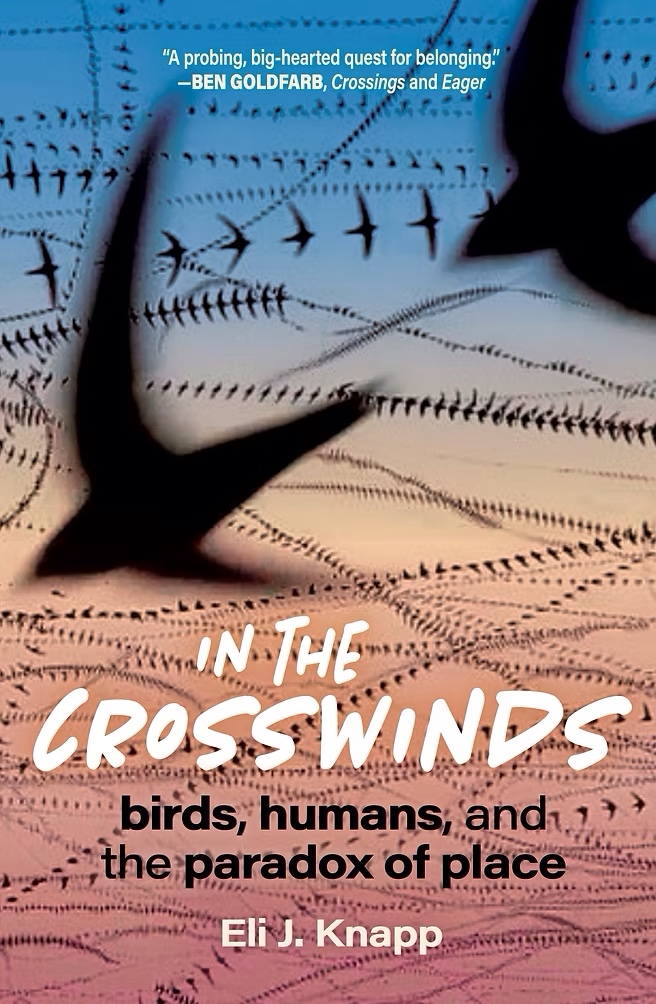
Likewise, Knapp elegantly embodies this description in his most recent wholly entertaining collection of essays, In the Crosswinds: Birds, Humans, and the Paradox of Place (also published by Torrey House Press). Once again, he burnishes birding’s reputation, making the science accessible in pages that flow easily for clear comprehension. The most impressive essays introduce penetrating, astutely timed epiphanies that connect our elucidating interactions with nature to thoughtful, compassionate considerations about the social, economic, cultural and even political realities of our lives. When we commune with nature, our better humanity flourishes without the polarizing polemics that incessantly pollute our ears and minds.
As he did in his earlier collection of essays, Knapp, an ecology professor at Houghton University who lives in Fillmore, New York with his wife and children, brings in family members as well as students from his classes. Family is of prime importance to Knapp, but so is diversity. In a charming essay about a friendly competition with his brother, who lives in Grand Rapids, Michigan, about the number and variety of bird species they have spotted, Knapp draws yet another elegant parallel to the meaning of consanguineous in nature. “Not long ago, it seemed predetermined that he would live out his days not caring a whit about nature. Now, he notices, records and communicates. He cares,” Knapp writes. “The closer our lists have gotten, the closer we have gotten. This is the great leeway, the freedom and beauty of a predetermined state. Our biodiversity contest is remarkably trivial, our relationship anything but.”
While Knapp has written plenty of papers and articles for scientific conferences and journals that target niche audiences within his discipline and related areas, he said, in an interview with The Utah Review, “I have also tried to write books to tuck into a backpack.”

Inspired by books that aim for a similar approach, his favorites have included, for example, The Song of the Dodo (1996) by David Quammen, Pilgrim at Tinker Creek (1974) by Annie Dillard, The Forest Unseen: A Year’s Watch in Nature (2012) by David George Haskell, Kingbird Highway: The Biggest Year in the Life of an Extreme Birder (1997) by Kenn Kaufman and Mind of the Raven (1999) by Bernd Heinrich who won the John Burroughs Medal for nature writing. Earlier this year, Torrey House Press published PYRO: The Quest for a Beautifully Elusive Snake by Dallin Kohler, a marvelous debut for a young herpetologist who said that he wanted to emulate Knapp’s personable style to make his experiences accessible to a broader readership.
Knapp sees bird watching as a way to “rally a priori convictions.” Birds have a profound ubiquitous presence that it is difficult to resist the tendency to articulate meaningful parallels to our own existence as humans. “I grew up loving birds and I really couldn’t pinpoint the moment when I decided to make a career out of birding,” he added. As several essays in the book indicate, birdwatching has enjoyed a steadily growing trend since the Eighties and has continued well into the first quarter of the current century.
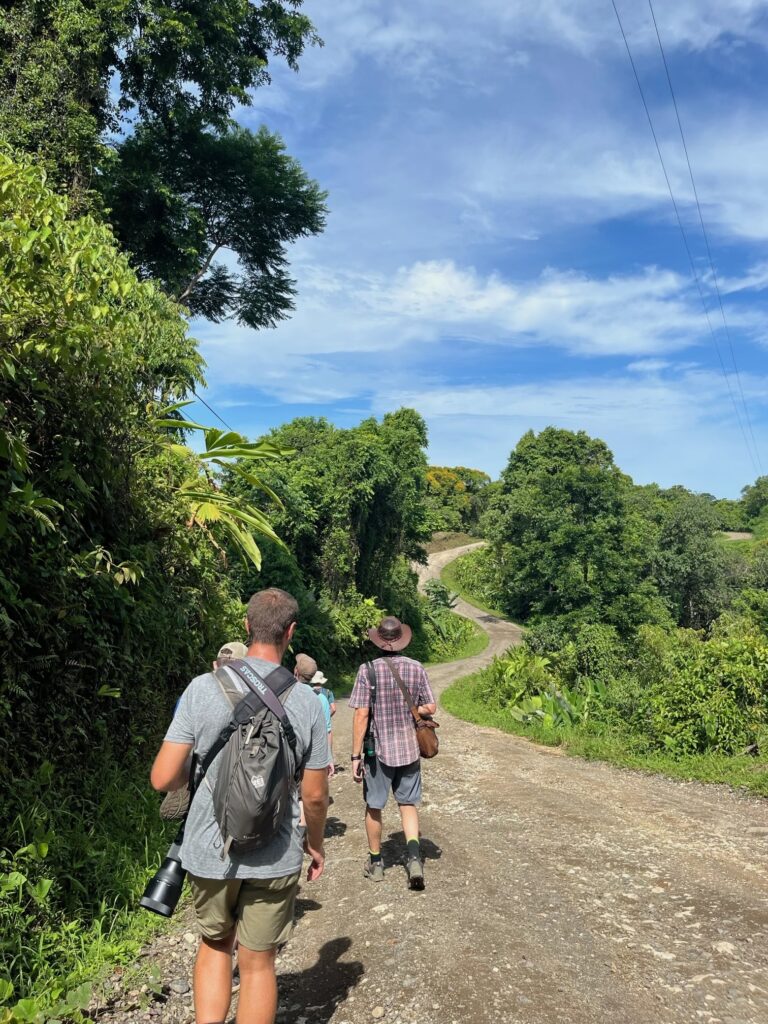
Looking for common poorwills near Tombstone, Arizona, with 13 ornithology students after border police had stopped their vans earlier in the day, Knapp used the experience to emphasize that like humans, birds migrate either by choice or necessity. It became more than a birding lesson. “To see that privilege is often a grand lottery, in this case dictated by the side of a line one was born on,” he explained. “Not all nests, not all places, are equally secure. Some are worth migrating toward, others left behind. Lessons like this—as I have found through my professional life as a biologist, and as my students discovered that night—are woven into the search for birds. To learn their lessons, pursuit is required.”

Readers will appreciate relevant parallels Knapp establishes, such as the example in the book introduction about bird migration and the polarizing political currents behind immigration and migration policies. Optimistically, sharing an appreciation of birds could be the gateway to finding a bridge for acknowledging that migration is an equally essential part of human nature. Knapp’s wit and humility serve him well. He wrote this book to, as he described in the interview, “look at issues to consider a different vantage point and to diffuse heated situations. He added the writing is deliberately “whimsical, but I also subtly tuck in a little bit of meat into these essays, with the hope of sparking the reader’s imagination to try finding ways to celebrate human migration as much as we find joy in birdwatching.”
In the second essay of the book, titled Naturalization, Knapp takes us to Florida where once exotic bird species from Africa and the Indian subcontinent have become the norm. Again, Knapp elegantly draws the human parallel. Explaining why the term “invasion biology makes him nervous,” he characterizes it as “a discipline explicitly devoted to destroying what it studies. When it comes to the naturalized species, humility seems overdue.”
Knapp prefers the term of dislocation. He writes, “Afterall, we’re responsible for most of these fellow refugees now making the best of their circumstances. Should adaptability be lauded or scorned? Are these maligned invaders merely victims of a global diaspora?” An essay about territoriality highlights the Gillmor Sanctuary for migrating and breeding shorebirds located on the south shore of the Great Salt Lake. Later, mockingbirds become the eye-opening example in his essay about endemism and how species immigrate and emigrate, either willingly or by force. Knapp finds cosmopolitan joy in endemism: “It’s usually reserved for rarer species, or those in isolated places, like the Galapagos. That’s why birders, like me, love endemics; you feel lucky to find one.”
Chestnut-sided warblers and hooded warblers set the context for his essay about birds and philopatry, and birds returning to the area of their birth. Weaving through epiphany threads from earlier essays in the book about migration, consanguinity, freedom and wildness, Knapp set the stage in the philopatry essay, quoting Barry Lopez, one of the contemporary age’s most prolific nature writers, who noted, “beauty is not about perception, is not in the eye of the beholder…but is the outcome of the artist’s relationship with the world.” According to Lopez, that journey starts in “the first step in the neophyte’s discovery of the larger world outside the self, the landscape in which wisdom abides.”
About the hooded warbler, Knapp rounds out the essay’s epiphany in powerful text: “I began to know them, what they did, and where they belonged—in the hills of eastern Pennsylvania to breed and here in the Central American tropics to fortify. The hooded warbler’s place spanned two continents. Spring and summer were frenzied. Here, now, it exhaled. The warbler was at peace.” Completing the epiphany, Knapp offers yet another jewel box of words: “While the chestnut-sided warbler invited me in, the hooded warbler revealed joy that comes through knowing a piece of it. A lemony-feathered piece, weighing two nickels, that flew 3,200 miles to perch above my nose.”
Knapp blends plenty of whimsy into his writing. Pop culture animates his essay about biomagnification, as Knapp recalls watching the Alfred Hitchcock thriller, The Birds, while grading his student exams. The essay introduces a morsel of trivia about how an actual incident in Santa Cruz, California in 1961 inspired the storyline for the film. What won Knapp over for the film came in the climactic scene. “Thrilling and cautionary, a reminder that we’re not always in control, that nature can— and sometimes— does revolt,” Knapp writes. “One minute you’re whistling down Cannery Row. The next you’re smacked upside the head by a deranged sooty shear water.”
In Wildness, Knapp recalls the viral story from two years ago about Flaco, a Eurasian eagle-owl, who was inexplicably set free from his Central Park Zoo cage by vandals. While many essays at the time made a fairly convincing case for why Flaco would live longer in his cage, others argued for Flaco’s right to freedom. “Zoos are good for conservation but lose on the consideration of context because they can’t offer wildness, admittedly an elusive concept,” Knapp writes. He turned to a quote from David Quammen, who has written extensively on science, nature and nature: “Wildness is intangible, maybe even ineffable, but not imaginary. It’s a matter of size and function and gloriously unpredictable complexity. Religious people might say…it’s like a soul.”

Knapp’s elucidating contemplations on wilderness and wildness and their distinctions are engrossing. He cites Braiding Sweetbrass by Robin Wall Kimmerer, a Potawatomi botanist, in explaining how colonial heritage led us to underestimate and overlook the importance of our relationship to nature. Using the example of Isle Royale National Park, near Michigan’s border with Canada, and the easternmost point of Lake Superior as designated wilderness, Knapp explains that such a designation “retain[s] a primeval character, with the imprint of humans substantially diminished” and going beyond, one will make their own discovery.
Noting how many have misinterpreted Thoreau’s thoughts about wildness, Knapp sets forth a distinction in plainspoken terms: “Wildness and wilderness are different: wildness is a state of being, wilderness a place. Wildness can come about in wilderness, but not the other way around.” More bluntly, wilderness preservation loses its meaning and power if we’re handcuffing all of the other land. Books like Knapp’s latest offering direct us to sharpen and finetune the vocabulary about the conversations surrounding preservation and conservation of public lands, in order to find a greater meaningful punch.
The subject of indigeneity and the vulnerabilities of erasure propel several essays, including one referencing a section of mountainside land settled by Cherokees but later owned by his grandfather, who was a turkey hunter. In the Nomenclature essay, Knapp relays the history of how many Seneca names in New York’s Genesee River Valley were scrubbed and replaced with “labels of colonial idealism.” However, some survived the cut, such as Cattaraugus, which means foul-smelling banks. A few others happily have been preserved: for example, Caneadea, which Knapp explains, signifies “where the heavens rest upon the earth” and Canaseraga, which translates to “among the milkweeds.” Knapp wraps it up tightly: “Names remind [us] that this land meant more to Seneca than return on investment.”
The theme of indigeneity finds its fruition in Miracle, the collection’s final essay. The setting for it is a ravine boardwalk being constructed for his three children to enjoy. Knapp is faultlessly humble and generous in how he turns to his colleagues for adding pearls of wisdom to every essay. In Miracle, Knapp quotes fellow ornithologist and award-winning author Scott Weidensaul, who clarifies the underlying meaning of reclamation, “which typically refers to improving or developing the land.” Weidensaul carries the ball to complete the point: “This suggests…humanity taking something that had been stolen when in fact the opposite is true.” This leads Knapp to the essay’s conclusion that encapsulates the journey of threads woven through every essay in the book:
The creek hadn’t belonged to the previous owners any more than it did to me. And, while the Seneca had used it well before all of us, it hadn’t belonged to them either. They had always understood that. It had preceded them and would outlast us all. It was space that all of us—the Seneca, my family, screech owls— transformed into place via relationship. We could do it well with wonder-filled intentionality, poorly with abuse and neglect, or fail to transform it at all. Of course I hadn’t reclaimed the creek. With intentionality and being, the creek had reclaimed me.
Each essay is compact and readable. This book’s greatest asset is the omnipresent humility of its author. Knapp gently invites the reader to contemplate the grace in their own connections to nature.
For more information, see the Torrey House Press website.