

EDITOR’S NOTE: For preview coverage of the 50th Utah Arts Festival, which runs June 18-21, The Utah Review is presenting individual or group profiles of artists, performers, entertainers and some newcomers to the event. The curtain raiser highlights the history of the Festival which is marking its golden anniversary. BANDALOOP, among the most prominent pioneers of vertical dance, returns to UAF for the fourth time, having appeared in 2005, 2013 and 2018. Once again, the Oakland-based arts company will perform on the 240-foot-high curving glass façade of the City Library, as part of a June tour in four cities featuring a work with ecological roots that will resonate with collective concerns about the Great Salt Lake’s ecological crisis, as the dance artists perform FLOCK while integrating company repertoire pieces including Downstream and its new creation, life || lines, all with an original score featuring music by four composers. Salt Lake Acting Company will appear for the second time at the festival, offering a sample from its upcoming summer show, The Gaslight Zone. Make-and-take opportunities will be among the most extensive in history, with Make Salt Lake as well as Secondhand Salamander which is bringing back the classic Mad Hatter project, and, of course, the Kids’ Art Yard. Urban Arts is offering its largest live graffiti mural installation featuring eight artists in four Festival campus locations, while a row of several other artists will be demonstrating their creative process in real time. Holdman Studios, based in Lehi with an international portfolio of commissions to create stained glass in religious and civic buildings, including a recent update to the Utah State Capitol rotunda, is offering an unprecedented series of free workshops for participants to create their own stained glass artwork. The City Library auditorium will be the home to the 23rd edition of the international Fear No Film program, with 84 short films on a slate of 15 programs, the second largest in the event’s history. Of course, dance, who wears the empress jewels in performing arts, will be represented by Repertory Dance Theatre, Ririe-Woodbury Dance Company, Sock Opera Dance, and, of course, the ever-popular 1520 Arts, which will feature Trash Panda Drum Group and competitions featuring Sol Tribe as part of the Salt Open Styles Battle along with the Red Bull Dance Your Style battle and a collaboration with Utah Valley University’s ESPRIT in Rep Your Set Choreo Competition, with choreographers who specialize variously in hip hop, contemporary, salsa, reggaeton, afro, popping. Headliners this year include Digable Planets, well known among jazz musicians as well as hip hop artists (June 18); Yola, six-time Grammy-nominated artist, songwriter, and actor (June 19); Austin-based musician Alejandro Rose-Garcia, better known as Shakey Graves, who has been cited for creating new musical experiences tailored to each fan, ranging from Bandcamp-exclusive releases to hosting interactive scavenger hunts while on tour (June 20) and Rubblebucket, a band well known for its hybrid genre blend of psychedelia and electronic dance music (June 21). For tickets and more information, see the Utah Arts Festival website.

SUSTAINING THE LEGACY
As the Utah Arts Festival celebrates the milestone of its golden anniversary and what it signifies for an organization to achieve longevity and community acceptance, Aimée Dunsmore, executive director, comprehends that one should never take such durability as automatic or indispensable. She sees the anniversary as the call to be that much more committed to responding openly and being accountable to a community which expects to see this multidisciplinary festival evolve and become more representative of the expanding range of diverse cultural interests that propel the local arts scene, even as it celebrates the history that made it so successful in the first place.
After 2024, with the festival experiencing low attendance and revenue shortfalls, Dunsmore said in an interview with The Utah Review, “I do think the community trusts us but what that really means is that we sincerely strive to deliver on the promises we made about the changes we discussed then.” She explained that focusing on maximizing the patron experience has led to revamping the layout of the festival campus and investing not only in headliners but also tapping into the steadily expanding pool of local talent who have cultivated their own robust followings. Marking its fifth year is one of the festival’s most impactful initiatives of recent years, Emerging Artists, which has given participants to develop their visibility and audiences.

The 50th festival, for example, also is bringing the internationally acclaimed vertical dance company Bandaloop, based in Oakland, California— which drew raves from the festival crowds in 2013 and 2018. Among the free workshops this year will be those offered by Holdman Studios known internationally for its captivating modern aesthetics in stained glass art forms, where participants will create their own stained glass piece to commemorate the Festival’s 50th anniversary. After a brief absence, Make Salt Lake returns with plenty of supplies for participants to make their own artistic tiles—one of the most popular make-and-take projects in festival history. Another popular make-and-take project making its return—one of the first in the festival’s history involving the use of upcycled materials— is Mad Hatter, which is being made possible by Secondhand Salamander.
In key respects, UAF at 50 has rediscovered what it was like in the wake of the Great Flourishing of the arts, especially during the late 1970s and early 1980s as it evolved and developed multidisciplinary stages and venues which became familiar anchors. As many other organizations in Utah’s ecosystem for arts and culture can attest to, emerging from the COVID-19 pandemic produced challenges that emphasized how patrons perceive and value the experiences they want in arts and cultural opportunities.

In a current economy with rising gas prices coupled with inflation that households are finding difficult to handle, Dunsmore said it is paramount to demonstrate and prove to patrons that the $22 they pay for adult admission will represent a festival experience that has great value. (NOTE: Adult admission is $18 on the opening day of June 18, 5-11 p.m).
Between 60% and 65% of the organization’s annual revenue comes from the festival, which costs more than $2 million to stage. The average staging cost for the festival per person is between $12 and $15 more than the adult admission ticket price, according to Dunsmore. Accounting for post-pandemic inflation rates, that staging cost has increased by more than a one-third since the two years immediately before the pandemic. Note that a technical stage crew member could command $50 or more per hour. Considering production coordinators, managers, stage assistants, security, build and strike teams, sound engineers, projectionists, etc., hiring qualified individuals can run between $150 and $600 per day.
Kids under the age of 12 are admitted free and admission prices are lower for seniors and military service personnel ($15). At $70, patrons can save a total $18 if they purchase a four-pack of single-day adult tickets.

The UAF year-round staff numbers just three full-time employees while some 45 coordinators come on board in the months leading up to the festival to formalize and complete the programming for the four-day event. Dunsmore said that in addition to the festival, it has become clearer that year-round programming of events that are affiliated with the festival’s cultural mission will become more frequent.This includes artist studio events, screenings of Fear No Film shorts and other activities related to the various program venues associated with the festival.
Corporate sponsors are critical but festival organizers also ensure that sponsors are integrated and aligned with various venues and activities. The core of Sustaining Sponsors includes Salt Lake County’s Zoo, Arts and Parks (ZAP) program and the Utah Division of Arts and Museums. Prestigious Sponsors include Utah Food Services, CommonSpirit Health, Pratt Sound and Weber Basin Job Corps, which provides tuition-free education and job field training. Weber Basin Job Corps is a classic example of sponsor goodwill. For example, the Festival Stage, which involves extensive scaffolding construction and teardown, would likely cost as much as $50,000 or more. Members of the Weber Basin Job Corps provide those services. And, as noted earlier, businesses such as Third Sun Productions are involved in major ways, which includes the creative services for UAF’s website and new app.
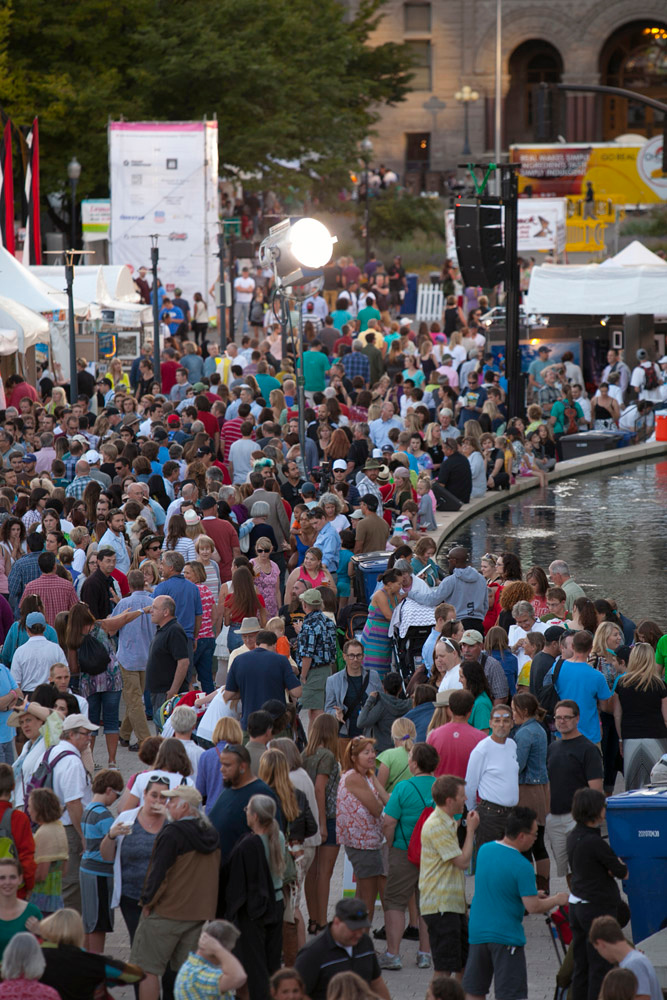
Individual giving is vital to nonprofits, especially in the arts. Appreciating the fact that even in challenging economic times, the individual who donates $5 or $10 is just as important as any larger donor, especially because the value of their feedback and expectations for a meaningful festival experience is just as significant and informative, Dunsmore noted.
While the June festival is the centerpiece of that relationship, initiatives such as the Friends With Benefits program, now in its 17th year, emphasize how the relationship can be expanded and sustained throughout the year and hopefully for many years. For example, in the Friends with Benefits program, donors can start modestly at $50 annually (which includes a benefit of two general admission festival tickets) or select one of multiple contribution levels ranging in manageable increments to $3,000 or more (which is known as the Best Friends category and carries benefits of four Friends with Benefits weekend passes, four Friends for a Day Passes, invitation to the Artist Marketplace reception and exclusive opportunities to meet musicians and performers).The VIP Day Pass ($85) gives patrons access to the VIP Patio which also includes close access to the headliners on a specific evening. UAF also is offering a $50 for Fifty campaign.

The Friends Who Give A Crap fundraising option returns for the sixth year. For $75, a donor can sponsor a Port-A-Potty, and, in return, will have their names featured on a unit along with a pair of festival tickets and a miniature commemorative foam potty. Some donors are creative. Many still talk about a 2018 donor who proposed marriage and even had a Port-A-Potty at their wedding. One of the festival’s best fundraising events, which always sells completely, is the Big Deal Brunch, held on the closing day, prior to the gates being opened. This will be the tenth time for the brunch. Tickets for the brunch run at $45 per individual or $500 for a table of eight with added amenities.