
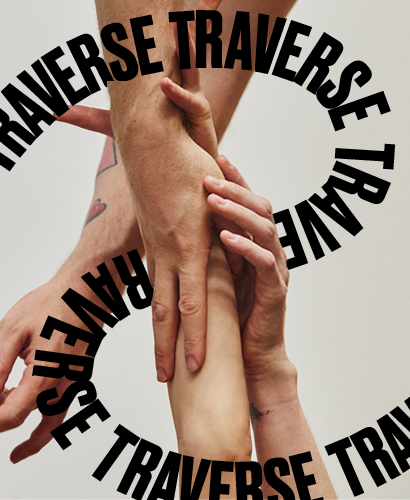
Continuing its 62nd season. Ririe-Woodbury Dance Company brings back the programming concept of Traverse, a collection of world premieres, including works by award-winning guest artist Annie Rigney and four current company dancers (Luke Dakota Zender, Fausto Rivera, Sasha Rydlizky, and Miche’ Smith). While the venue is the Jeanné Wagner Theatre in the Rose Wagner Center for Performing Arts, the audience will be seated in the round on stage, making for an intimate performance setting.
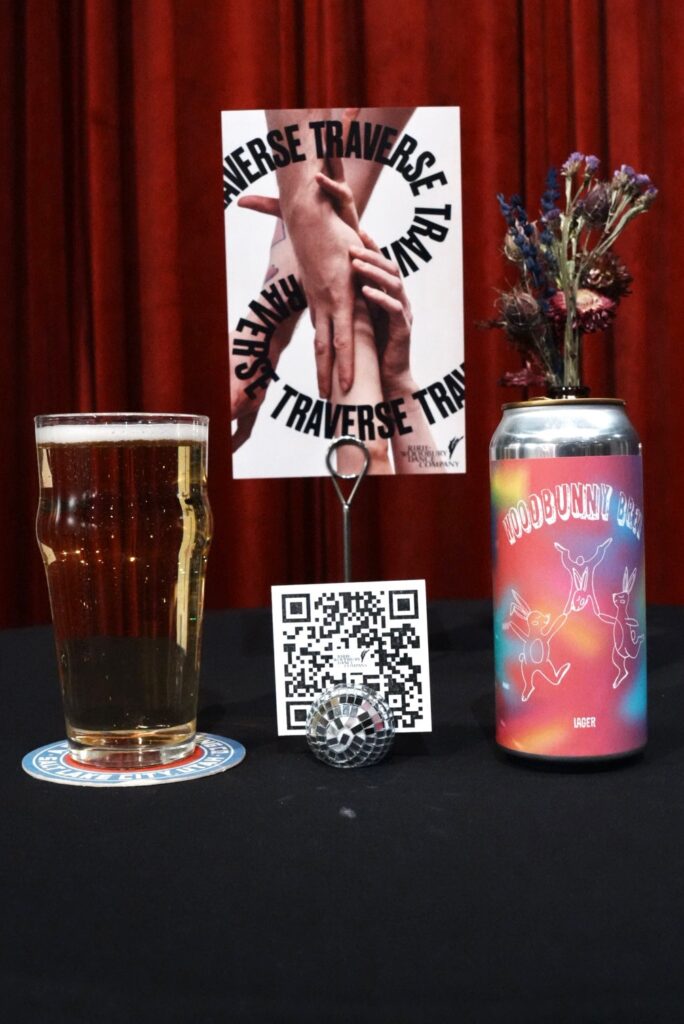
Audience members are encouraged to arrive early for an on-stage happy hour, beginning a half-hour before the performance starting time. Concessions, along with alcoholic and non-alcoholic beverages will be offered. The highlight beverage is Woodbunny Brew, a lager by Fisher Brewing Company which honors Ririe-Woodbury alumni. Performances will take place daily, Jan. 15-17: at 7:30 p.m. There also will be a Moving Parts Family and Sensory Friendly Performance on Jan. 17 at 1 p.m. Following the closing performance. there will be an encore after-party with live music, dancing, and disco balls.
Launched in 2024 by Daniel Charon, Ririe-Woodbury’s former artistic director, as part of the company’s 60th anniversary season, Traverse was successful for its unique staging and artistic cause for celebration. As The Utah Review noted at the time, “There were works of astute sociocultural significance, pieces reflecting the ardor and rise and fall of emotions expended in the creative process, intimate choreographic statements about individual personalities and audience-pleasing displays of play and whimsy.”
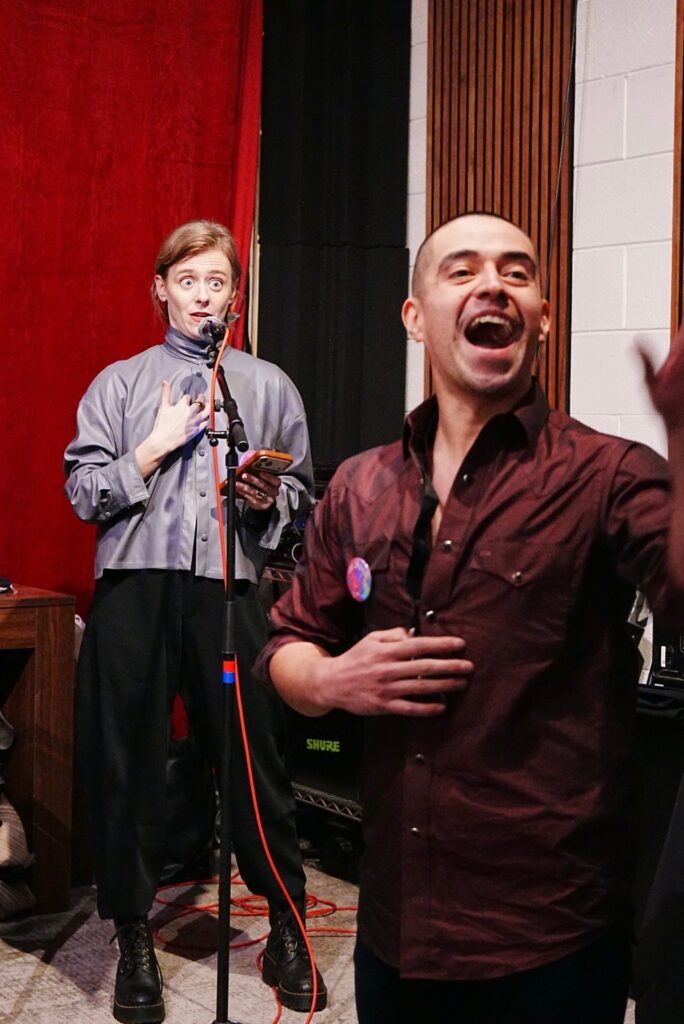
Leslie Kraus, the company’s current artistic director, said her role for Traverse is as facilitator, providing, as she described it, “a creative sounding board” and “a support system for ideas to flourish.” She added that the beauty of the stage setup for Traverse is bringing people literally as close as possible to the action which also gives audiences a chance to peek inside the creative minds of the dancers they know so well in watching other Ririe-Woodbury performances. Kraus said she recommends that the best way to experience Traverse is to arrive a half-hour before the performance starting time to enjoy a beverage, snacks, mingle socially and even partake in a quick board game (which also will provide cues and prompts for one of the scheduled premieres).
Rigney, who is the second choreographer to receive the Ririe-Woodbury Dance Company’s Choreographic Canvas Residency, said in an interview with The Utah Review, “I believe that there is not good or bad choreography but what matters is how we move and dance the steps.” She added that her movement language, which is sensory and image based, emerges from her own performing experiences and her process-oriented research. A choreographer in high demand, Rigney is a 2025 Harkness Promise Awardee and NYFA/NYSCA Artist Fellow and 2024 Bessie Award nominee.
Her performance portfolio includes Tel Aviv-based Batsheva Dance Company where Ohad Naharin developed the Gaga movement language process as a metaphysical approach to recuperate from a back injury that required surgery. Gaga has pushed modern dance’s capacities for storytelling into many new possibilities. As one choreographer (Danielle Agami) explained in a 2016 interview with The Utah Review, “It is an egalitarian approach because it trains us to be fully effective and efficient in our body movements as we communicate – in essence, talking through our eyes.”
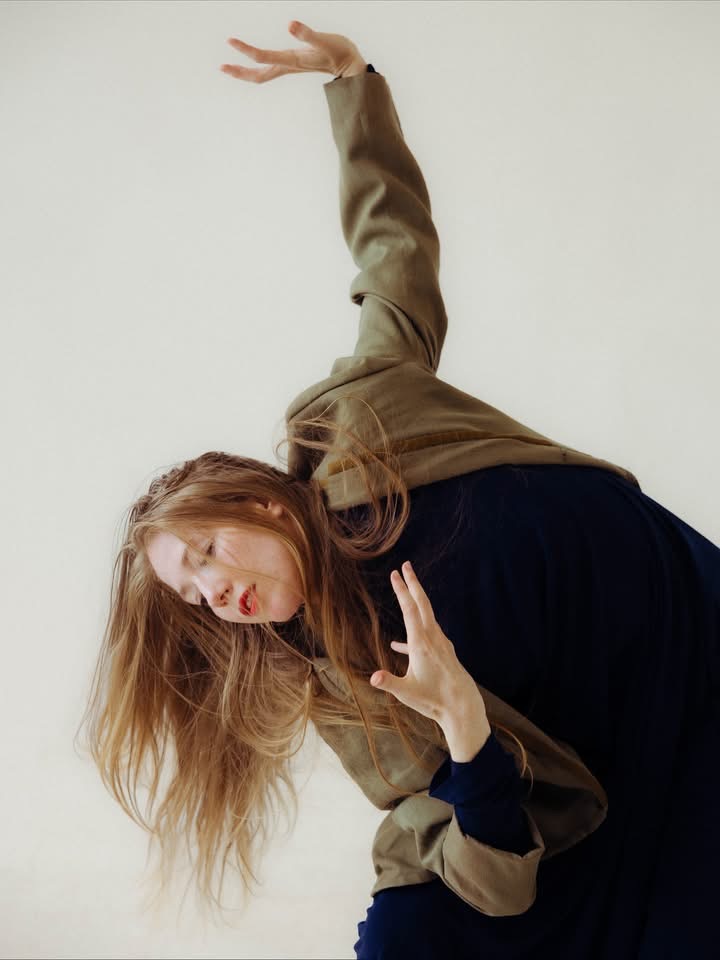
As creator, educator, and somatic movement practitioner, Rigney has cultivated her own vocabulary of Gaga’s egalitarian-driven movement language. In New York City, she is a certified Ilan Lev Method practitioner, helping to treat dancers, musicians and people of all ages and abilities for injury, pain, functional limitation, post concussion syndrome and physical and emotional trauma. What interests Rigney the most is exploring the intersections of art’s capacities for healing and physical virtuosity.
Likewise, Rigney’s research interests were fueled by her performing experiences with Punchdrunk’s Sleep No More, an award-winning multidisciplinary immersive theatrical production inspired by Shakespeare’s Macbeth. Unlike conventionally staged theatrical productions, audience members decided where to go and what to see, as dancers performed acrobatic choreography while moving from one room to another, each with its own unique atmosphere, and accompanied by a film noir soundtrack. In fact, Rigney and Kraus have forged their own bonds of sisterhood, as both had performed in Sleep No More.
It was the immediacy of the live theatricality of that experience that resonated for Rigney as a choreographer and as a researcher. As she has noted at her website, “I love to make space for the unexpected and the ‘happy accident’ while inside the making of a work. I believe that the classwork must be the stage work and that what we nurture and practice in the studio; HOW we move, HOW we listen, and HOW we collaboratively learn to follow the thread of an idea to completion, will lead us to the dance that is desiring/needing to be made.”
This describes the foundations of the process Rigney and the six company dancers experienced during the nine days in the studio as they collaborated on creating Sarabande for 6. Rigney’s process emulates, for example, the storytelling medium of comics, in which artists will use abstract colors and forms as background that strips away literal realism and intensifies the emotional depth which allows the internal experiences of the individual to come forward. Thus, in dance movement, things also emerge naturally, thanks to their visual certainty. And, in Traverse’s unique setting where the audience will be seated on stage and in the round, the audience will sense the tangible immediacy of the dancers encouraging us to connect our own sensations of emotional and psychological truths to the experience of the performance unfolding directly in front of them.
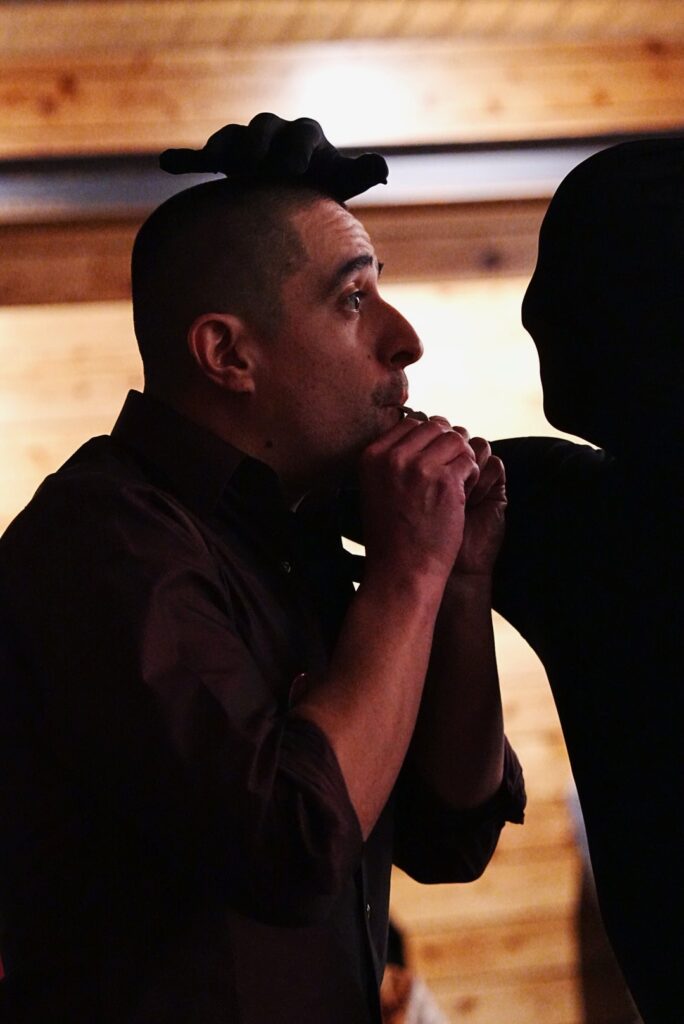
To prime this creative process, Rigney facilitated daily a 90-minute guided improvisation class, which she explained helped her and the six dancers to develop a “collective consciousness” and to “start creating a common movement language.” While exploring the emotional realm, the group considered points and questions to jump into material for the creative process. For example, what heaviness and gravity can do to the body and how the friction and explosiveness of movement can emulate rage, exhilaration and other fascinating emotional dynamics. “We found our opening to a dance and started to build around that,” Rigney said. Audiences will be walked through the process as well, in which words such as cut, smear, collapse, open and close become prompts and cues to spark movement as responses to specific words.
Indeed, Traverse’s setting and the environment for socializing before and after the performance are effective for immersing the audience into the experience, without feeling intimidated or worried about whether or not they are interpreting correctly the dance’s intended epiphany. Drawing upon her research, Rigney sees the dance movement as triggering our mean neuron, sensory and empathy responses. “I sweat when I watch a dance performance because I understand the rigor and intensity involved in it,” she offered as an example. Rigney added that she likes Kraus’ description of the choreographic process for the work as “building a nervous system.”
Speaking about the company’s six dancers, Rigney said, “They are a mature group of artists who are unique movers and thinkers and I am grateful for how completely committed they dove into the way I work.” She added, “I always try to make room for happy accidents and lean into chaos and the unknown that could otherwise become scary and I appreciated how the dancers were willing to get lost with me and search for that unknown thing.”

One notable happy accident that emerged in the creative process for Sarabande for 6, a title referring to the stately social dance form, was linked to the Argentine tango, which has become a hobby for her “alter ego” as a dancer. Among the music selections which echo those sensibilities for the work comes from Gaspar Claus, a French cellist. Most notably, Rigney also has selected Caroline Shaw’s Pulitzer-Prize-winning a cappella composition Partita for 8 Voices, featuring a unique palette of speech, whispers, sighs, murmurs, wordless melodies and vocal effects, which parallels beautifully with the provenance of Sarabande for 6. Also,there are elements of György Kurtág’s choral music and its intricate textures that comprise part of the soundtrack for this world premiere choreography.
The four other premieres comprise choreography by company dancers. They include Sage Green, by Fausto Rivera apairing of short dance stories that ask the audience to wonder how they would handle both large and small absurdities and to question whether they can trust what they see. Another is what I want is the ocean! by Miche’ Smith, featuring guest performers from the University of Utah that explores how we approach and respond to our own potential and dissect expectations others have of us that sometimes become our own. The third is Mad at the foot of a ladder by Luke Dakota Zender, with assistant choreographer Cody Brunelle-Potter, which also features guest performers from the University of Utah. In a world of uncertainty and overwhelm, how do we cope? This work shows us how we can choose to find fragments of madness to release the pressure valve and find catharsis. Finally, gg by Sasha Rydlizky investigates elements of gameplay, chance, and audience interaction.
For tickets and more information, see the Ririe-Woodbury Dance Company website.