
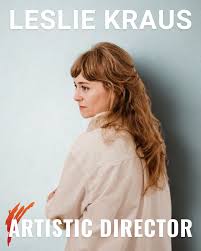
Vantage Point, the forthcoming season closer for Ririe-Woodbury Dance Company, will feature works by three women choreographers, including a world premiere by Leslie Kraus, the company’s artistic director, which will feature live sound design by Harrison Lind, a local musician-actor, and an avant-garde floral sculpture and costuming by Galore Floral artist Meagan Bertelsen.
Vantage Point will have three performances at the Rose Wagner Center for Performing Arts, April 17-18 at 7:30 p.m. and an April 18 matinee at 1 p.m.
In-Kind Growth is the second in a planned trilogy of works by Kraus, who is completing her first season as artistic director for Ririe-Woodbury. “I feel like this first season getting to know this community has been exciting and wonderful,” Kraus said in an interview with The Utah Review, adding that she considers this latest work a fully fledged collaboration with the company’s six dancers, along with Lind and Bertelsen.

Describing the process for creating this work as “fast and dirty,”Kraus said the piece is episodic with eight scenes that travel back and forth between moments of flashbacks and flashforward moments. The work touches on the broader themes of otherness and the implications of acknowledging that, in fact, it is humanity, as we conventionally have understood it, is really the anomaly and that it is our surrounding natural environment with its unsurpassable diversity which guides us to integrate ourselves anew in the community and the relationships that define our connections.
As noted last fall in The Utah Review, in Listening Hour, Kraus’ first world premiere in her new role as the company artistic director, her process started with a deep dive into watching not only the body language of the six company dancers’ movement, but also listening to them. It is the appreciation of each artist’s individuality, not the attempt to reshape dancers into cookie-cutter form, which primes the landscape for the collaborative dialogue that generates the most impactful experience between choreographers and dancers set to perform a specific piece.
She goes much deeper with In-Kind Growth, in part inspired by Annihilation, the 2014 novel by Jeff VanderMeer, which was the first installment of his Southern Reach Trilogy. In that novel, the biologist discovers that what she has been witnessing is not cosplay in nature, but rather a complex process of mimicry which is far from being mere mirrored distortions. At one point, one of the biologist’s journal entries provides edifying context for what Kraus and her eight collaborators are exploring in the premiere of In-Kind Growth:
The terrible thing, the thought I cannot dislodge after all I have seen, is that I can no longer say with conviction that this is a bad thing. Not when looking at the pristine nature of Area X and then the world beyond, which we have altered so much. Before she died, the psychologist said I had changed, and I think she meant I had changed sides. It isn’t true—I don’t even know if there are sides, or what they might mean—but it could be true. I see now that I could be persuaded. A religious or superstitious person, someone who believed in angels or in demons, might see it differently. Almost anyone else might see it differently. But I am not those people. I am just the biologist; I don’t require any of this to have a deeper meaning.
I am aware that all of this speculation is incomplete, inexact, inaccurate, useless. If I don’t have real answers, it is because we still don’t know what questions to ask. Our instruments are useless, our technology broken, our motivations selfish.
“I don’t believe in the idea of the single genius in the room,” Kraus said, explaining that the information coming from all of the players in the room is invaluable. She added that those who watched closely last fall’s premiere of Listening Hour will see the related themes of In-Kind Growth. That is, this is not a reinvention. Instead, it extends an ongoing instinctual exploration of relationships in a chaotic world thrown out of balance by humans who cannot understand or accept how the world has evolved into something that is different. The question is whether or not we can follow nature’s lead, which accepts the process of adapting to differences, by operating on a systemic level, rather than just primarily on the predominating species’ level. Kraus will set the third installment in this trilogy, for a world premiere next season.
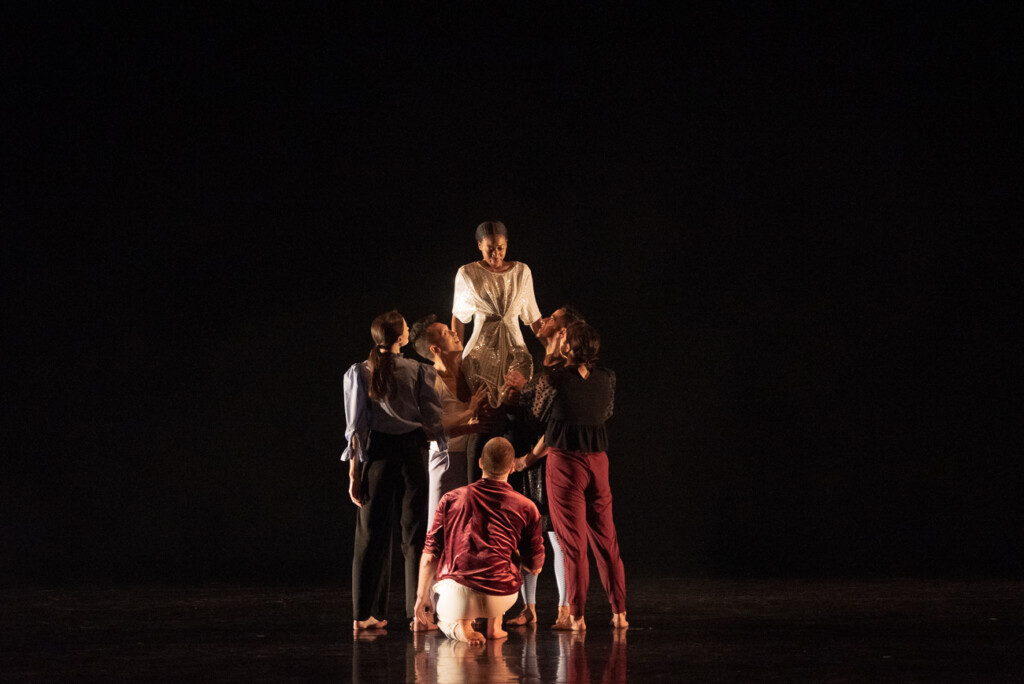
For Vantage Point, the company also will restage two outstanding choreographic standard-bearers in its repertoire: Two Hearted (2021) by Keerati Jinakunwhiphat, and audience favorite, Tzveta Kassabova’s The Opposite of Killing (2010). The recipient of the Princess Grace Award in 2023 and the first Asian-American woman to choreograph for the New York City Ballet, Jinakunwhiphat formerly was with with Kyle Abraham’s A.I.M and her career developed along a rapid trajectory after she graduated from SUNY-Purchase in 2016. The work is based on R&B music composed by Bryndon Cook, a genre not typically used by contemporary dance choreographers. Cited in Dance Magazine’s 2021 25 to Watch, Jinakunwiphat also studied with Doug Varone, a choreographer whose work has been widely featured at Ririe-Woodbury. Abraham commissioned Jinakunwiphat to set Big Rings, for A.I.M.’s season at the Joyce Theatre in 2019, marking the first time one of its members choreographed a piece for the company.
At the time of its premiere, The Utah Review wrote: Two Hearted signals the immense creative possibilities in a new generation of contemporary dance, introducing a bracing, ingenious take on a theme that has been explored by numerous choreographers in various forms. In her exploration of the value of clear hindsight in reflecting upon the successes and failures of relationships, Jinakunwiphat mixes it up fabulously, taking the cues of Cook’s musical score to set movement that is as lush, silky and smooth in its R&B manifestations as it is athletic and agile in its street-inspired character.
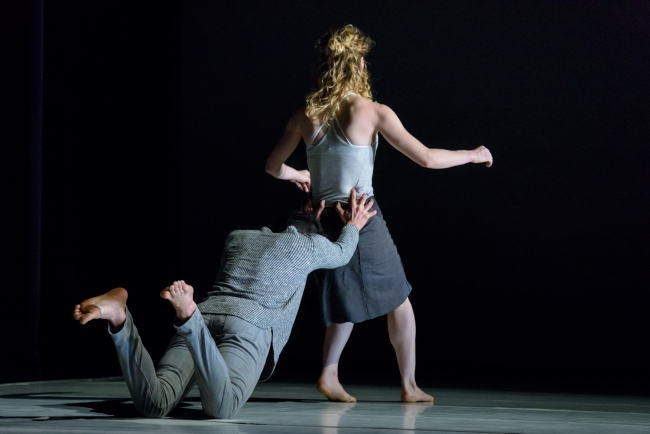
The Opposite of Killing is well-known to long-time Ririe-Woodbury audience members. The work represents the various emotions one experiences because of the absence of a close friend. Kassabova, who also has a background in astrophysics and mathematics, infuses her work with strong musical and physical sensations. The work ultimately highlights the hope and optimism in a valued friendship even in the person’s absence. Six dancers from The University of Utah will be joining the performance of this work.
For tickets and more information, see the Ririe-Woodbury Dance Comony website.