
EDITOR’S NOTE: Repertory Dance Theatre’s 60th anniversary season is in full swing. This includes the 60 Years In Motion: RDT’s Archival Exhibition, on view March 2–7, 2026, at the Rose Wagner Performing Arts Center in the West Studio. On March 6 at 7:30 p.m, audiences are invited to a special guided experience through the exhibition with Linda C. Smith, a cornerstone of RDT’s history who has been part of the organization through all six decades of artistic evolution. Guests will enjoy a toast to RDT’s 60th anniversary, light refreshments, and personal stories from someone who has truly “been through it all.” For tickets and more information, see the RDT website.
In 1965, Linda C. Smith was not in Salt Lake City when Gérald Freund of the Rockefeller Foundation called to ask if she would become a founding member of Repertory Dance Theatre. She was in Detroit holding her three-week-old son when the call came.
A year later, Smith was back in Salt Lake City, joined by seven other dancers who became the caretakers of an extraordinary example of artistic democracy, with RDT as the nation’s first modern dance repertory company. Inspired by Virginia Tanner, the foremost Utah modern dancer whose efforts helped establish the Tanner Dance program and the Children’s Dance Theatre at The University of Utah, the grant from the Rockefeller Foundation came amidst one of the most important decades in the history of dance not just in Utah, but also the United States.

During the 1960s, within a span of three years, three of Utah’s most prestigious and internationally acclaimed dance institutions were established in Salt Lake City: Ballet West, Ririe-Woodbury Dance Company and RDT. This season, RDT is the third dance institution to mark its 60th anniversary. The historical magnitude of this cannot be overstated, especially for a city the size of Salt Lake City. Ririe-Woodbury Dance Company, founded two years earlier than RDT, also was beginning to build its own repertoire. In 1966, the Alvin Ailey American Dance Theater in New York City was the only other dance company in the United States that occasionally featured works by choreographers other than Ailey but those works also bore his distinctive artistic mark. When RDT was founded, there were fewer than 90 professional dance companies in the U.S. Touring was not all that common. Today, the Dance Data Project tracks the largest 150 contemporary and modern companies. More than 3,300 are recognized as 501(c)(3) dance companies.
When RDT marked its 25th anniversary in 1990-1991, Smith noted that while the company was praised for its courage and ingenuity it also was criticized for “daring to present” works by artists who were not always on hand to coach the RDT dancers. “Many critics overlooked the fact that symphony orchestras and ballet companies were accustomed to the repertory concept, denying the opinions of guest choreographers who expressed their confidence in RDT’s ability to perform their choreography,” she explained.

The idea of an RDT was radical in the 1960s. As Marcia Siegel, the eminent dance critic and historian, noted, “Dancers sometimes seem to have concluded a silent pact with their audience to discount everything but that mutual moment of creation when a new dance is being performed.” She added that “repertory is a disappearing concept,” even in the most solidly anchored American dance companies. Siegel mentioned that “modern companies undergo what seems to be complete rehabilitation— from dances to personnel— about every five years.” That obsession for “constant renewal,” according to Siegel, “for clearing away the landscape to make way for something different, is deeply ingrained in American dance.”
When Smith refers to RDT as a revolutionary institution, that label signifies not just its founding in 1966 but something even more important than it was 60 years ago. RDT is the paragon for proving the archival meaning of the word ‘repertory.’ She explained, “modern dance is an enactment of Americans’ dramas and dreams” which have unfolded over the last 125 years. “It tells us who we’ve been and who we are. No wonder it can still touch us,” she added.

CROSSING THRESHOLDS AT HOME AND ABROAD
The company quickly crossed many thresholds. It was one of six companies tapped for the National Endowment for the Arts’ Dance Touring Program, which gave RDT the opportunity to hone its brand for the lecture-demonstration, which is the bread-and-butter element of a broader educational mission that demystified modern dance for audiences and has helped to dismantle the intimidating barriers of modern dance. It inspired building a robust dance center offering classes and workshops for people of every major age demographic who otherwise might not have imagined that they could learn the movement art of dance.
In 1972, RDT was the first Utah dance company to perform at the Kennedy Center in Washington, D.C. In 1983, they went from performing at the O.C. Tanner outdoor amphitheater just outside of Zion National Park one evening to the next at an outdoor theater at Lincoln Center in Manhattan.
A 1975 New York Times article about Salt Lake City’s strength in dance highlighted RDT and its then recent performances in the Big Apple, described variously as “astonish[ing] New York with a wide‐eyed, home‐grown company, a style distinctly Western, a ruggedly individual repertory” and “as striking as any modern dance soloists and principals you would find on Broadway or its environs.”

The 1970s anchored RDT’s flair for dance theater. Collaborating with artist Richard Taylor and her husband Tony, Smith created Diamond (1971), a psychedelic piece featuring a light show with images reflected off the bodies of the dancers, courtesy of a dozen slide projectors. The show sold out Kingsbury Hall on the University of Utah campus, according to Smith, who added, “the fragrance of marijuana filled the balcony.” Shortly afterward, Frank Zappa, who was touring with his band The Mothers of Invention, told Smith, who and her fellow dancers were in Binghamton, New York, that he loved Diamond. Zappa also invited the RDT dancers to ride on the band’s tour bus.
There have been many memorable tours. In 1992, RDT dancers arrived in Vienna and while Smith and her husband were trying to walk off the effects of jet lag in the early morning hours, she broke into tears when she saw a 30-foot-tall poster featuring one of the company dancers. The theater was sold out for the show, which included Smith performing St. Denis’ The Incense, where the original choreographer premiered the work in 1907. Their performances at Austria’s Tanz International Festival and in Munich elicited such strong positive reviews that the company returned to Germany two years later. One of the most unforgettable moments in the tour came in Düsseldorf, where the music did not start as indicated for the dancers who were waiting for the sound of a drum beat. Finally, after a long wait the music started and the company later learned that the sound engineer in the booth had passed out drunk.

RDT has always capitalized upon its international visibility, at home and abroad. During the 2002 Winter Olympics cultural arts festival in Salt Lake City, RDT achieved a historic first in programming for modern dance. In addition to performing two American masters works the company already had in its repertoire (Tamiris’ Dance to Walt Whitman and Humphrey’s With My Red Fires), RDT performed the newest historical addition to its catalog: Martha Graham’s Diversion of Angels. It was a work that Smith had tried since RDT was established to secure, which was made possible by a grant from the American Express Foundation.
In 2024, RDT had its most significant tour since the COVID-19 pandemic, which took the dancers to stops in Massachusetts, Connecticut and New York City. Its first stop in the three-week tour was at Phillips Academy in Andover, Massachusetts, one of the nation’s finest preparatory schools which was founded 248 years ago. Kareem Lewis, who danced with RDT for two years until 2022 and joined the academy’s theater and dance program as faculty, arranged the visit. RDT’s residency encompassed master classes, dance demonstrations and choreography sessions, along with two performances featuring RDT dancers and students from the academy. After Andover, RDT spent two days in residency at the Hartt Dance Division at the University of Hartford in Connecticut, conducting workshops and performing for Hartt’s dance students and faculty. RDT’s tour wrapped up with six performances at the Whitney Museum of American Art in New York City, as part of the museum’s Edges of Ailey installation, which honored legendary choreographer Alvin Ailey and his historical impact on American dance.

RDT dancers.
THE FIRST YEARS
The ideals propelling RDT’s founding in 1966 established precedents that today seem commonplace. The Rockefeller Foundation grant of $370,000 ($3.8 million when adjusted for inflation) ensured adequate salaries for the eight founding members to choreograph as well as perform, educate and select repertoire. The members voted on everything including commissions, programming, touring and casting. Within a short time, RDT performed choreography by Smith and colleagues Bill Evans, Kay Clark, Tim Wengerd and others, which were sandwiched among works by Anna Sokolow, John Butler and Viola Farber. Tenacious commitment never wavered but the decision-making in such an artistic democracy could be periodically tumultuous with philosophical and aesthetics wrangling, Smith recalled.
More recently, RDT’s Emerge, which had its 10th edition last month, gives company dancers the opportunity to choreograph their own work. The aggregate results have been gratifying. Each work has championed the exceptional scope of Utah’s dance ecosystem, which per capita ranks the state nationally among the top for appreciating a performing arts form that justifiably wears the imperial crown here. The opener for this year’s Emerge, 60 Moves/60 Years, by Linda Smith, RDT’s co-founder and director emerita, set the appropriate tone for celebrating the company’s legacy. Smith selected a work from each of the company’s 60 years and assigned a short movement phrase from each one to a current company dancer. Meanwhile, the soundtrack featured snippets of recorded memories from the company alumni about their experiences, with the collage edited by local composer Trevor Price. The work is a valuable oral history artefact that will be immensely helpful to future arts journalists and dance historians.
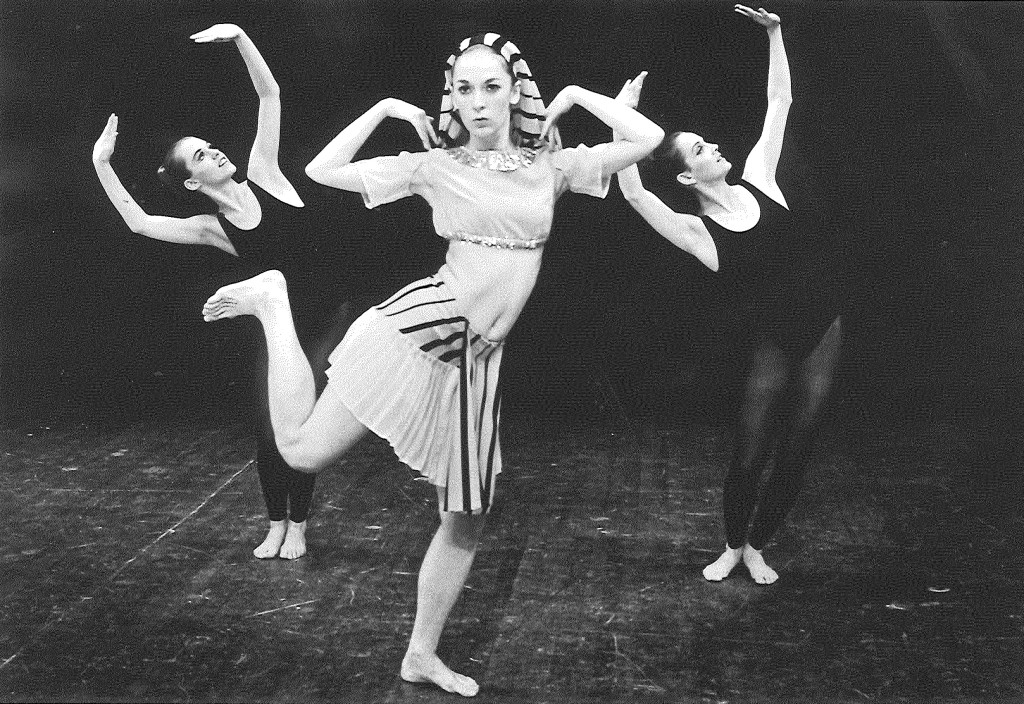
Back to Back, choreographed by Bill Evans.
At the end of its first decade, RDT evolved its artistic leadership model, with the dancers electing Smith and Kay Clark to become co-artistic directors. “The experiment in artistic democracy taught me a great deal about group process and the importance of having someone in charge who looked at the ‘big picture’ and not just what the company could do for one individual,” Smith said. “The university of RDT taught me as much about psychology and sociology as it did about dance. It was important to put personal struggles aside and see what RDT could do for dance and for the community … things that Virginia Tanner had taught me.”
In 1983, Smith became the sole artistic director, after Clark and her husband moved to California. In 2025, just ahead of the 60th anniversary season, Smith retired and, for the first time in more than 40 years, RDT is helmed by two artistic directors who have risen in the company ranks: Nicholas Cendese and Lynne Larson.

Bill Evans, who danced and choreographed new works during the early years of RDT’s revolutionary experiment, said in a 2016 interview with The Utah Review, “I am filled with admiration for Linda [Smith, RDT’s executive and artistic director] and how RDT has chiseled out a place in the cultural life of the city and state.” He added, “If you were to tell me 50 years ago [from 2016] that Linda would still be leading the company and that I would be choreographing a new work, I would have considered it impossible. But here I am at The Rose Wagner [the performing arts center which houses RDT], filled with gratitude to work with the latest generation of the company’s dancers.”
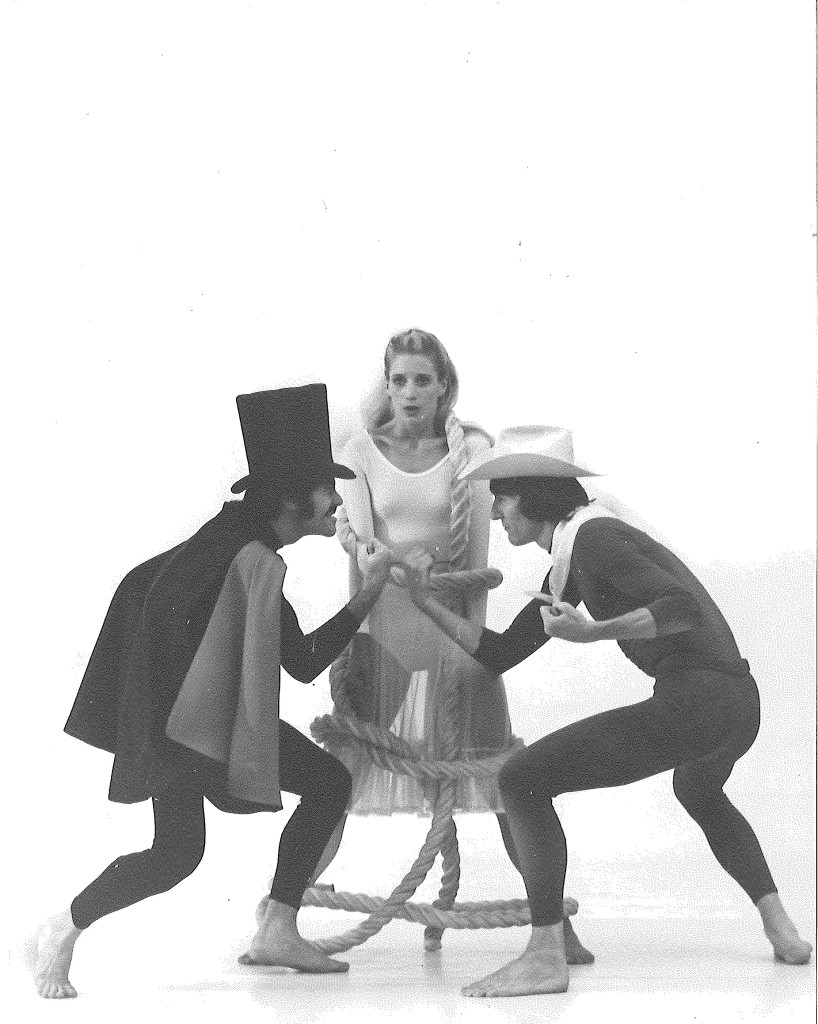
BILL EVANS
One of Evans’ most important works was created in 1973, which was performed in 2022 for the first time by RDT since 1985. He choreographed Hard Times, a work using classic Americana folk tunes including Virginia reels and songs from the Appalachian region of eastern Kentucky, which interprets images of rural families struggling to survive The Great Depression.
When the work was premiered by Evans and his colleagues, RDT dance artists Ruth Jean Post and Manzell Senters, it caused quite a stir and two different sets of reactions by audiences. Evans set the work to dislodge widely referenced hillbilly stereotypes as lazy and outdated. Hard Times was set to envision the Appalachian peoples as no less emotionally intelligent or resilient in ensuring their cultural folkways and relationships could withstand the economic challenges of surviving the Depression.
In a 2022 interview with The Utah Review, Evans recalled how some audiences members nervously laughed at various moments, attempting to see the piece as more entertaining while others debated outside the hall that Hard Times was a complex, deep, humane reconsideration of people who were no different than the so-called average or “normal” American, while hoping to survive The Great Depression and The Dust Bowl era. Evans said he wanted to dig below the surface for an emotional epiphany. For example, in a duet, the audience saw a couple who depend upon each other to survive their abject conditions of poverty but even as they cling to each other, they also lash out at each other in frustration. “There have been many reasons why this work has made audiences uncomfortable,” Evans said.
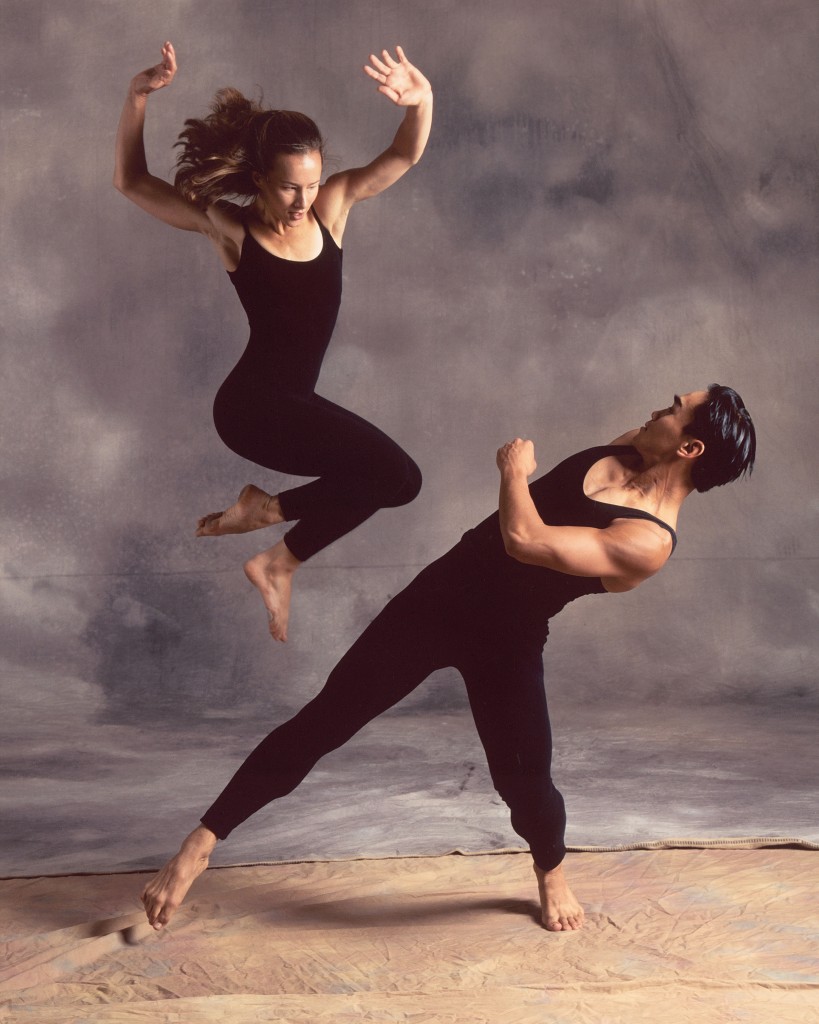
a piece by Shapiro and Smith, for the Repertory Dance Theatre.
Evans never has forgotten one of his earliest artistic homes. Even after he left Utah in the mid-1970s, he returned frequently to RDT. Twenty works by him are in RDT’s repertoire. Evans and Smith went to college together. “We were considered renegades,” Evans told The Utah Review in 2017, explaining how his interests spanned ballet, modern dance, and other entertainment classics such as tap dance. It was before the time that dance schools finally would cast aside genre limitations, stylistic distinctions and artistic boundaries to allow students to explore both ballet and modern dance simultaneously. In fact, students at the time who wanted to pursue modern dance had to pass a women’s physical education course – and that included Evans.
After leaving RDT, he founded his own dance company in 1975, which performed in every state and 24 countries, becoming one of the most widely booked American dance institutions during the 1970s and 1980s. A Guggenheim Fellowship recipient, he built upon the platform of the Laban/Bartenieff Movement System to articulate his own movement language, the Evans Somatic Dance Technique, which is now part of his institute in Port Townsend.
After a public rehearsal with the company in 2022 in preparation of a RDT concert featuring dances he choreographed, Evans mentioned how immensely satisfying it was to see the latest generation of dancers carry the torch of RDT’s consistently expanding legacy. To wit, a comment from his 2017 interview: “We were working day and night during the late 1960s and early 1970s and learning so much from so many different choreographers who came to us in Utah,” he recalled. “We grew so much individually and as an ensemble.” Thus, he sees RDT’s legacy like a living historical document, which always is absorbing new experiences and new artists. For example, in 2022 compared to 2017, Evans was working that year with a group that included male dancers who were not in RDT at his previous visit. ”The dancers get it and they realize that the legacy will always be larger than the works and choreographers who have come through RDT and they have profound respect for that legacy,” he said.

SOME OF SMITH’S FAVORITE MEMORIES OF THE EARLY YEARS
Many of Smith’s favorite dancing roles during RDT’s early years were part of the company’s commitment to be a revolutionary institution, which continues to this day. One of the first guest choreographers RDT invited was Glen Tetley, whose choreography dispelled the perceptions of artificial and essential barriers between modern dance and ballet. In 1967, he set Freefall. “He encouraged us to be daring and to set our artistic standards high,” Smith said, adding that Freefall was the first work she performed that involved complex partnering with a male partner. “Tim Wengerd and I had a diet filled with new ways to lift and support your partner…very sensuous,” she explained. “Tim became my dancing partner for many other pieces of choreography.” Tetley, whose international reputation grew working with major European ballet companies, returned in 1973 to set Stationary Flying. “Working with Glen changed your life,” Smith added.
Smith said she relished roles that allowed her to explore different aspects of characters. Richard Kuch restaged The Brood for RDT in 1968, in which she danced the role of Mother Courage, one which she enjoyed because she could show her “evil schizophrenic side.” While the dancers loved performing it, Smith said it was difficult for RDT audiences at the time to process. A 1974 review in The New Yorker described it as a “brutal fantasy” in “which “four main characters have become sadistic monsters who torment each other without mercy.” On the opposite end, Smith said her most profound spiritual experience on stage was performing the role of the wife in Doris Humphrey’s Day on Earth, recognized as among the choreographer’s greatest masterpieces about life, work and love, which was set to a piano sonata by American composer Aaron Copland. “Through dance, I felt connected to the universe and everything in it,” Smith said. “What a magnificent way to live your life.” She has specified that the piano sonata be played at her funeral by Ricklen Nobis, RDT’s booking and music director.

Smith has always enjoyed opportunities for humor even if some audiences took the art of dance too seriously all of the time. Her Sugarflash (1979), a commentary on pop idols inspired by an after-show reception that exclusively served sweets, was set on 25 performers, including Clark, the co-artistic director, as Proteina Wondercookie. “An audience member, a psychologist, suggested that I had psychological problems,” Smith recalled. “I told him that I just had a sense of humor.”
For Snackpack (1973), Smith set the piece celebrating the joys of eating and dieting with giant soft sculptures reminiscent of Claes Oldenburg’s famous public art sculptures of everyday objects which included things like clothespins, spoons and hamburgers. As part of the RDT’s tenth anniversary, Smith set A Piece for Evan (1976), featuring her ten-year-old son. For a parent to be weeks away from family during a tour, which she said was agony, the dance was possible, as Evan joined the cross-country tour that year.
In the following year, Clark and Smith decided the time was ripe for a children’s show. Smith scripted a concert-length work, The Dragon with the Endless Tale (1977) about how music, dance and language cross-pollinate and cross-fertilize. The late James Prigmore, who was musical director for Pioneer Theatre Company for 35 years, composed the score for singers and a pit band. “We fantasized that we were going to cut a record and make a lot of money,” Smith said. “We didn’t do either, but the piece toured several years and it gave the dancers a chance to dance and sing on stage.”
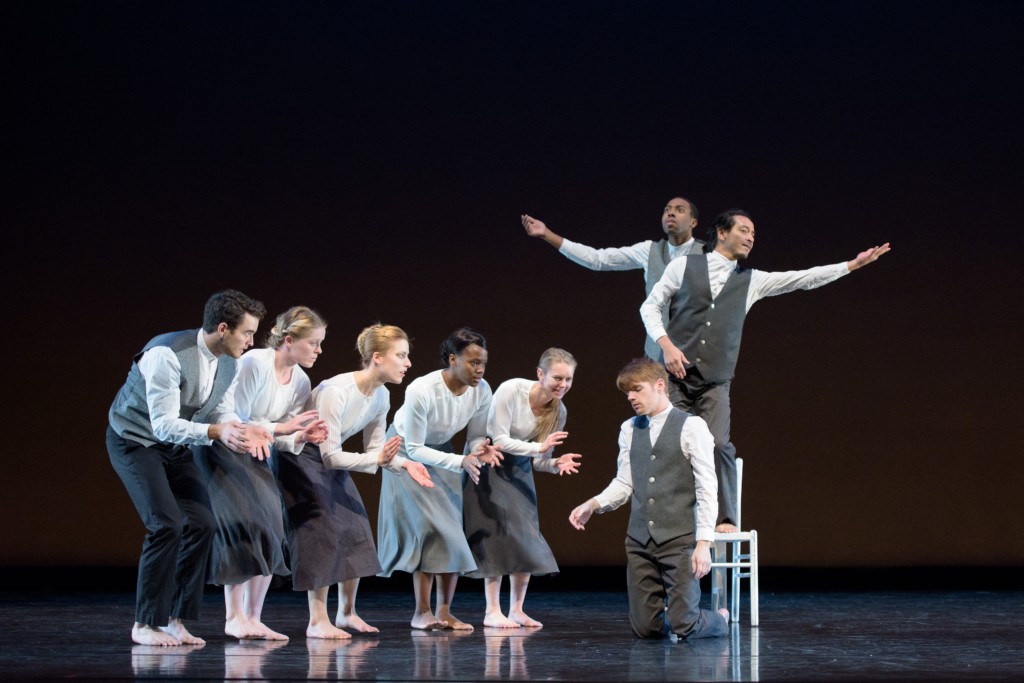
Throughout its 60 years, RDT has attracted legions of internationally renowned choreographers, dance artists and musicians. In 1977, a young Bobby McFerrin walked into the studio, asking if the company needed an accompanist. Smith recalled that one time he sang German lieder to inspire the dancers to execute plies. “When I thanked him for the lieder, he said that it was fake and that he was just imitating songs that his father liked to sing,” she said. RDT even allowed to use the rehearsal piano to hone his skills as a singer to audition for the Room at the Top lounge bar in the downtown Salt Lake City Hilton, where he performed for two years.
THE ARCHIVAL ART OF DANCE REPERTORY
Of course, as much as the Rockefeller Foundation grant asked that dancers also plunge into creating new work and seeking commissions from contemporary choreographers, RDT embraced just as deeply its mission of preserving the historic treasures of dance. Once RDT secured a seed grant from the National Endowment for the Arts, the company worked with Marcia B. Siegel, one of the most influential dance critics and historians about which choreographers from the early period of modern dance history should be represented in the RDT catalog. For the 1980 concert, Then…The Early Years, RDT adopted a format which included narration, to highlight the works of choreographers such as Isadora Duncan, Ruth St. Denis, Ted Shawn, Helen Tamiris, Rudolf Laban, Hanya Holm, Lester Horton, Charles Weidman, and Doris Humphrey.

RDT has ensured that even works of the earliest period of modern dance are preserved for perpetuity. Michio Itō (1892-1961) was an extraordinary artist who studied 12-tone (serialism) music theory in Germany at its height among the Second Viennese School composers and incorporated the elements into his movement language based on a set of symbolic gestures of the arm. His works reside with RDT as the only official U.S. repository for the foundation which bears his name and as a courtesy of Michelle Ito, his granddaughter.
Among the historic works that have resounded in the ideals of RDT’s mission as a community for dance is Humphrey’s Passacaglia and Fugue in C Minor, which is based on the famous J. S. Bach composition of the same name. As dance historian Marcia Siegel explains, Humphrey (1895-1958) “began working at a time when art dance was best known through civic pageantry and private entertainments.” Distinguishing herself from Martha Graham, Humphrey established her own movement language. In part, this reflected her personal life. While Siegel explains that she was not necessarily wedded to a political affiliation nor did she promote ideologies in her work, Humphrey nevertheless was inspired to see dance as communicating the positive values of collective action in building a productive sense of community. Her husband was a prominent utopian socialist and in New York they lived for many years in a communal arrangement with her son and dance colleagues including Jose Limón, one of the 20th century’s greatest choreographers.
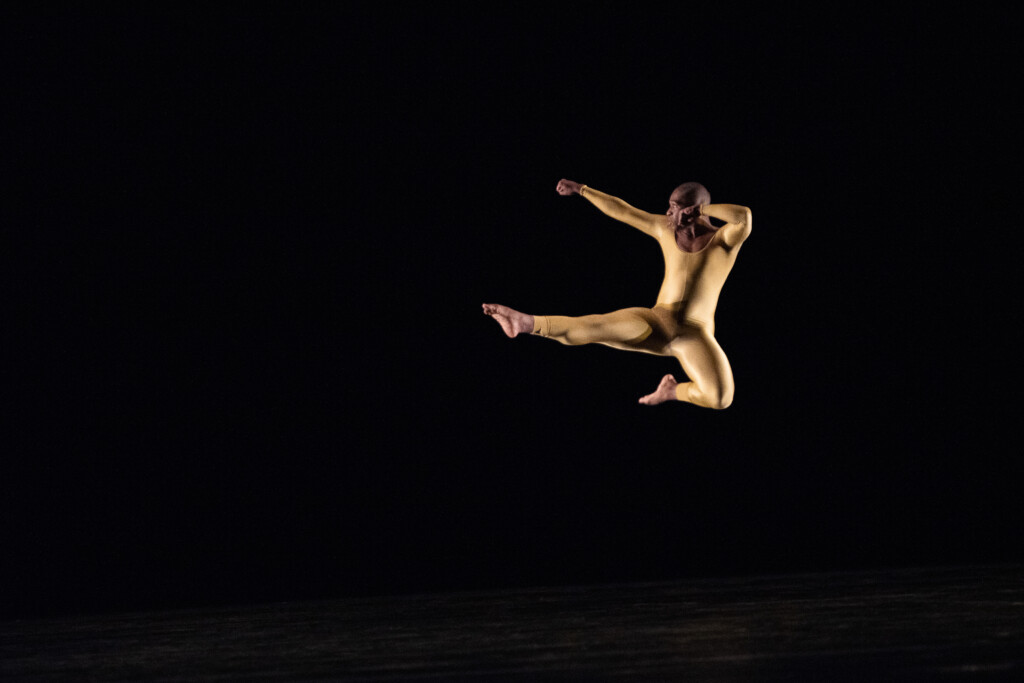
Photo Credit: Sharon Kain.
Limón’s Concerto Grosso (1945), a masterwork of musicality was RDT’s first major choreographic acquisition in 196. Among his works in the RDT catalog is The Winged (original 1966) is an enormous suite comprising eight sections including solos, duets, trios and group sections. It’s a soaring exploration of ornithological wonders and some flying creatures of classical mythology, without focusing on a particular unifying theme. As with other Limón works that RDT has performed, Nina Watt, who toured nearly three decades with the Limón Dance Company, staged and directed RDT’s most recent performances of it in 2023 and 2025.
One of the most compelling examples of the challenges of preserving historical works of modern dance is Dance for Walt Whitman by Helen Tamiris, which incidentally will be presented twice this spring by RDT: in a UtahPresents program featuring the University of Utah’s school of dance and then in the company’s Anthology concert in April, which also will feature Limón’s Concerto Grosso and the Utah premiere of Martha Graham’s Dark Meadow Suite.
Smith and Joan Woodbury, a cofounder of Ririe-Woodbury Dance Company, performed in the 1961 premiere of Tamiris’s piece, which was made possible by a Rockefeller Foundation grant. In 1992, Smith set out to reconstruct the work for a new performance, but was temporarily stuck when she heard that a rehearsal film from the original production was damaged and no longer available. However, Woodbury told Smith that she had given her copy of the film to the University of Utah’s media department. But there was no record that the film had been saved in a digital format. The staff offered several boxes of unmarked films for Smith to go through and she rented a projector to screen the videos at home and eventually found it. “There are people who do not seem to appreciate how important it is to preserve the artistic treasures of the past,” she said. “I like to quote the videographer, Ken Burns, who said, ‘You can’t know where you are going until you know where you have been.’”
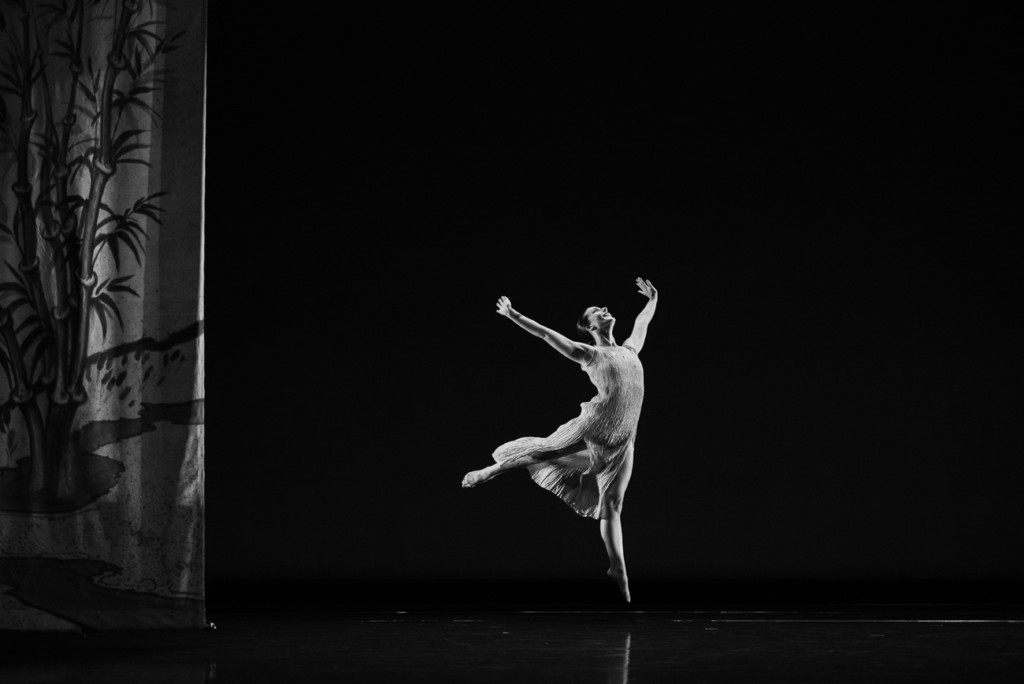
Anyone who has ever seen RDT perform early historic works of modern dance will appreciate the role of “dance archaeologists” the company undertook to reverse an alarming trend of dance history being forgotten and lost. Répétiteurs also have become the lifeblood of dance preservation. “We met former dancers who remembered material in fragments, impressions, movement phrases, often in passionate recollections of past performances,” Smith said in 1990. “It seems to us that the early dances are like old stories and legends that may change slightly in the telling, but that are filled with the original message and mystery.” RDT’s dedication to archaeological preservation of modern dance is priceless and it has prevented what could have been an unfathomable loss of artistic history.
RDT also has performed other Graham works. Created in the midst of the Great Depression and the turbulence that inevitably signaled the onset of World War II, Steps in the Street by Graham came after the choreographer refused to take part in the ceremonies for the Berlin Olympics in 1936. The work’s thematic premises of desolation and isolation evoked parallels when RDT performed it in one of its first live concerts after the pandemic. Virginie Mécène from the Martha Graham Dance Company came to Utah to set movement for the performances, featuring the RDT company as well as dancers from Utah Valley University. In an interview with The Utah Review published at the time of that performance, Mécène said the dancers responded very well in learning the basic core of the Graham technique, which the legendary choreographer used to express specifically her observations and critiques of events and experiences in life.

“She wanted to convey the impact of the Great Depression, such as the long breadlines, the devastation of the Dust Bowl, and the rise of fascism in Europe, the chaos which was making people feel intense despair,” Mécène explained. Mécène said she was impressed with the strong sense of community among the professional and student dancers and what a “solid pillar” RDT and other institutions are for propagating a rich, diverse culture for dance’s creative power of expression. This, she added, translated the innate egalitarian core of this particular Graham work for this particular generation of dance artists. This was evident in the dancers learning to shape the breathing and phrasing patterns in the work’s choreographic structure.
The experience with another Graham work, Ekstasis, a solo originally choreographed in 1933 emphasized what is involved in rescuing a great dance piece from being lost forever. In 2017, Mécène reimagined the work,and in the same concert which featured Steps in the Street, Angela Banchero-Kelleher, an RDT alumni dancer and UVU professor, performed its Utah premiere.
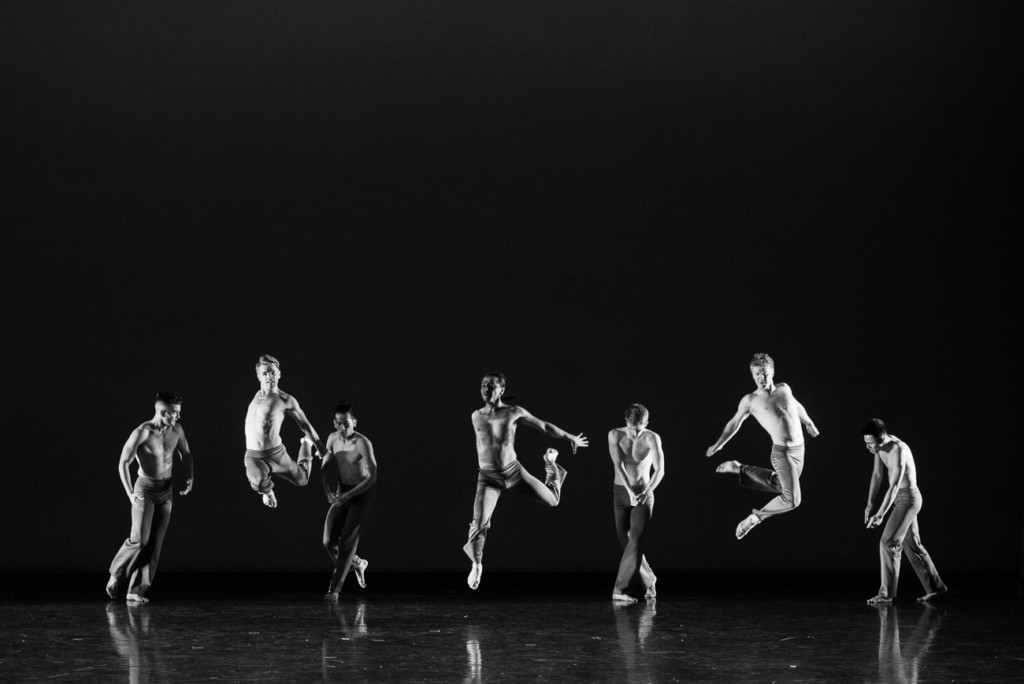
Mécène said there was no intact artifact of the original solo and the extant evidence was found in a few articles, which also did not reveal or clarify any visualizations of the work or its movement phrases. As referenced in a 2017 news item, in a 1980 interview, Graham said “that she was experimenting with the thrust of the pelvis. This led her to explore ‘a cycle of distortion’ that she found deeply meaningful. ‘Before Ekstasis, I had been using a more static form, trying to find a ritualistic working of the body,’ she concluded.”
But, as a result of her research and her direct work with the Graham technique, Mécène said it became a call to experiment — “having the wings to go ahead and create something I wanted to do in reimagining this pivot in her technique.” She selected music especially arranged by Catalan composer Ramon Humet, who based it on a poem by Mario Lucarda. “It gave me chills and the music was an abstraction of her poetry which represented the ideal of what the Graham technique would become,” she added.
While virtual presentations in the performing arts abided by constraints and adjustments in social distancing during the COVID-19 pandemic, they also afforded unique advantages. The case for such advantages was evident in Double Take, the film of the historic collaborative season opener for RDT and Ririe-Woodbury Dance Company. The opportunity to film was a blessing, in part, because RDT could highlight some of the earlier classics of modern dance. In 2021, Homage, the filmed concert to close RDT’s 55th season produced and edited by Wonderstone Films, featured four works created between 1949 and 1959.
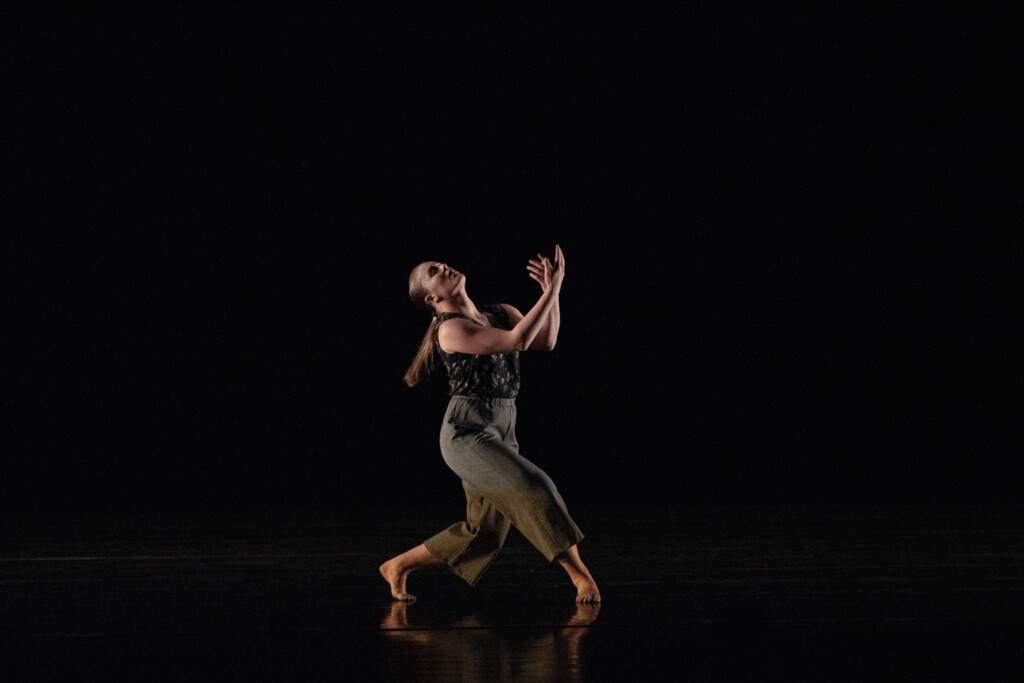
One example was Castor & Pollux, a work created in the 1950s by Elizabeth Waters, a vaudeville performer-turned-dance artist, teacher and choreographer. Waters, who died in 1993, moved to New Mexico, where she observed and was inspired by the Pueblo tribes’ dance rituals. Prior to moving to the Southwest, Waters had become absorbed with the technique of Hanya Holm, popularly known as one of the Big Four founders of modern dance. The technique emphasizes geometric concepts of planes, space and patterns. RDT first performed the work 55 years ago and its sense of timelessness comes through the incredible music that Harry Partch wrote for it. Partch, sometimes described as the Magellan of sound, built his own instruments for the music, including bells from glass bottles and a customized marimba.
Other works in Homage included Limón‘s Mazurkas and Humphrey’s Invention. Only two companies have rights to include the Humphrey piece in their repertoire: RDT and the Limón Company.
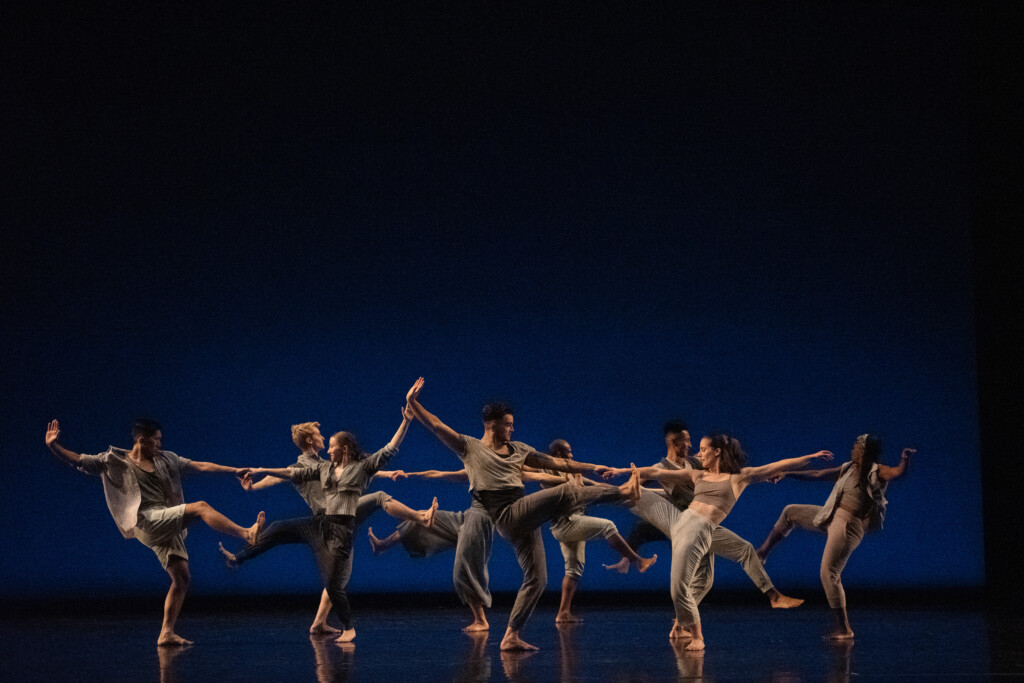
LONG-LASTING RELATIONSHIPS WITH RENOWNED CHOREOGRAPHERS
Another great American choreographer, Lar Lubovitch has had connections to RDT going back to the 1970s. RDT was the first company to commission a work from Lubovitch – Sessions, which premiered in 1975.
Erosion (1993) sparked one of RDT’s longest lasting active relationships (33 years and counting) with an internationally known choreographer, Zvi Gotheiner, and his regular musical collaborator, Scott Killian. Since that commission of his Erosion, which was inspired by southern Utah’s red rock landscapes, RDT dancers consistently have quickly found their best instincts in working with Gotheiner. In an interview with The Utah Review, Gotheiner, the founder of ZviDances in New York City, said he has always felt at home in the RDT studio. One of those commissions, as detailed in a later section of this feature, was Dancing the Bears Ears.
To start the 60th anniversary season last fall, RDT gave a Utah premiere of Migrations (2022), the 10th Gotheiner work in the RDT catalogue. Migrations inscribed a new chapter following the lineage of other RDT commissions that Gotheiner and Killian have set on the company dancers, including Glacier, Lapse, Bricks, and Dancing the Green Map.
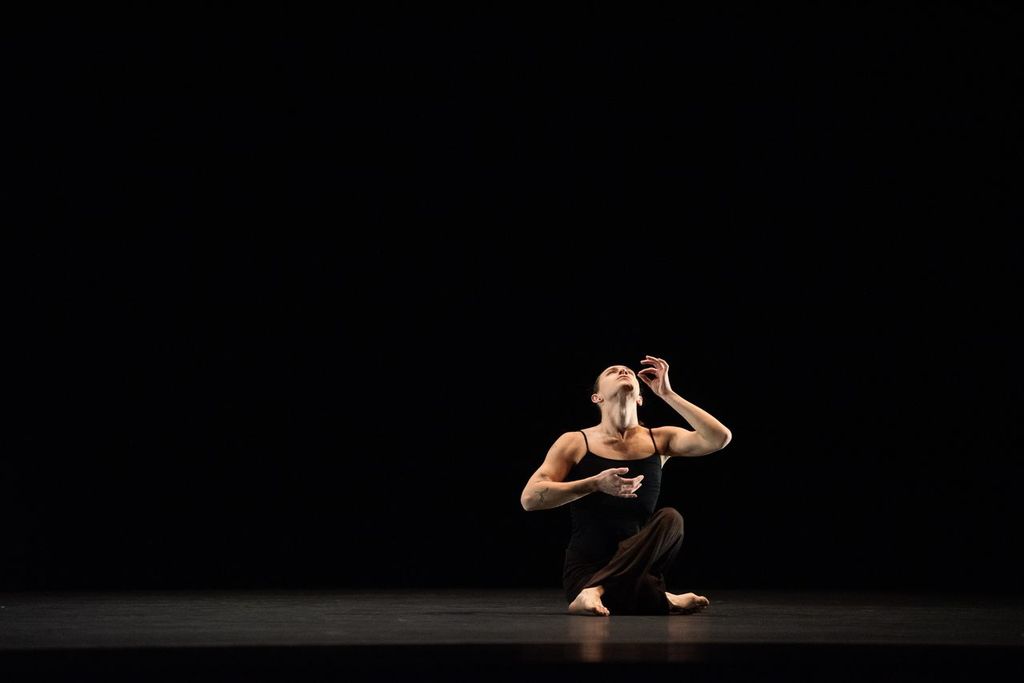
In the 20-plus-years relationship that choreographer Joanie Smith of Shapiro and Smith Dance has had with the Repertory Dance Theatre (RDT), dancers have performed many works that bear her company’s distinctive joyous, witty, uninhibited, physically demanding artistic brand. Smith and her husband, Danial Shapiro (who died in 2006), came to Salt Lake City in the mid-1990s to do an improvisational dance workshop for AT&T employees. During the visit, the consultant (Bob Archibald) introduced the couple to Smith, who did not hesitate to commission a Shapiro and Smith dance composition to be performed in 1997.
Turf, which became one of the Millennium Commissions leading up to the 2002 Winter Olympics in Salt Lake City, quickly became an audience favorite. With original music by Scott Killian, dancers alternate between friendly and aggressive rivalries as they battle for throw rugs and carpet remnants. Even as Turf ventures periodically into serious moments, the work never loses sight of its basic humorous structure.
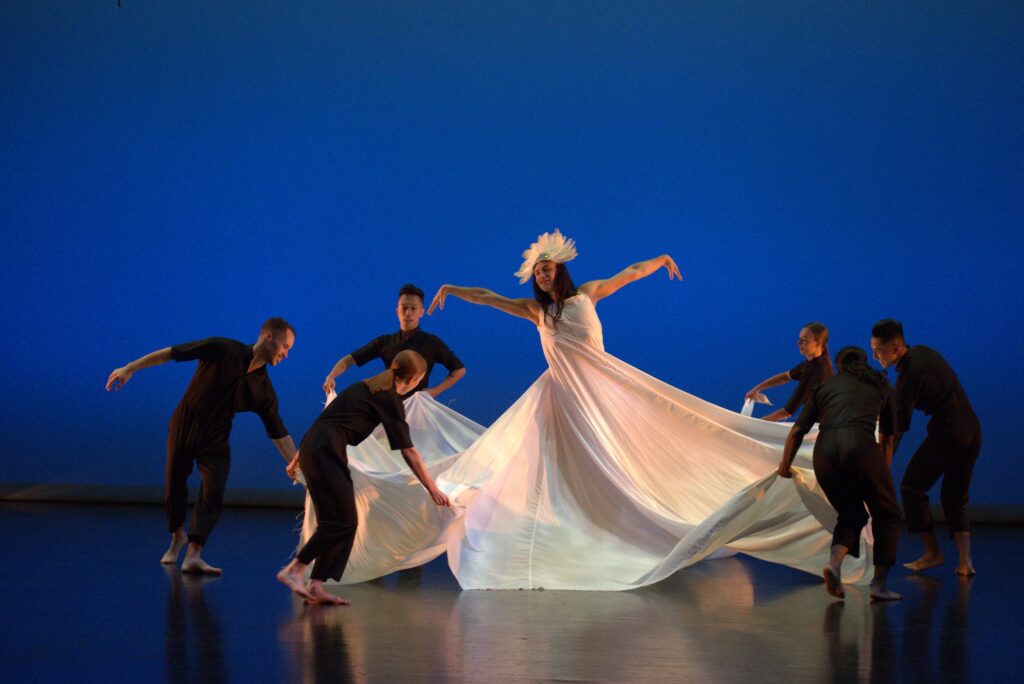
DANCE STEWARDS OF UTAH’S HISTORY AND NATURE
RDT’s presence has just been as important in conveying dance as a platform to document the history of Utah, especially including that of the Indigenous peoples who were stewards of the natural lands and monuments of the region. In 1990, Lynne Wimmer’s dance drama, Separate Journeys based on interviews collected by the Utah Oral History Institute premiered and was later aired on KUED, Utah’s public television affiliate. Ahead of Utah’s centennial celebration of statehood in 1996, RDT commissioned a variety of artists to create the Centennial Landscape Suite, with dances celebrating the Colorado Plateau, Great Basin, Utah rivers, mountains and forests.
A 2017 commissioned piece by Gotheiner, Dancing The Bears Ears is rich in metaphorical physiology and the heartbeat of the massive natural monument in southern Utah. In the spring of that year, the company, along with Gotheiner and dancers from his New York-based company (ZviDances), traveled to the Bears Ears National Monument as the opening workshop for the creative process. Meanwhile, Ryan Zinke, then U.S. Secretary of the Interior during the first Trump Administration, was in the area, gathering evidence to reverse the monument designation that former President Obama had approved near the end of his second term. Fortunately, the Biden Administration, with U.S. Secretary of the Interior Deb Haaland, restored the designation. Despite national politics, the public awareness of the Native American sovereignty and stewardship of these lands continues to grow.

When the group visited the land, their stops included the Fry Canyon Ruin, the steep switchbacks of Moki Dugway, a kiva at the Cave Tower Ruin, a hike at the Procession Panel and a community gathering in Bluff Utah. They also were accompanied by Navajo and Diné guides. According to Smith, the dancers talked on the first day of their workshop how they already were being changed in understanding why this land is sacred.
In a 2017 interview with The Utah Review, Gotheiner, who regularly visited many of the state’s natural sites ever since his first collaboration with RDT in 1993 (Erosion), recalled that Killian, the composer, was unable to accompany the group but arrived as everybody was returning. “He interviewed my company members and then later the RDT dancers and he was so touched by how everyone described their experience. It was phenomenal,” Gotheiner explained. “He got it immediately.”
Incidentally, Smith has emphasized an important point about the commissioned piece: “It is not a representational work meant to imitate or impersonate Native American people or culture.” She added, “It is a dance about how this incredible sacred landscape healed us, and brought us into a harmonious place. The dance is a ‘new ritual’ to raise consciousness about the significance of the extraordinary area.”

Bill Evans also created one of RDT’s most popular pieces it has taken on tours: Crippled Up Blues … and other tales of Deseret, the dance version of a historical album celebrating the land of Deseret, accompanied by a suite of songs composed and performed by the locally based group 3hattrio. Evans created the work in 2015 to celebrate RDT’s golden anniversary.
A HOME AT THE ROSE
It wasn’t until after RDT marked its 30th anniversary did it finally secure a permanent artistic home, becoming the first tenant at the Rose Wagner Center for Performing Arts in downtown Salt Lake City. In 1983, RDT established a planning committee which Smith’s husband (Ivan Weber) volunteered to lead. Over the next decade, he visited more than 100 performing arts centers. The vision encompassed large rehearsal studios, offices for staff, a black box theatre and a larger space for performances. Options included moving out of Salt Lake City and even leaving Utah.
When Alice Steiner agreed in 1989 to direct the efforts, she formed the Performing Arts Coalition (PAC), which today comprises the six current artistic company residents at The Rose. The intention was to have a publicly-owned center for the performing arts on par with Portland, Nashville, Tampa, Tulsa, Denver and Charlotte.
In 1992, RDT vacated the barracks facilities on the University of Utah campus where the company had operated since its founding. Its campus home was demolished to expand the University of Utah Medical Center. RDT had become a nomad, moving five times in two years, which also stressed its financial stability. A year after it moved temporarily to the old Salt Palace, RDT learned that this location was set to be razed.
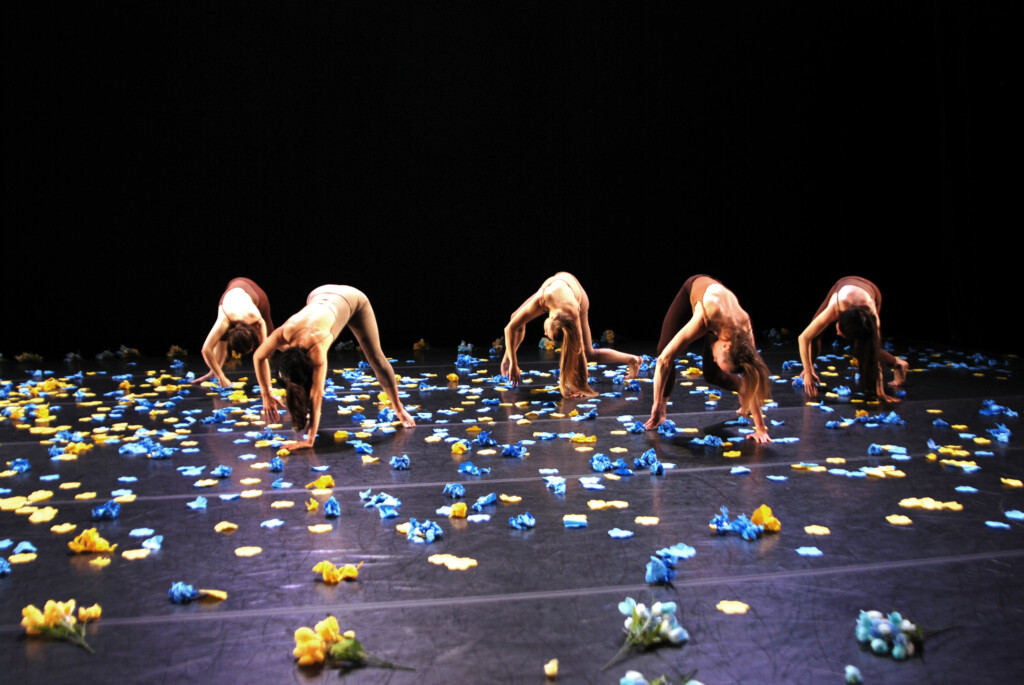
Prospects for the home RDT envisioned had dimmed considerably. In early 1994, the company moved into the former Restaurant Equipment and Supply and Fetzer Buildings (RESCO) which had been located at 138 West Broadway since 1943. Once Salt Lake County officials agreed to purchase the RESCO site, RDT received seed money from a public-private partnership and PAC began raising funds for the new performing arts centers.
The location turned out to be ideal. The entrance and a larger clear-span bay gave people an opportunity to see the dancers in rehearsal. One visitor who repeatedly came in to watch rehearsals sparked concerns about safety. When Smith asked the visitor why he kept returning, he said that his wife once was a vaudeville dancer. As Smith recalled, he mentioned that he was born in a family home that was located at that same address, where the family business also operated. That man was Izzi Wagner, who got the ball rolling for the Rose Wagner Center for Performing Arts.
Wagner’s vision, indeed, was fortunate for companies that previously were artistic nomads using temporary spaces in the community. When the RESCO building was demolished in 1995 to make way for the new building, with Prescott Muir as the architect, RDT moved temporarily into the Fetzer Warehouse. As The Rose (named for the family matriarch) opened in 1997, RDT christened the new Black Box Theatre honoring Wagner’s sister (Leona Wagner for whom the theater was named) Essence of Rose, which was choreographed by Lynne Wimmer. The Jeanné Wagner Theatre was named for his wife.
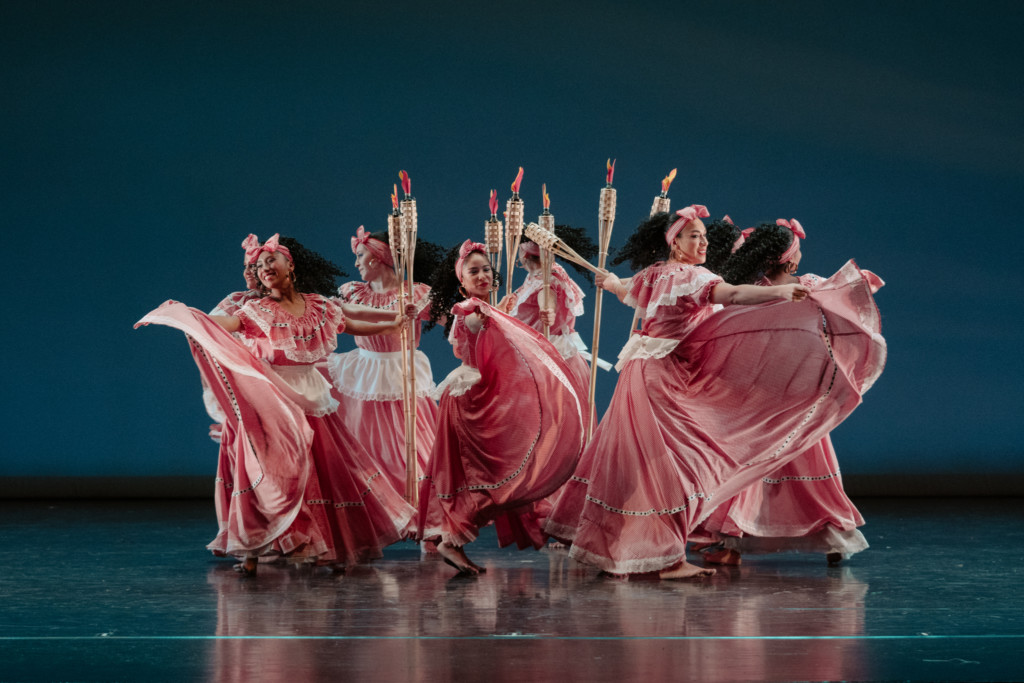
MANIFEST DIVERSITY
Representation has always mattered at RDT, from day one 60 years ago. For instance, RDT has performed the work of eight Black choreographers including Geoffery Holder, Manzell Senters, Donald McKayle, Bebe Miller, Tiffany Rea-Fisher, Natosha Washington, Ursula Perry and Justin Bass.
The theme for its 2018-2019 season was Manifest Diversity, to reinforce how the company has consistently prioritized this dimension of its overall mission. The season brought the world premiere works of Natosha Washington (Say Their Names) and Tiffany Rea-Fisher (Her Joy), which touched on contemporary issues and problems: the law enforcement brutalities of “stand-your-ground” laws and the celebration and respect for women’s body rights, respectively, in adept representations through their distinct dance movement language. Meanwhile, RDT’s male dancers and guest artists connected Donald McKayle’s Rainbow ‘Round My Shoulder from the 1950s — a fully realized narrative of a Southern chain gang – to the thematic imperative of dance’s timeless capacity to impart socially relevant messages.
Washington returned in 2023, developing and setting I AM…, which was a companion piece extending the provenance of her earlier work. Washington started the creative process, by reflecting upon the holistic body of experiences she has as a Black woman. As The Utah Review noted then, to describe the work as autobiographical is insufficient because Washington has opened up each section to allow the dancers to etch their own personality (and experiences with the themes she introduces throughout the evening) intoI AM… This is a brilliant meta composition about art, identity and the imprint of memories, place and history.
During the Manifest Destiny season, Mosaic was conceived, according to Smith, with the multitude of works selected to represent dance’s own primary colors.“People dance for all kinds of reasons – to mourn, to celebrate, and to heal,” she wrote then in the artistic statement for the concert. “To give thanks, to preserve cultural heritage and treasured legends. To demonstrate physical prowess, to assert individuality, to provoke … and to entertain.” And, it is in the dances of courtship, work, war and community that evolve through many generations, even as tribal societies and ethnic communities preserve their own ancestral traditions alive in the present day, she added.
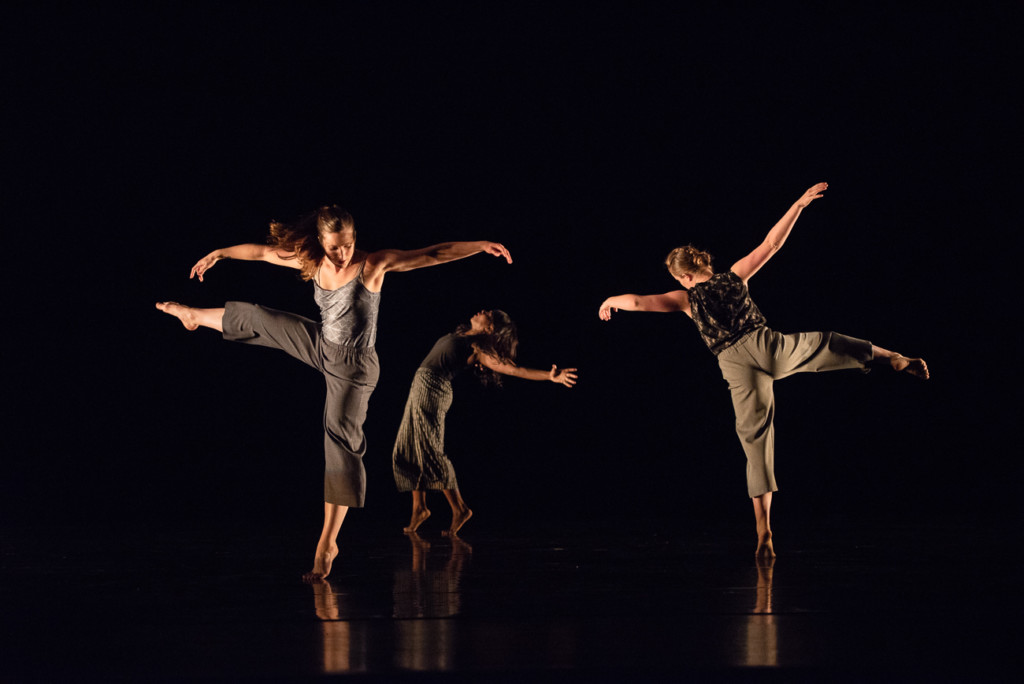
MOSAIC featured Native American culture, INFR Dance Troupe; Greece, Dionysios Dance; Cambodia, Khemera Cambodian Troupe; Okinawa, Okinawa Ken Jin Kai; Mexico, Ballet Folklorico de las Americas; Spain, Tablado Dance Company. and Polynesia, Malialole Dance Company. In its dance center, as well as its Link Series and contributions to Ring Around the Rose, dance cultures from every single continent have been variously featured.
In 2024, when RDT began its 59th season, it was the perfect start to highlight the then decade-long relationship in which RDT dancers have consistently taken so easily to the agile and physically vigorous spectrum of the Gaga movement language. The opening concert featured a trio of works by Noa Zuk, a choreographer who has been one of Gaga’s most prominent artistic ambassadors. RDT dancer Alexander Pham articulated a sentiment that company dancers over the previous decade have learned to appreciate about this particular movement language: “Working with Noa [Zuk] was one of those moments where you experience how someone’s lifelong commitment to their craft (Gaga) has informed their entire being and approach. She is so articulate in both her words and in her body that when she tells and shows you how to jump through space towards your partner as if you are shedding all the dust off your skin, you know exactly what she means and what sensation to continually search for. You always know what every movement should feel and sound like.”

For example, in Zuk’s By The Snake, which RDT commissioned in 2014, with the eight dancers paired off in couples, the work took on a polyglot character, by riffing off folk dance conventions and creating a new foundation for a contemporary ritual on the dance floor. The variety of Gaga movement the dancers display was just as impressive in Outdoors, a work that Zuk and Ohad Fishof, Zuk’s creative partner, initially restaged on RDT in 2019. Outdoors is based on a 15-second rhythmic ‘sentence’ that repeats itself 60 times in many variations. Tthe premise for Outdoors is simple: a concise rhythmic idea where the variations are represented by movement and sound. The work becomes a unique naturally occurring story every time it is performed. Outdoors suggests how the body feels when it is at its height of its physical capacities and capabilities but also finds ways to compensate and keep up the vigor, while the biological clock continues to tick toward its inevitable mortality. The Gaga movement language fit naturally for RDT.
CHARETTE, IRON CHOREOGRAPHER, REGALIA
In 60 years, RDT has never shied away from taking risks on stage. Likewise, RDT has embraced risks for its annual fundraiser in ways that few dance companies would dare attempt. In 2006, Charette was launched, in which guest dancers from the community worked with a choreographer to set a movement piece within one hour. Emboldened by Charette’s popularity, RDT took a cue from the popular Iron Chef television competition for its own version where guest choreographers were prompted to set a piece with “secret ingredients” of dance artistry and music. In 2016, for its 50th anniversary, RDT recast the fundraiser as Regalia, where four choreographers had four hours to create their own short dance composition. Audience members voted with their wallets to select which choreographer would win a commission for a full premiere in the next RDT season.
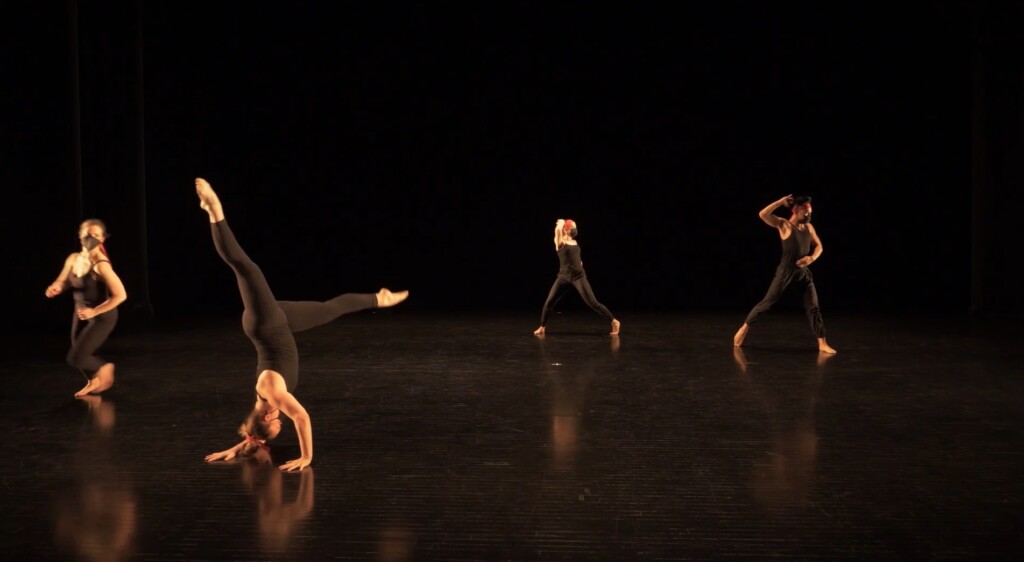
In 2024, RDT opened the doors to the community for its newest version of Regalia — So You Think You Can Choreograph. Making their debut as choreographers were a local restaurateur, a worker’s compensation and disability attorney, a retired radiologist who has attended RDT events for more than 50 years, a teacher who leads classes for refugees and their families resettling in the area, and a University of Utah academic program coordinator. It was so successful that it reprised the format in 2025: Making their debut as choreographers included the mother of one of RDT’s current artistic leaders and one of the event’s hosts and whose profession is as a life coach, therapist and social worker. Others were a Qigong instructor and registered nurse who was the mother of one of the current RDT dancers; psychotherapist and relationship expert and an artist and jewelry designer.
At the time, Smith said that while every edition has been a success for its biggest annual fundraiser, it is always on their minds to keep it fresh. But Regalia also has been about showcasing not just what audience members have come to expect from the productions staged every season but also about its statewide Arts-in-Education programs; the RDT Dance Center on Broadway which offers classes and workshops on every imaginable form of dance, and a major foundation of community projects that frame dance as a lifetime activity, which anyone, regardless of age, dance experience or ability, can pursue.
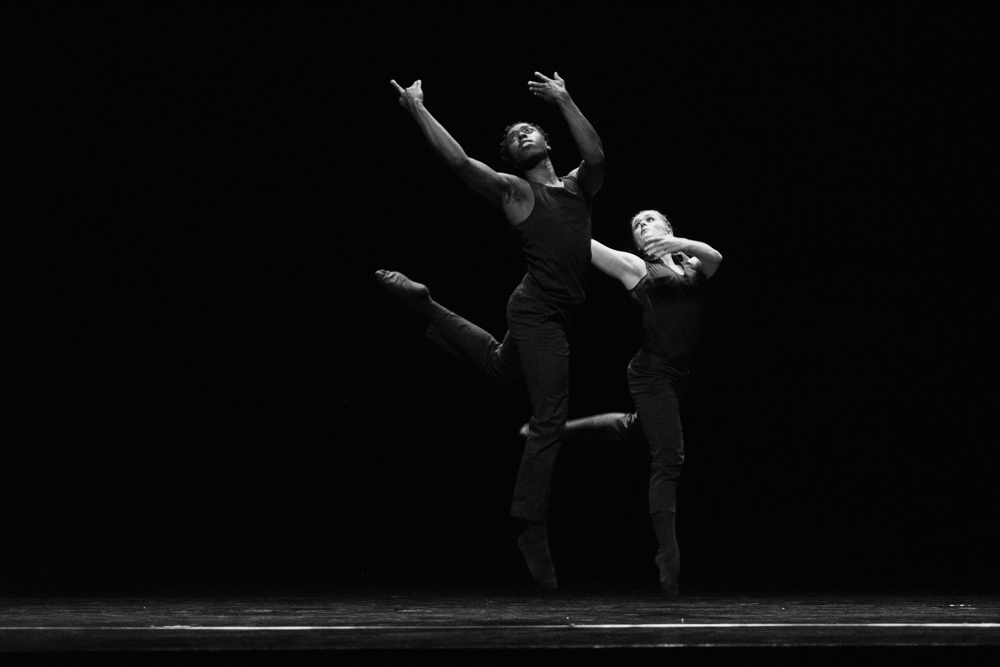
ALUMNI
Many RDT alumni have gone on to careers dancing elsewhere as well as choreographers and teachers. Among them are several alumni who typify the impact that RDT made on their career. Francisco Gella has had an award-winning career as a dancer and choreographer who has traversed the fields of modern dance and ballet in many of the nation’s best known performing arts settings. Gella was born in the Philippines and came to the United States at the age of 11. He came to RDT in 1996, his first professional experience after earning his bachelor’s degree in dance from the University of Washington in Seattle. “It was the most amazing experience and Linda [Smith] truly believed in me,” said Gella, who has run Francisco Gella Dance Works since 15. “There is no question it prepared me for the rest of my career.”
In an earlier interview with The Utah Review, Gella said he will always be grateful for the roles Smith entrusted him to perform. These included works by internationally known choreographers who are essential to the dance archive RDT has created, such as Bill Evans, David Parsons, Lynne Wimmer, Elizabeth Waters and others. He considered his most memorable RDT performance to be the 1998 full-length premiere of Chairs, choreographed by Gotheiner,Indeed, Chairs electrified the community both among dance artists and audience members, and every performance sold out the house in the Rose Wagner Center for Performing Arts.
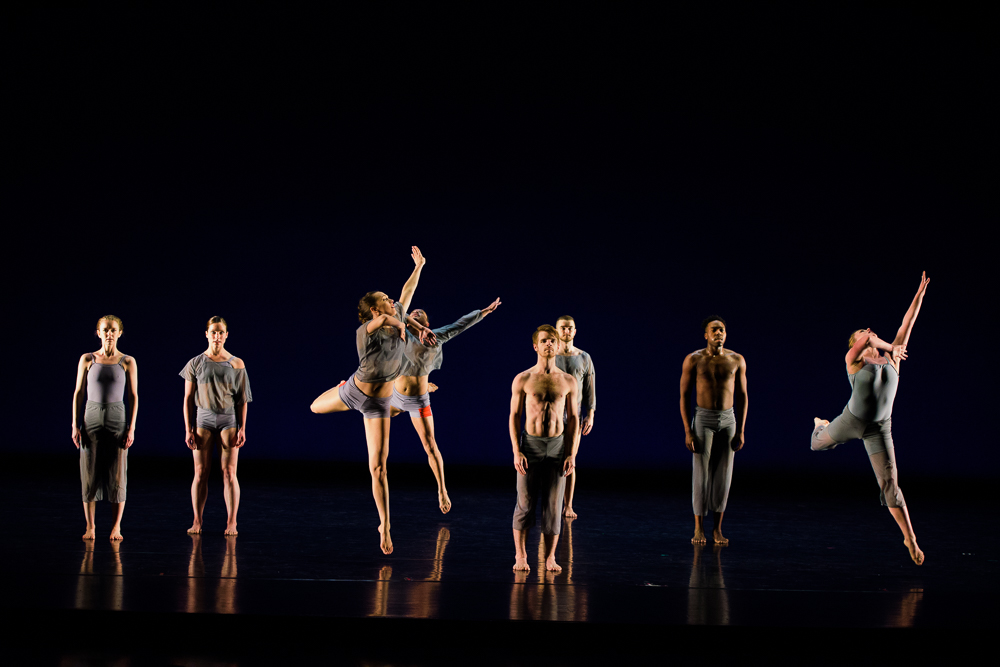
Many of RDT’s alumni dancers came to the company on many different paths. One was Angela Banchero-Kelleher, who did two stints as a dancer with the company, first from 1985 to 1992, and then again from 1998-2007. Now professor of modern dance at Utah Valley University, Banchero-Kelleher’s earliest RDT experiences were in the old army barracks at the University of Utah campus where scores of students, including many who were not necessarily destined to be professional dancers, paid to take six-week summer workshops in the art. By the time Banchero-Kelleher had finished her first stint with the company, the barracks had been demolished and RDT moved into temporary headquarters in downtown Salt Lake City. In 1997, just right before she began her second stint with the company, RDT had a new home in the Rose Wagner Center for the Performing Arts.
However, for Banchero-Kelleher, the clearest and most important memories have always been the works and their choreographers. “RDT was and is populated by the giants of the field,” she said in an earlier interview with The UtahReview. The repertory archive had grown from the early works of choreographers such as Limón, Sokolow and McKayle and those of independent artists – the bread-and-butter of RDT’s unique ‘artistic democracy’ – including John Butler, Geoffrey Holder and Glen Tetley. Banchero-Kelleher remembered works such as Laura Dean’s Sky Light and the early masters including Merce Cunningham and Doris Humphrey.
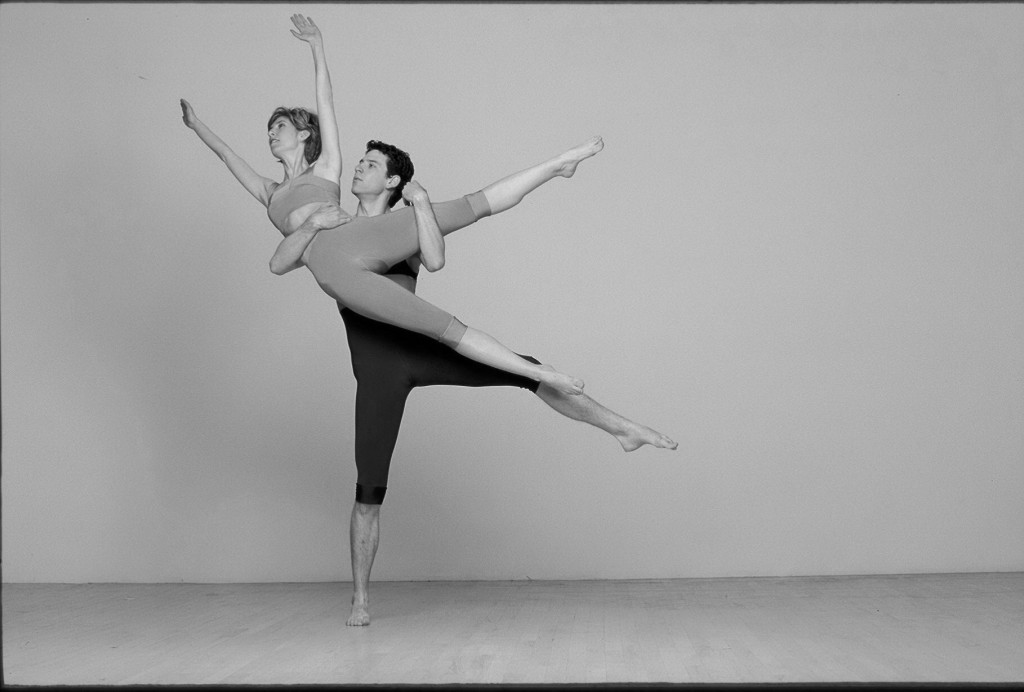
The immersion guided Banchero-Kelleher’s craftsman-like approach to choreography. “Looking at a Doris Humphrey piece, I figured out how that piece worked. And, I got great advice from people like Lynne Wimmer [choreographer and RDT dancer from 1968-1977]. I learned to ask questions that a dancer normally would not be asking but it helped me realize how important it is for dancers to like the work they are performing.”
An associate chair and professor of dance at Sam Houston State University and co-artistic director of NobleMotion Dance, Andy Noble came to RDT, on the recommendation of one of his professors, Lynne Wimmer, who had danced and choreographed for RDT during the late 1960s and 1970s. “I started very late and I had not taken a formal dance class until I was 19,” Noble said in an earlier interview with The Utah Review, who originally had started out in hip-hop and breakdancing. “I was sweating bullets during the audition and Linda [Smith] was very intimidating.” Noble, whose family was active in creative pursuits especially as writers, is grateful that Linda took a chance on him. “There was so much work with so many different types of artists including many of the historically significant legends of dance,” he recalled. “I adored it. It was pure joy.”

Like Noble, David Marchant had only started formal dance training in college. “I was a very young and green dancer,” he says, when he arrived at RDT in 1989. “It was two solid days of auditions with Linda and others staring at me. She said, ‘look, you’re very inexperienced but we need men.’ She took the first risk with me and I would not have this life without being at RDT. I am honored to come home and share what I have grown into.” Marchant, incidentally, was in the company when RDT celebrated its 25th anniversary in 1991. Today, David Marchant is professor of the practice, on the faculty of Washington University in St. Louis since 1994, specializing in aesthetic theory, technique, composition and improvisation in the concert art of contemporary dance. He is the coordinator of the School of Continuing & Professional Studies Somatic Studies Certificate Program at Washington University, offering students a curriculum in integrative movement practices, complemented by theoretical knowledge from a wide variety of fields investigating the art, spirit, and science of human movement.
Marina Harris, who eventually moved to Canada, was associated with RDT for any years. “I believe it was in 1968, when I was a student, I did some sewing for the new and thrilling RDT,” she explained in an earlier interview with The Utah Review. “And then, I think, it was in 1974 that I moved back to Salt Lake and called up Kay Barrell, the lighting designer and colleague from the theater department in student days, to see if RDT needed a costume person.”
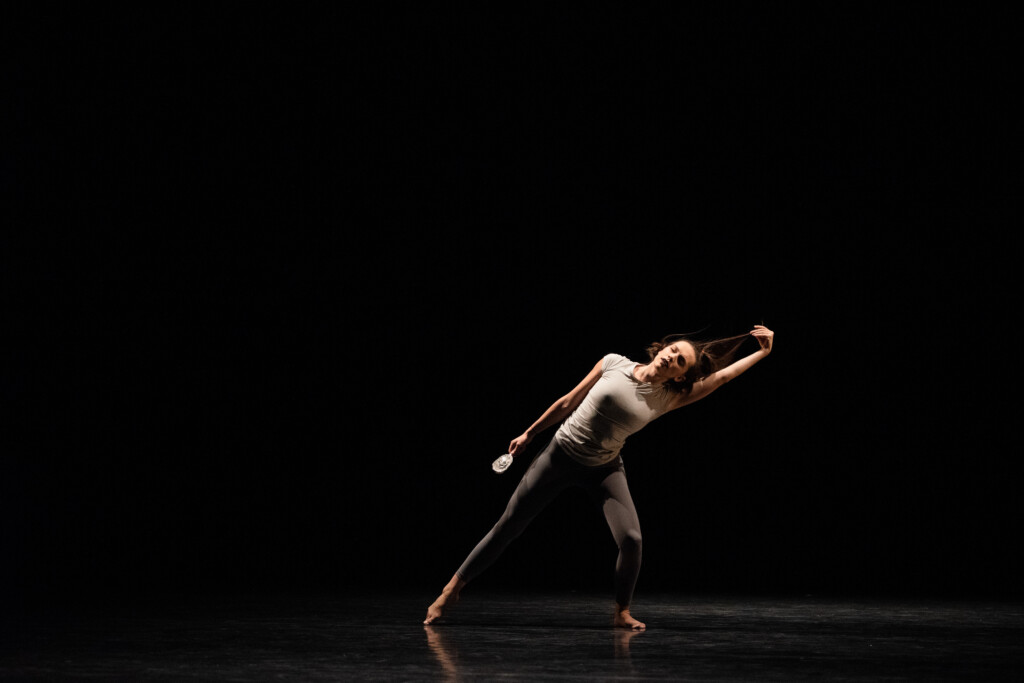
Most of RDT’s early choreographers – trying to be as budget conscious as possible – dressed their works with clothing from thrift stores around the area. “Shopping for theater work at thrift stores isn’t my forte,” Harris recalled. “And Arnie [Zane] perked up when he realized that he could probably get anything he wanted. That there was actually a costume budget. I’m pretty sure the costumes were all about ideas Arnie had been accumulating: a tutu over jodhpurs, a long skirt on a guy. It was fun coming up with the pieces of wardrobe and I was relieved of the responsibility of furthering a message.”
From 1976 to 1996, Harris was RDT’s costume designer but she also started doing choreography, initially incorporating her own experience as a ballet dancer. Harris adds that she had taken only one modern dance class in college but took an additional class when she started choreographing works for RDT. Harris, who learned Spanish, Brazilian and Russian dance as a child, said that she loved any form of dance (she particularly admired Margot Fonteyn and George Balanchine) and she approached her work as a “magpie” and “dilettante.” She added, “albeit a pretty disciplined dilettante, a dilettante in the sense of hard working nonspecialist.” Harris also worked with Company X Puppets, a puppet theater that also included two other RDT alumni, Melinda and Ford Evans. Kip, Harris’ husband, handled the photography, video editing and power tools.

TIME FOR CELEBRATION
Joining institutions such as Ririe-Woodbury Dance and Ballet West, the founding artists of Repertory Dance Theatre became cultural ambassadors for the American West in helping to cement Utah’s place as one of the nation’s most important centers for dance.
In between pieces in RDT’s sensational Ovation production last November, Nicholas Cendese, a former RDT dancer who is now executive/artistic co-director for the company, talked briefly about the company’s 60th anniversary as an occasion to celebrate its “luminous pinnacle.” Indeed, this phrase encapsulated the astonishing quintet of commissioned works, including two gorgeous world premieres, which comprised an extraordinary choreographic production of thanksgiving. Ovation produced an endless string of beautiful emotions, many inducing goosebump effects and tears in more than a few instances— which precisely always has been the power of modern dance.
Dear Les,
This is a marvelous article. Thank you so very much!
Mary Ann Lee, Tanner Dance
Dear Les,
This is a marvelous article.
Thank you,
Mary Ann Lee