
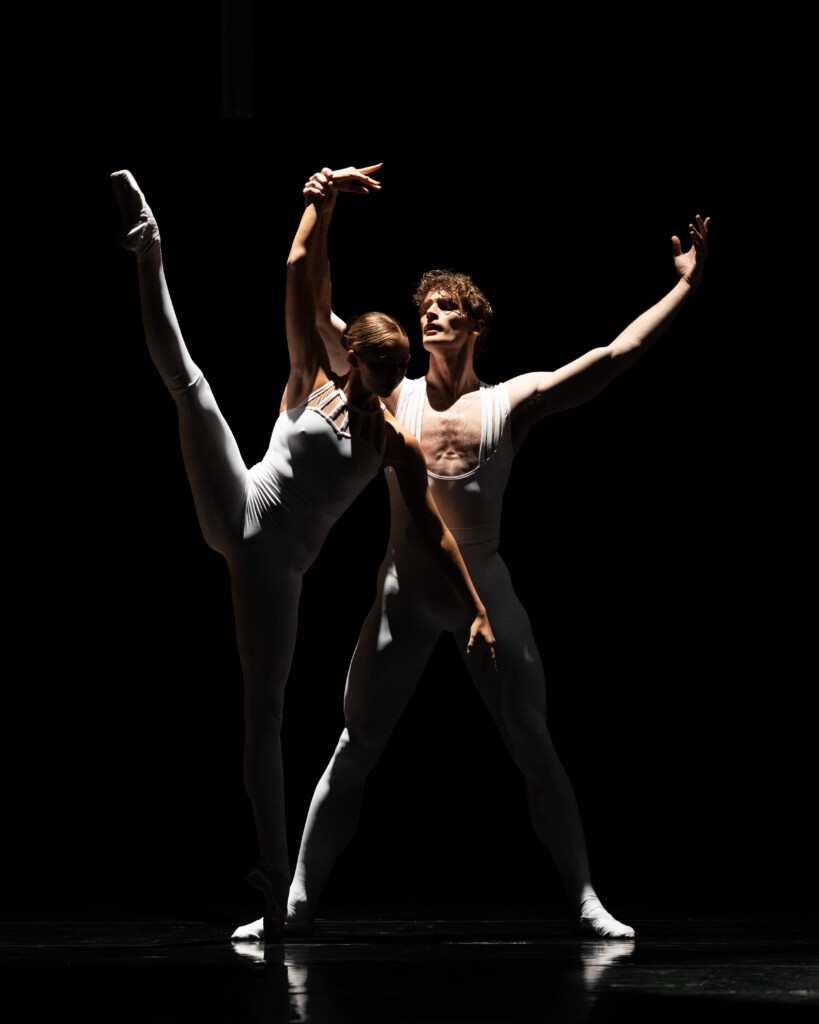
There is purity of expression in each of the five works in Ballet West’s Rolling with the Stones production.
The cathartic communal movement in the Utah premiere of Ulysses Dove’s Dancing on the Front Porch of Heaven speaks volumes about the rite of passage in grief, blocking out the usual hushed voices that cloak death and open expressions of mourning as social taboos.
Dove’s choreography is stunning, with movement wholly synced with the prolation canon (framed in silence per the composer’s instruction) in the accompanying music of Arvo Pärt’s Cantus in Memory of Benjamin Britten. Discussing the genesis of this composition, Pärt said, “It is the clarity of the order that we all perceive consciously or unconsciously, so that it creates in us vibrations, a kind of resonance. Isn’t that the mystery of music, of all kinds of music?”
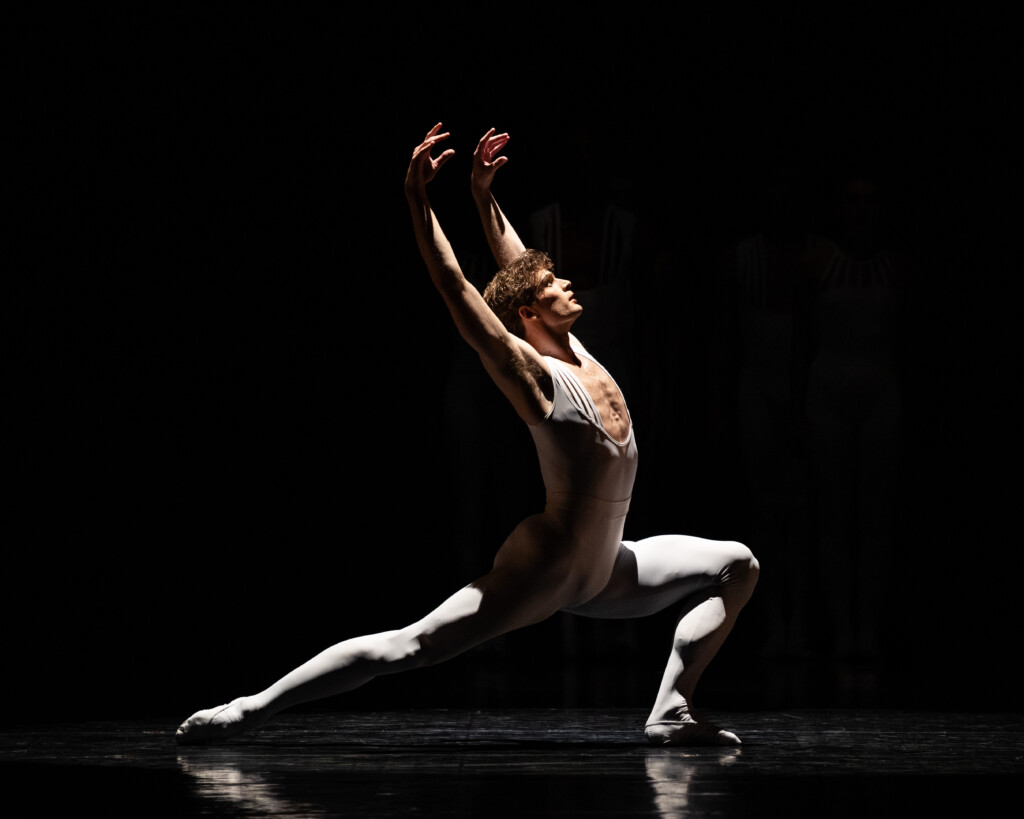
This is replicated precisely on the Ballet West stage. The sextet of dancers (on opening night, Katlyn Addison, Dominic Ballard, Maren Florence, David Huffmire, Rylee Ann Rogers and Loren Walton) restores the venerated ancestral practices which made the passage of death feel natural and customary. Watching Dove’s extraordinary piece and listening to the tolling of bells, we remember those who have passed on, realizing that they are not as far away as we have been led to believe. Dove’s work liberates us from the implicit reserve of our social contract that has restrained profound emotional expressions because they are seen as unbefitting.
The purity of intimate emotions in couples is manifested in a set of three pas de deux works, with two by Christopher Wheeldon (both Utah premieres) and the third by Ben Stevenson.
The first Wheeldon piece is Je ne t’Aime Pas (featuring the 1934 song by Kurt Weill of the same title). The pas de deux, which is an excerpt from the choreographer’s longer work There Where She Loves, is based on a song suited for a glamorous cabaret star. Soprano Jin-Xiang Yu, with intense emotions and theatrical storytelling of a breakup imbued in her interpretation, and pianist Emily Barrett were superb.
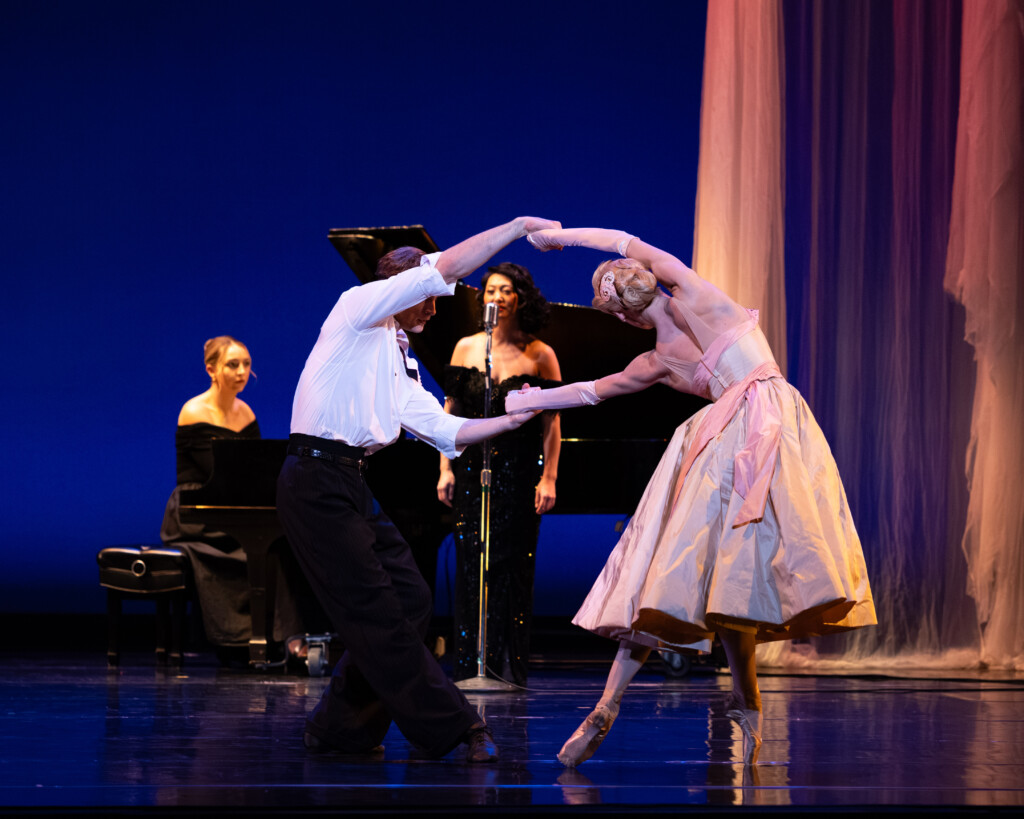
Ballet West. Photo: Lauren Watttenburg
As noted in The Utah Review’s preview, Wheeldon is a master choreographer of partnering. Nicole Fannéy and Dominic Ballard are dynamite, their performance matching exactly the expressive rubatos which occur in the song (with verses such as “pull back your hand,” “do not give me your handkerchief,” and “no, be silent instead. I’m on my knees. The fire is out, the door is shut.”) This is the mother of artistic expressions of romantic breakups.
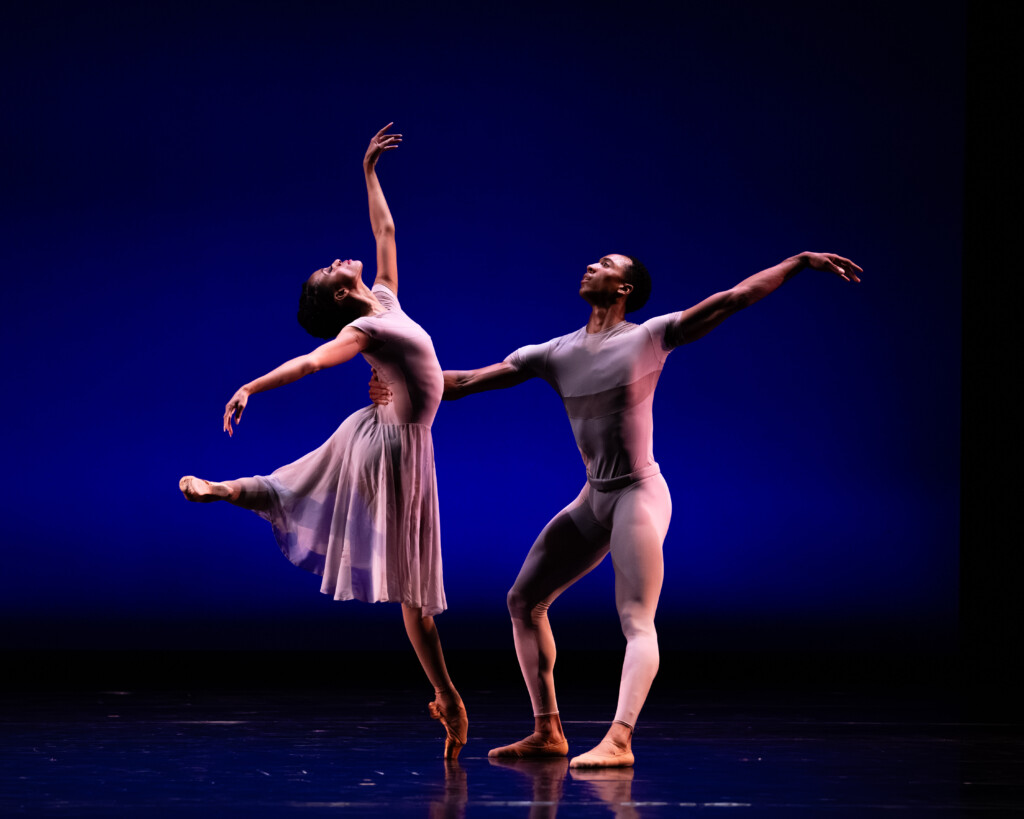
Wheeldon’s second featured pas de deux is This Bitter Earth, premiered in 2012 as part of a larger work. Katlyn Addison and Loren Walton eloquently evoke the interplay of poignant emotional counterpoints of heartbreak and the sorrowful toll on those who have experienced discrimination and marginalization which alternate with resilience and hope.
Just as Dove and Stevenson potently displayed in their works, Wheeldon is eminently conscientious of the emotional stakes in the selected music. It emerges from the ingenious mashup of the song of the same title which Clyde Otis wrote and Dinah Washington covered in a definitive recording and Max Richter’s luminous music On the Nature of Daylight, which was heard in the 2010 film Shutter Island.
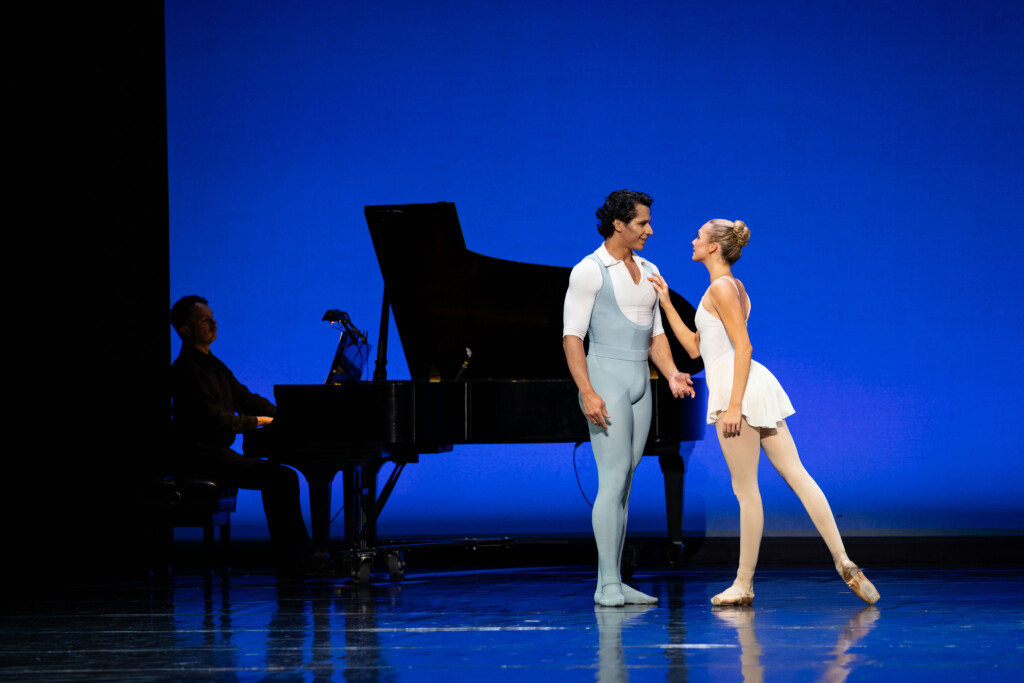
In between the Wheeldon works, Ballet West restaged Ben Stevenson’s Three Preludes, an exceptional artistic statement of ballet’s potential for pure expressions of love and joy. The piece is set to three Rachmaninoff piano preludes (Opus 23, no. 1 and Opus 32 nos. 9, 10), played beautifully as miniature tone poems by Jared Oaks, music director of the Ballet West Orchestra. A triptych of a relationship that starts tentatively, then blossoms and finally endures in joy, the piece opens with the dancers using the ballet barre. On opening night, it was immediately clear to see Rylee Ann Rogers and Hadriel Diniz feel at home on stage, beginning a performance exactly as they do every day warming up for rehearsals in the studio.
The kinetic conversation between pianist and the couple is flawless, as Rogers and Diniz follow the trajectory from the hesitant yet hopeful initial embrace of love to the budding assurance in their relationship and finally the unbridled joy of having experienced life together. In the Ballet West family, a good number of lasting relationships have been created in much the same way. Stevenson’s work is the balletic avatar of this experience.
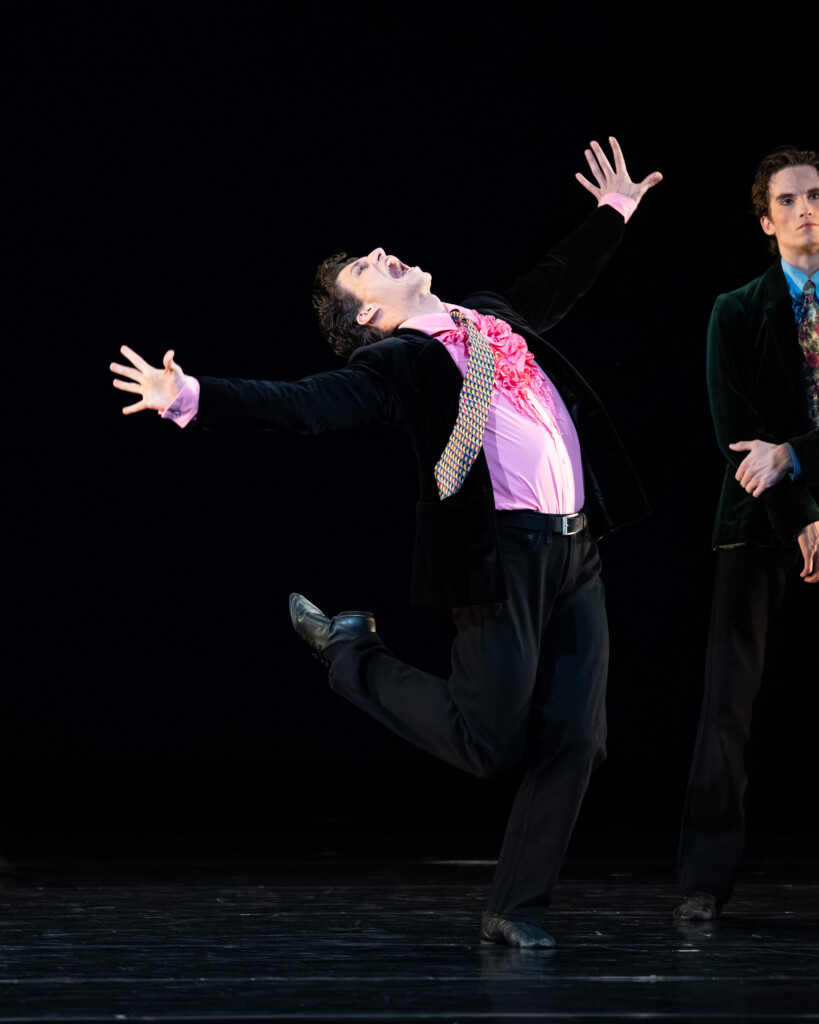
The headlining work, Christopher Bruce’s Rooster is a cavalcade of pure romp, swagger, flirtation, rejection and social independence, marking the dramatic sociocultural shifts in the dating game of the early and mid-1960s. The 1991 work is set for ten dancers (five male and five female), but more often than not, the men get the spotlight, starting with the strut of roosters and ending with the intractable ‘boys will be boys’ vibe in the final section. The choreography lines up with eight Rolling Stones songs from the early period of their catalogue: Little Red Rooster, Lady Jane, Not Fade Away, As Tears Go By, Paint It Black, Ruby Tuesday, Play with Fire and Sympathy for the Devil.
Special mentions go to two dancers who also have some of the sharpest theatrical skills in the company: Jonas Malinka-Thompson shines in Not Fade Away, a 1957 song co-written by Buddy Holly which the Stones covered in 1964. He promenaded and pranced just like the young Mick Jagger of the 1960s, then a hyper-animated acrobatic frontman for the band. In Paint It Black, written by Jagger and Keith Richards, Bruce’s best fusion of ballet and pop rock is effectively captured by William Lynch who channels the song’s psychedelic, hypnotic emotions along with the meaning of the most depressing lyrics in this particular song.
Three performances remain this week for this impressive production that artistic director Adam Sklute personally crafted as an intimate statement of his creative journey which includes his final and 20th anniversary season with the company. For tickets and more information, see the Ballet West website.