

EDITOR’S NOTE: The Utah Review will publish a daily diary about the Gina Bachauer International Piano Foundation’s International Junior and Young Artists Competitions, which are running June 14-27. Follow this link daily through June 27, as we cover both rounds and the final round of the young artist portion of the competitions, which will include performances with the Utah Symphony. For more details about the 32 pianists in the young artist category, see our comprehensive profile feature here.
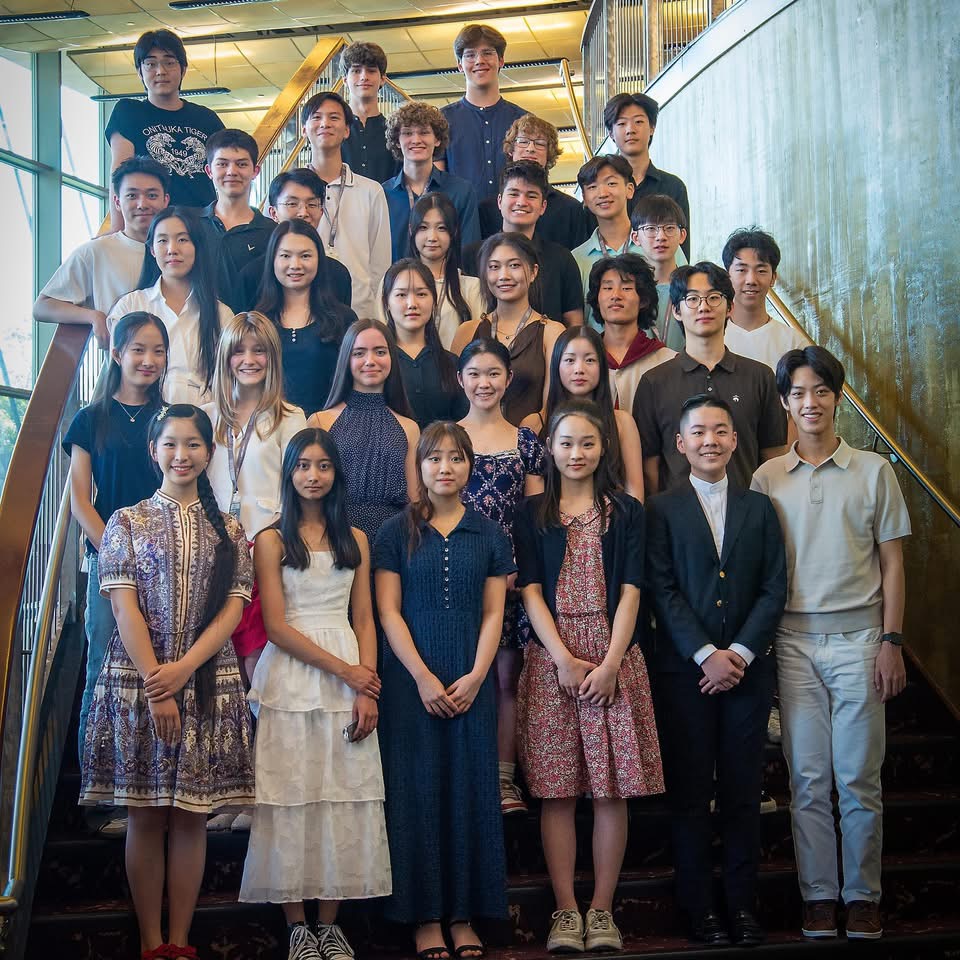
JUNE 27, 2026
WINNERS
GOLD MEDAL: Cash Award of $15,000: Ziyu Shao, 16, China
SILVER MEDAL: Cash Award of $10,000: Eunha Basu,16, U.S.
BRONZE MEDAL: Cash Award of $5,000: Jaeyong Lee, 17, South Korea
FINALIST PRIZE: $3,000 Cash Award (to each of the remaining two finalists): Yichen Sang, 17, China; Matthew Chang, 17, U.S.
SASCHA GORODNITZKI FOUNDATION DISCRETIONARY PRIZE: Cash Award of $1,000 at Jury’s discretion to a non-finalist: Ryusei Kobayashi, 15, Japan
JUNE 26, 2027
PREVIEW OF FINALS
Tomorrow (June 27), starting at 7 p.m., each finalist will perform a movement from a concerto with the Utah Symphony, led by distinguished guest conductor Kevin Fitzgerald.
The seven-member jury will then determine the winners:
GOLD MEDAL: Cash Award of $15,000
SILVER MEDAL: Cash Award of $10,000
BRONZE MEDAL: Cash Award of $5,000
FINALIST PRIZE: $3,000 Cash Award (to each of the remaining two finalists):
SASCHA GORODNITZKI FOUNDATION DISCRETIONARY PRIZE: Cash Award of $1,000 at Jury’s discretion to a non-finalist
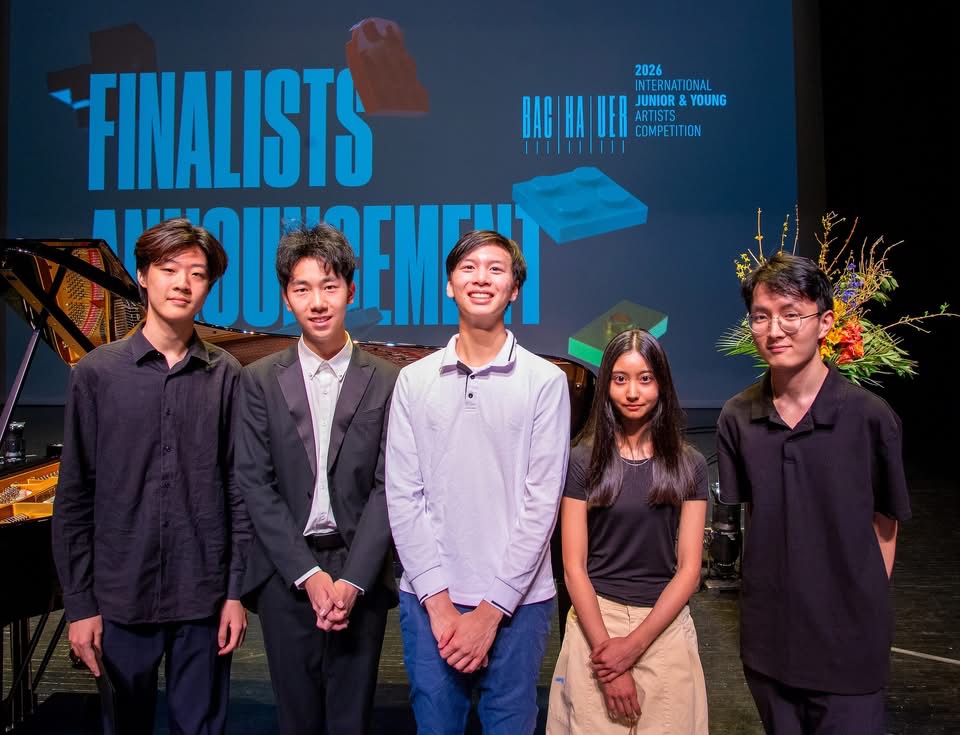
The five finalists are:
Eunha Basu,16, U.S.
Tchaikovsky: Concerto No. 1 in B-flat Minor, 1st movement
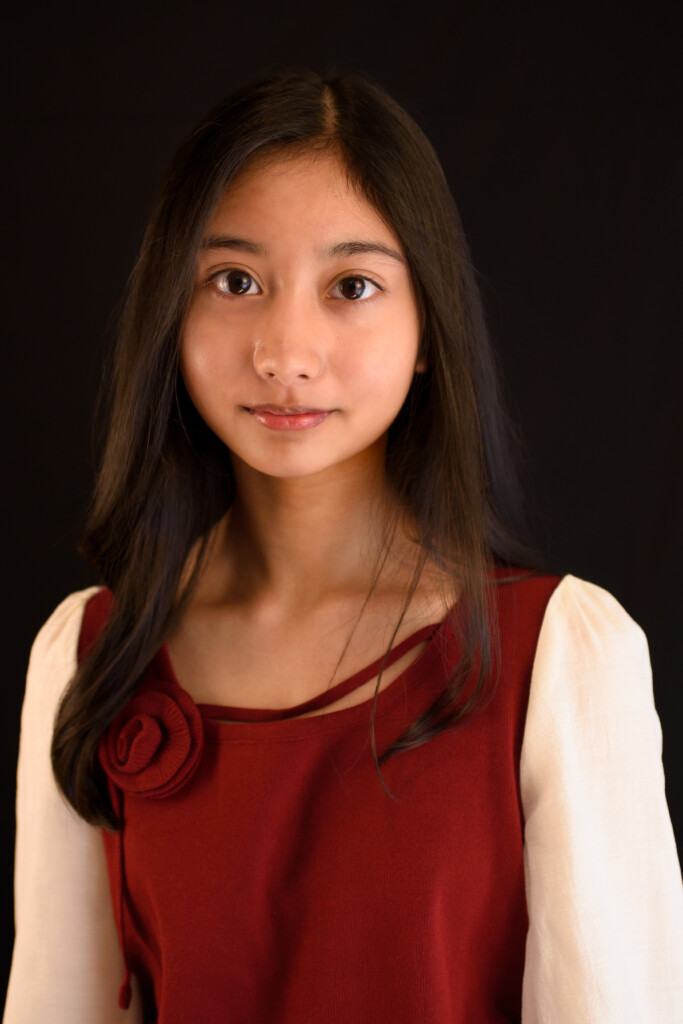
Recent concerto performances: Fort Worth Symphony Orchestra (2025); Brockton Symphony Orchestra (2026). Recent competitions: Kaufman Music Center International Youth Piano Competition (2024)New York City, USA: First Prize; Rosalyn Tureck International Bach Piano Competition (2025) New York City: First Prize, Tureck Prize; National YoungArts Competition: Classical Music (2025 and 2026) Miami: Winner.
Jaeyong Lee, 17, South
Liszt: Concerto No. 1 in E-flat Major
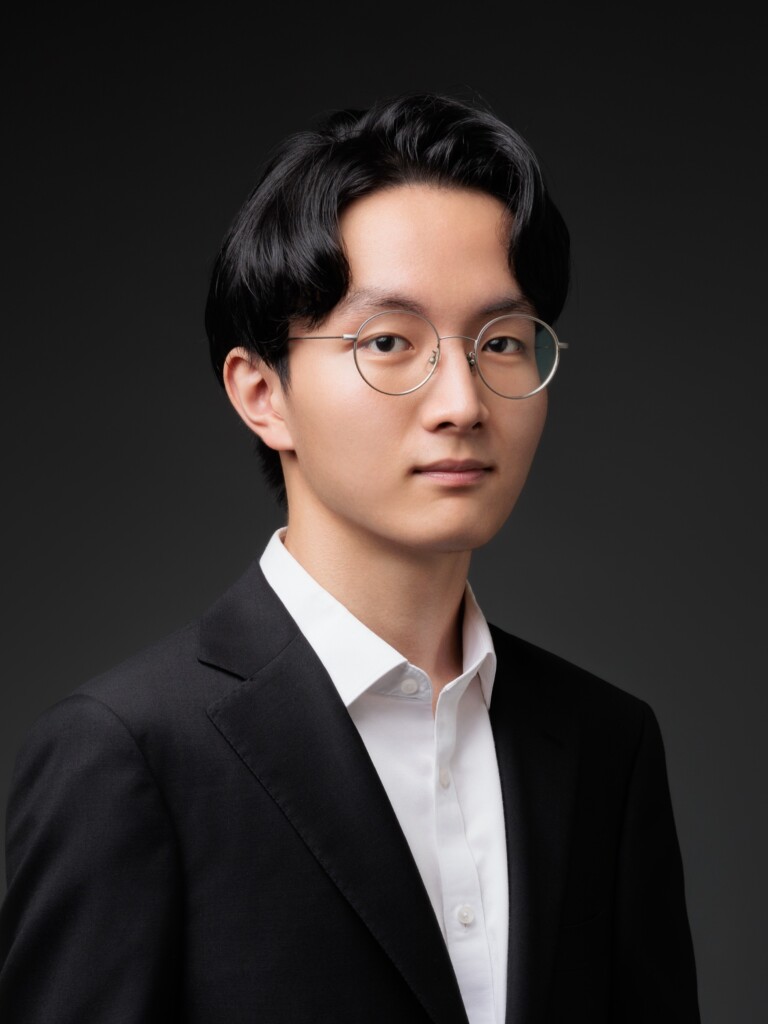
- ROLE MODEL: I have always greatly admired my teacher, Ms. Chiao-han Liao and have long considered her as my role model. Whether in a lesson, a concert, or a daily conversation, she leaves me with something incredibly meaningful. The way she talks about music and life continues to shape and inspire me as both a musician and a person. I hope to grow into a great artist like her one day.
- MOST MEMORABLE PERFORMANCE: I believe that the recital I gave last year at the Kumho Art Hall Yonsei was the most memorable one for me so far. Not only because it was an opportunity after a competitive audition process, but also that the program reflected where I was artistically at the moment. I was especially thrilled to be able to play Brahms’ First Piano Sonata, a work that I found incredibly close to my heart.
- OTHER MUSIC TO ENJOY: Alongside classical music, I enjoy listening to jazz. I was first introduced to the genre by a close friend and I was immediately fascinated by its distinct rhythm and harmonies. I also like how everything seems to be so spontaneously done. For educational purposes, I find it a great thing to listen to as well, since it offers a fresh and creative perspective on how certain expressions could be made.
- HOBBIES: I enjoy meeting new people, especially those whose backgrounds are different from my own. Even as an introvert, I find it valuable and exciting to connect with people from various cultures and experiences, observing how they express themselves and communicate with others. These encounters not only help me gain understand of the world around me but of myself and my perspective as well.
- ADVICE FOR STUDENTS: When it comes to preparing a piece of music, I have learned that the most important thing is to trust your instincts. While it is essential to carefully study the music, I believe that the authenticity is what matters the most. When an artist remains true to their artistic conviction, certain things would be reflected in the sound they produce.
Yichen Sang, 17, China
Rachmaninoff: Rhapsody on a Theme of Paganini
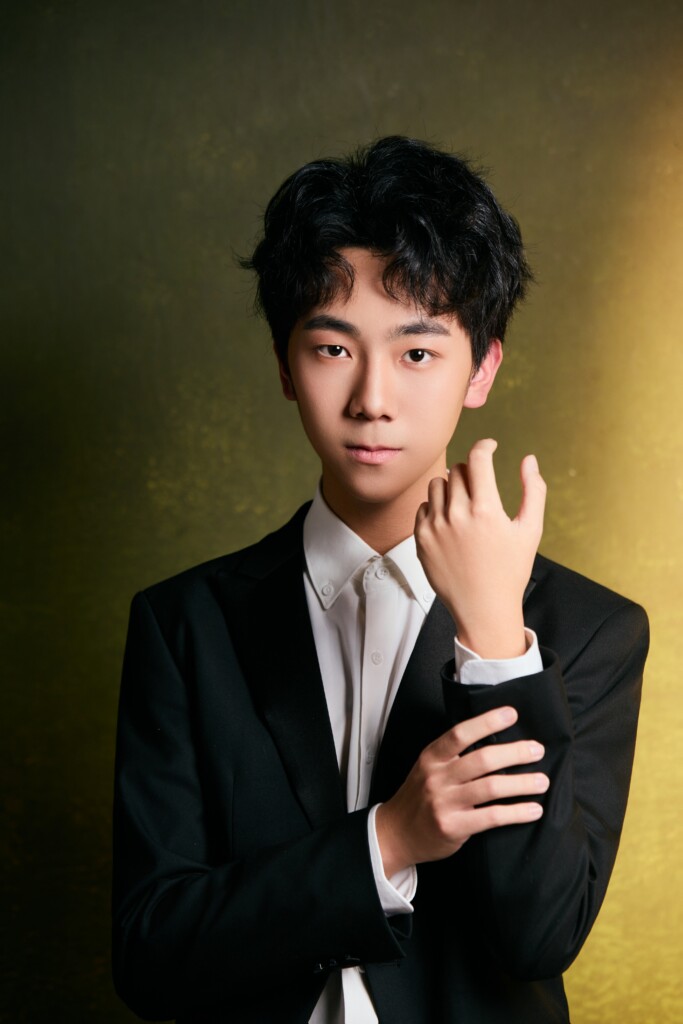
- ROLE MODEL: Sergei Vasilyevich Rachmaninoff, Alfred Cortot, Dinu Lipatti, Vladimir Horowitz
- MOST MEMORABLE PERFORMANCE: I gave my first solo recital when I was seven. It was during that performance that I truly felt the magic of music—the connection with the audience, the ability to share my thoughts and emotions through sound, and that profound, heartfelt joy. That experience was so powerful that it motivated me to commit myself to serious practice from then on.
- OTHER MUSIC TO ENJOY: Rhythm and blues, Jazz, popular music
- HOBBIES: I love writing fantasy novels, playing table tennis.
- ADVICE FOR STUDENTS: To be relaxed is the most important thing.
Matthew Chang, 17, U.S.
Chopin: Concerto No. 1 in E Minor, 1st movement
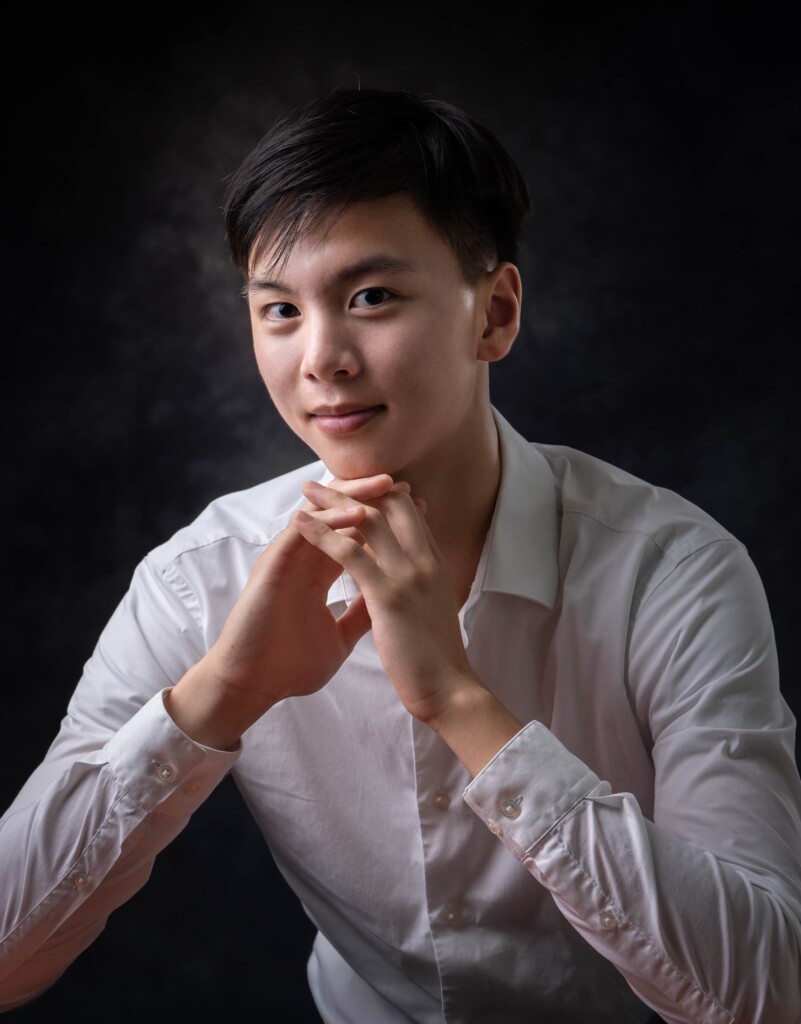
- ROLE MODEL: Bruce Lee! 🙂 If you require me to mention a pianist, then I would say Krystian Zimerman.
- MOST MEMORABLE PERFORMANCE: Performing in Debrecen, Hungary was an amazing experience. Not only the concert itself, but the atmosphere, food, and people all contributed to my experience in Hungary being an extremely special one.
- OTHER MUSIC TO ENJOY: Not much! I like to listen to the occasional J-pop (aka city pop)! 🙂
- HOBBIES: I play varsity tennis in my high school, have a third-degree black belt in both shotokan karate and itf taekwondo, and love training mma! I’m also very interested in neuroscience, especially regarding the relation between music and the brain.
- ADVICE FOR STUDENTS: About practicing: Most of the time, you have to LOVE practicing. If you practice for the sake of others or other things (say a parent, or an external motivator, such as a competition), you will NOT succeed. LOVE practicing. However, once in a while you’ll feel drained, or even bored of it. It’s imperative that you continue, as getting over that hurdle of mental stagnation will make you even stronger (and perhaps even more appreciative of music-making). About learning a new piece of music: Love your new piece! Try to pick a piece that really interests you! 🙂
Ziyu Shao, 16, China
Rachmaninoff: Rhapsody on a Theme of Paganini
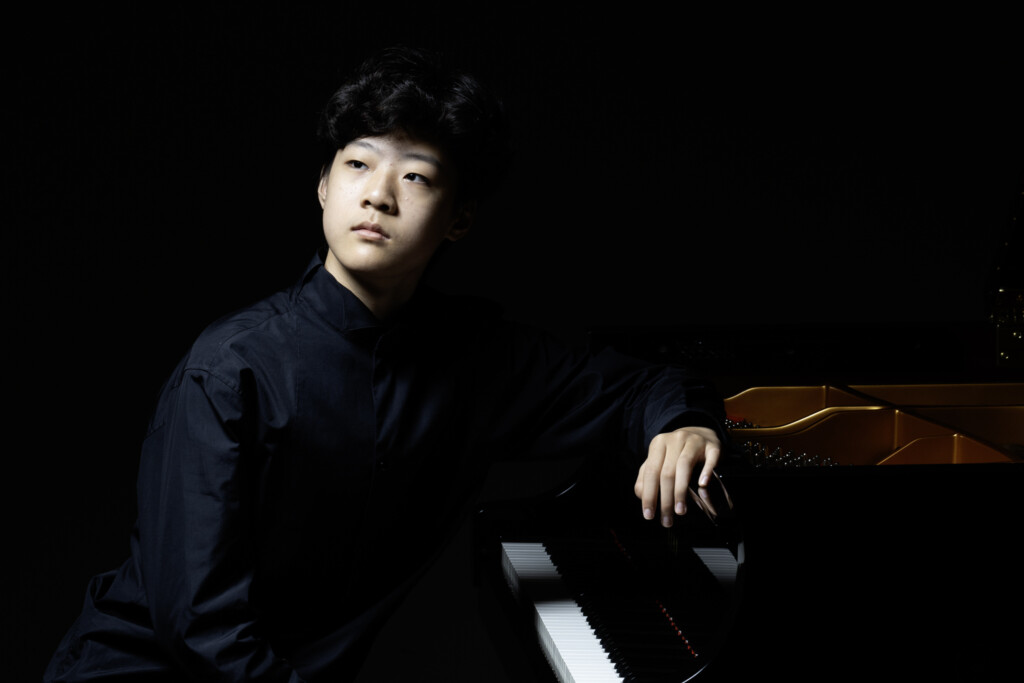
- ROLE MODEL: My parents are musicians, and they were a huge source of inspiration to me throughout my childhood. I grew up sitting in the audience listening to their performances, and that experience made me fall in love with music instantly.
- MOST MEMORABLE PERFORMANCE: Two years ago, I performed a concerto with an orchestra in the Grand Hall of the Moscow Conservatory. It was an unforgettable experience for me because, during the second movement, the lights suddenly went out while I was playing. I consider it an invaluable experience, especially for an artist and concert pianist. I am deeply grateful for what this extraordinary moment taught me.
- OTHER MUSIC TO ENJOY: In my free time I like to perform jazz.
- HOBBIES: I love sports, especially taekwondo and swimming. I also love traveling and cooking.
- ADVICE FOR STUDENTS: For me, learning a new piece is like entering the inner world of the composer. Beyond technique, it requires historical understanding, imagination, and the ability to uncover the deeper emotions and symbolism hidden in the music.
JUNE 25, 2026
EVENING SESSION
After the four remaining pianists performed this evening, the jury will deliberated and selected the five finalists who will play Saturday, June 27, beginning at 7 p.m., in Abravanel Hall. Each finalist will perform a movement from a concerto with the Utah Symphony, led by guest conductor Kevin Fitzgerald.
The five finalists are:
Eunha Basu, 16, U.S.
Jaeyong Lee, 17, South Korea
Yichen Sang, 17, China
Matthew Chang, 17, U.S.
Ziyu Shao, 16, China
Sunny Ritter opened her program with Beethoven’s 15 Variations and Fugue in E-flat Major, op. 35 (Eroica), which is based on the theme in the finale of the famous symphony (which was played earlier in the week by Yau-Nam Ng). By the second variation, Beethoven had already ratcheted up the technical demands significantly. The challenge is that each variation is unique in character in which the pianist must determine how to flex the tempo without sacrificing overall consistency in the work’s musical architecture. Meanwhile, in the fugue, as heroic as it is, the pianist should avoid the temptation to play it quickly and only fortissimo. Ritter followed with a waltz from Prokofiev’s opera War and Peace, op. 91 (1941–52) in a transcription by Nathan Perelman. The transcription softens Prokofiev’s style by giving the waltz sweeping elegance while preserving the dramatic context of the ballroom scene in the original set in St. Petersburg where A New Year’s Eve Ball is held. She concluded with Marc-André Hamelin’s Toccata on L’homme armé. The Toccata, commissioned for the 2017 Van Cliburn International Piano Competition, is based on a warlike secular song dated to the Burgundian School of the Middle Ages. This work is among the most dynamic fortissimo pieces a pianist could possibly play for a competition, which fit in with the heroic theme embedded in Ritter’s program.
Riko Ando was the sixth pianist today to include Schumann in their program. This suggests a good number of competitors believe that playing Schumann could prove convincingly that they are more than capable of handling the complex expressive nature inherent in a work such as Kreisleriana, Op. 16. Composed in 1838, the work sets the virtuosic stakes from the fiendish get-go and never looked back through all eight movements. It sets up contrasts of crystal clear whirlwind force with the elegant musical latticework that pops up in various spots throughout the work. Key is the rhythmic control, especially in the third movement, which is marked by a triple rhythmic pattern that challenges the pianist not to let it be obscured in interpretation. Ando was aware of giving her most sensitive attention to Kreisleriana, in many moments. She concluded with Prokofiev’s Scherzo in A Minor, the final movement from Ten Pieces, op. 12. He wrote these lighthearted pieces when he was still a student at the St. Petersburg Conservatory. Constructed almost like an etude, it is moto perpetuo which starts pianissimo and steadily grows to its fortissimo. Even in this early work, the signature characteristics of his mature composing vocabulary had taken hold, which would soon after also appear in Visions Fugitives, a work that also has been heard a couple of times this week during the competition.
Ziyu Shao turned to a lesser known Liszt work for his opener: Ballade No. 2 in B Minor. It is based on the mythological tale of romance between Hero, a priestess of Aphrodite who lived on the European side of the Dardanelles, and Leander who swam the Hellespont every night to be with her. He drowned one night during a storm and overcome with grief, Hero jumped to her death from the tower where she had waited every night for her lover. However, Liszt changes the ending so that both lovers survive the storm, which the music makes plainly evident. Shao followed with Ravel’s La Valse (with a tremendous close), which also was played earlier today by Emma Guercio. Shao closed his program with Earl Wild’s transcription of Rachmaninoff’s Where Beauty Dwells, the seventh song from the dozen in How Fair This Spot, Op. 21. The original song is a nostalgic romance set in a sunny meadow but Wild’s transcription situates Rachmaninoff’s lyricism in a virtuosic flower basket of many colors and varieties. The transcription pops with arpeggios, rolled chords and a baseline, all of which combine to give the song a full orchestral glow-up.
Guillermo Hernández Barrocal’s entire program is given to Brahm’s first published work: Sonata No. 1 in C Major, op. 1. Brahms was just 19 and was eager to share it with Schumann, who was 23 years older than the young composer, and Clara Schumann, who was 14 years older. The Schumanns were impressed. Clara wrote, “My ultimate impression of it is of an incredibly precocious composer, one who has seen and heard the traditions of classical music and knows the nuts and bolts of how it should work rather intricately, but perhaps… is trying a bit too hard. This work is dense, heavy, ornate, and almost a bit overwhelming, to me. While it doesn’t feel like a half-hour-long work, the music is so… concentrated, so rich, that I almost want to give it all a bit more time to breathe and develop. That’s no criticism, but I feel like it’s definitely an early work from someone who needs, not more training, but more experience.” This is important when considering how an 18-year-old pianist in a prestigious international competition should play the work, especially when he is the last pianist to perform before the jury determines the five finalists. Here, Hernández Barrocal is taking a precocious composer’s unfiltered bravura to heart (most notable in the scherzo and the mighty opening to the final movement) while mindful of the handful of truly tender moments in this sonata, small as that number might be. Like Brahms, these young pianists are on a quest, to quote some of Schumann’s words, “the true field” for their talent and hard work.”
AFTERNOON SESSION
Alexander Liu opened his program with Bach’s French Suite No. 5 in G Major, BWV 816, an understated elegantly euphoric collection of dances, Notable is the appearance of the Loure, in 6/4 time, which only pops up in one other known Bach work. When Bach wrote in G Major, one could bank on it being a positively radiant expression of human spirit, as reflected in Liu’s buoyant performance. His companion piece was Schumann’s Faschingsschwank aus Wien, op. 26, which is in five movements (Allegro, Romanze, Scherzino, Intermezzo and Finale). Portraying Carnival scenes in Vienna, the work feels like a suite instead of a sonata. The first movement could be a stand-alone miniature suite with its six episodes, including a parade, waltz, barcarolle, a parody of the French national anthem and a chorale. The Romance movement is tinged with soulful nostalgia and contains the most complicated harmonic journey in the work while the Scherzino is the most straightforward, with the exception of the unexpected transition to the tonic of B flat major. The halftones in the Intermezzo heighten its blunt character while the Finale, technically the most challenging movement, shines with hand-crossing arpeggios and other virtuosic passage bits. A tall order but one that Liu assertively accepted.
Kenneth Zhiyuan Chen’s program opened with Poissons d’or from Book II of Debussy’s Images. The composer was true to his Impressionistic roots in visual and musical arts. These books, were to quote Debussy directly, were to document ‘‘the most recent discoveries of harmonic chemistry.” This piece was inspired by a Japanese lacquered picture in his home. Chen’s companion piece was Schumann’s Symphonic Etudes, op. 13, which was the third time it appeared in a competitor’s program this week. As noted previously, the theme came from an amateur aristocrat whose daughter also studied with Schumann’s piano teacher, Friedrich Wieck. When the young Schumann began composing this work, he was in love with the baron’s daughter, a relationship which the father did not approve of and found a new piano teacher for his daughter. Schumann stopped working on the piece. Of course, this cleared the path for Schumann to fall in love with Clara Wieck. Inspired by Chopin’s music, Schumann resurrected the Symphonic Etudes. Schumann already had nailed down the fast tempo Etudes but he finessed the others with the same lyricism that had set Chopin apart. Chen generally knew when to pull out all the stops in this rigorous work.
Emma Guercio opened with Les jeux d’eau à la Villa d’Este from Liszt’s Années de pèlerinage. This selection comes from late in Liszt’s life, which he composed in 1877 when he was in Italy. Like the other pieces in the third volume, this one touches on spirituality and religion, but accomplishes it by reproducing the continuous flow of waters through the music. She continues with Schumann’s first published composition, when he was 21: Variations on the Name “Abegg”, op. 1. The piece was dedicated, unsurprisingly for a composer who crafted alternate personae, to the fictitious noblewoman, Countess Pauline von Abegg. Of course, as he normally did, her name converted handily to pitches referenced in the letters that spelled her name. An 1832 review by a critic, who apparently was unaware of Schumann, wrote, ‘The probably still youthful composer, whom we encounter here for the first time, is a rare phenomenon of our age: he follows no school, draws his ideas from his own mind, and declines to preen himself with . . . borrowed plumes. He has created an ideal world in which he gambols with almost reckless abandon, at times even with original bizarrerie . . .” Guercio closed her well-conceived program with one of music’s most complicated works of duality: Ravel’s La Valse. While it is best known in its orchestral form, it premiered as a two-piano work and later Ravel transcribed it for solo piano. This work requires the performer to comprehend Ravel’s context when he composed it after the end of World War I. Even as it tips it hit nostalgically to the European waltz, it becomes a dark statement on the decline and collapse of once worthy empires. These young artists instinctively connect the dots of history to the music’s still relevant and urgent message in the contemporary age.
Sakina Hatakeyama dedicated most of her program to Beethoven’s Sonata No. 21 in C Major, op. 53. The opening Allegro con brio alone runs an average of 11 minutes, with a development that has extensive orchestral textures. This work is known more widely as the Waldstein sonata (in honor of one of his patrons) and one of the most technically demanding from Beethoven’s middle period. The rondo is punctuated by lyrical passages and the coda is nearly like a fugue. It has become one of the most popular staples on concert programs around the world, underscoring the creative triumph Beethoven achieved in his middle period as his Classical Era roots migrated to the large-scale works that heralded the high marks of Romanticism. She concluded with the finale Vivace from the first of the composer’s trio of Prokofiev’s “war sonatas”: Sonata No. 6 in A Major, op. 82. The Sixth Sonata has an overwhelming harshness of dissonance and aggressive, angular rhythms and the real horrors of war come through the clearest in Sonata No. 6 (earlier this week, Matthew Scott played the sonata’s first movement). In the Vivace, motifs from the opening movement of the sonata are caught up in war, as Prokofiev puts elements of mercy and comradeship against the worst horrors of barbarism. All of this is situated within a toccata where we hear both B-flat and D major—a ferocious end to a big program.
Qinyaoyao Ji was the second pianist to feature selections from Prokofiev’s Ten Pieces from Romeo and Juliet, op. 75 (which also was played by Minwoo Hong). Ji played fhe first six sections. As noted earlier, many pianists grasp the crisp percussive rhythmic elements in Prokofiev’s score. However, the pianist’s challenge is to persuade listeners that a soloist can replicate the holistic emotional punch of the original orchestral score for ballet, with perhaps the benefit of more privileges of playing rubato. Her companion work was Book II of Brahms’ Variations on a Theme of Paganini, op. 35. The violinist’s Capriccio no. 24 in A minor, op. 1, was the quintessential embodiment of virtuosity in the 19th century (which inspired the likes of Chopin, Liszt, Schumann and later Rachmaninoff to adapt it accordingly). Composed in the early 1860s, the Variations were not intended to be published, as Brahms considered them as practice exercises for finger dexterity. The Book II variations are rich in challenges for the pianist: parallel thirds (Book II, no. 1), independent meters in the right and left hands (Book II, no. 7), gentle, rapid contrary motion (Book II, nos. 8 and 11), octave gestures that are approached and deserted by wide leaps (Book II, no. 10). Of note are the waltz (no. 4), the gossamer touches and grace notes (no. 6), the cascading sequences of thirds (no. 13). The coda starts quietly and then steadily gains its maximal power at the conclusion. Plenty of musical muscle in this program.
Hat tip to Matthew Chang for bringing a work that challenges many musicologists about how to view the three short movements in Anton Webern’s Variations, op. 27. Some view the work, which Webern composed in the middle 1930s as his only solo piano piece, as defying clear explanation because Webern’s experimentation wasn’t meant to be clear-cut. For the pianist, it becomes their own little project of untangling the elements of what they hear. It seemed like good conditioning for the main part of the program: seven of Liszt’s 12 Transcendental Etudes (No. 5 in B-flat Major (Feux follets) was played earlier this week by Linda Yuan). Sandro Russo summarized it well: ‘“As the word Transcendental implies, Liszt is more concerned with tailoring the étude art form to the drama and visionary content each piece represents, rather than limiting it to a given technical aspect; he uses the latter more as a point of departure. Each of his Transcendental Etudes, in fact, becomes like a ‘tone poem.’ Even the first Etude, Preludio, is hardly a ‘warm up’ piece to plunge into the cycle, but rather a work with a full narrative arch––despite its being less than a minute long. The later Etudes, with their more poetically descriptive titles, are undoubtedly more elaborate in their form and harmonic language.” This forms the task of tonal colors and atmospherics for these young piansts.
Sizhe Wang opened with Debussy’s Étude No. 11 (Pour les arpèges composés), which came from the composer in a set of a dozen he wrote in 1915 while he was working on a new edition of Chopin’s piano music. In this selection, many believe that Debussy foraged for arpeggios from various musical sources and added his own touches with his characteristic intermediate intervals and sevenths and ninths. Wang’s main companion work,was Schumann’s Humoreske, op. 20–a bold choice for a young artist competition. Humor is not in the witty sense per se. There are so many contrasts in moods, ranging from, as musician Tony Chen Lin explains well, “inward-looking poetry to manic exuberance in an endless stream of unpredictability.” Noting that the work unifies “a setting of the small world beside the great,” Lin goes on: “Schumann once referred to the Humoreske as his ‘most melancholy composition’…When we hear the Humoreske we understand why; the melancholy passages are rendered all the more poignant by the flashes of unbridled joy.” Wang’s reading was sensitive to this point.
Anwen Deng’s program was an eclectic program of short works by Scarlatti, Ravel, Chopin and Liszt. One is more like to hear a Scarlatti sonata in a major key than a minor one. Of the 555 sonatas, only 32 were in D Minor and Deng selected Sonata in D Minor, K. 213, a substantial piece for its five minutes. There is an overall dark, probing nature about it and the tense discontent in spots of his writing come through effectively. While Ravel’s Gaspard suite has appeared several times this week, Deng was the first pianist this week to select a movement from his exceptional Le tombeau de Couperin: the final movement of the Toccata. This was Ravel’s final work for solo piano. He dedicated this movement to Captain Joseph de Marliave of the French Army, who was killed shortly after the outbreak of WWI. We have heard a few Chopin Nocturnes this week and Deng picked one of the composer’s most emotionally complex in the form: Nocturne in B Major, op. 62, no. 1. Mieczysław Tomaszewski wrote this Nocturne “has been given the name of an exotic greenhouse flower: ‘Tuberose’. James Huneker explains why: ‘the chief tune has charm, a fruity charm’, and its return in the reprise ‘is faint with a sick, rich odor’.” She closed the program with Listz’s Réminiscences de Norma (which was also played earlier this week by Linda Yuan), an amazing feat by the composer who managed to thread seven arias from the title character of the famous 19th century opera. This is quintessential Liszt wrapped up in a 15-minute work of exceptional technical demands.
MORNING SESSION
Round 2 concludes today with the remaining 16 young artists and this evening the seven-member jury will determine the five finalists who will perform Saturday evening with the Utah Symphony. Today, the jury and audiences will hear various selections from 14 composers. Six pianists have at least one Schumann work in their program while five have Prokofiev featured.
Ryusei Kobayashi opened with Chopin’s final major work, the Polonaise-Fantasy in A-flat Major, op. 61. The 1846 piece was not well received initially, including Liszt and Frederick Niecks, who was among the earliest biographers of the Polish master. Today, it is unimaginable that it could have been criticized, as we observe that Chopin’s musical language was still evolving. He was experimenting with form. This piece contains numerous interpretive challenges: the fermata in the opening bars as well as other spots where a break occurs, the approach to the arpeggio passages and, of course, the mature demands of virtuosity. His companion piece was the formidable Busoni transcription of Bach’s Chaconne in D Minor (BWV 1004), recast in the spirit of Romanticism (which Ryan Huang also played earlier in the competition). On the surface, it’s the genius of Bach’s simplicity: a structure built of a series of loops of four measures, each following a generally similar harmonic foundation. One of the reasons why Bach’s appeal never wanes, especially with music lovers not familiar with classical genres, is they recognize how he pushed simple harmonic ideas to astounding lengths. Ethan Hein, a well-known music educator in New York City explained, “In this sense, the Bach Chaconne is like the endless one-chord grooves that John Coltrane played in the early 1960s, or the ones Miles Davis played in the late 60s through the mid-70s, or the ones Fela Kuti played his whole life.” Busoni’s transcription succeeds precisely upon this insight. An invigorating opener for the morning session.
Seoeun Lee also opened her program wirh Chopin, selecting Ballade No. 1 in G Minor, op. 23, which has become widely familiar by appearing in great Hollywood films such as Gaslight (1944), Impromptu (1991) and in a key scene in The Pianist (2002), when Adrian Brody’s character is given food by a German officer after he heard the Ballade (which actually was played by Janusz Olejniczak). The Ballade is a dramatic panoply of emotions ranging from despair and longing to hope and joy. The first theme starts bittersweetly and eventually becomes restless and the second theme in E flat major is exquisite. Last is the blazing set of descending double octave chords which end on the final two chords. Lee brought the piece to a wholly satisfying conclusion. Her companion work was the complete work of Ravel’s Gaspard de la nuit. While several pianists have offered individual movements, with more hearings of Scarbo than Ondine and none of the middle movement (Le gibet), it was a joy to hear Lee perform this famous work in its entirety. On the occasion of The Bachauer’s 50th anniversary, it is worth noting that one of the most prized recordings that Gina Bachauer made with Mercury Records was Gaspard de la nuit, which includes tracks of the actor John Gielgud reciting the poems by Aloysius Bertrand that inspired Ravel. When Madame Bachauer made her New York City debut, Harold Schonberg, then the chief music critic at The New York Times, said of her performance, “the outstanding achievement of an evening on an altogether Alpine level.” High Fidelity’s review noted that Bachauer’s “control over keyboard colour and rhythmic outline is truly remarkable.” One hopes that these young pianists are acutely aware of the historical significance, especially in a competition year that coincides with this landmark anniversary.
Daniel Bertomeu opened with Haydn’s Sonata in B Minor, Hob. XVI:32 (which Eunha Basu played in the first round). This sonata comes from 1776. This is different from the typically cheerful tone in some of the Haydn sonatas we have heard, as there are more prominent darker, tenser moments that stay in the minor key. The finale, however, is uncharacteristic of this composer’s famous good-natured ebullience. This week, we heard the original 1913 version of Rachmaninoff’s Sonata No. 2 in B-flat Minor, op. 36 (played by Yichen Sang). We also heard the opening movement of the 1931 version (by Jacob Rockower) but Bertomeu played all three movements of the 1931 version (for a good discussion about comparing both versions, see here). Regardless of the version, judging the performance rises and falls upon how well the pianist has responded to Rachmaninoff’s demands of temperament and technique in expression and interpretation, respectively.
Chenxi Chu opened with four excerpts from Prokofiev’s Visions fugitives, op. 22, a work that also was featured in Yichen Sang’s second round program last evening. Many of the 20 pieces, written when he was in twenties reflect experiences the composer enjoyed with his friends. Among the four excerpts Chu played were two heard for the first time in this competition: Commodo (literally, a stroll through the park which is the most serene of the lot) and Ridicolosamente (one of the most avant-garde which reflects back upon the composer’s love of humor and cynicism, often rolled into one). Chu’s main companion work was Schumann’s Davidsbündlertänze, op. 6, which is not known as widely as Carnaval (which Guillermo Hernández Barrocal played in his first round program). The music (1837) is coded extensively for what it represents: think of DMs between Schumann and Clara Wieck, who was then his fiancée, and their alternate avatar personalities, Florestan and Eusebius. This work, with 18 sections left untitled save for the composer’s tempo markings, contains some of Schumann’s most personable and approachable music.
JUNE 24, 2026
EVENING SESSION
Bringing round two to its midway point are four more competitors who followed the trend with adventurous, often thrilling, half-hour programs. Surprisingly for a competition it is Yichen Sang who brought the first Brahms work to the stage this week with the first three selections from Sechs Klavierstücke, op. 118. And, yes, this late period Brahms work was dedicated to Clara Schumann. Julius August Philipp Spitta, a German musicologist, told Brahms, “They are the most varied of all your piano pieces and perhaps the richest in content and depth of meaning …”. The opening A minor Intermezzo is appropriately marked Allegro non assai, ma molto appassionato, which folds beautifully into the A Major Intermezzo, one of the greatest romantic pieces with its transcendental expression of love. Have young pianists experienced the intense yearning expressed here? Such a formidable task for this competition and Sang evidently appreciated the challenge posed here. The third selection, Ballade in G Minor, verges on fierce virtuosity at its bookends but the central section in B Major radiates strains of love. Following an audacious opener, Sang kept things on the edge with five excerpts from Prokofiev’s Visions fugitives, op. 22. Many pianists so far in this competition have attended to Prokofiev’s works from his late teens to mid-twenties, which coincided with the upheaval that led to the Bolshevik Revolution. Many of the pieces are inspired by the composer’s friends. Con eleganza, for example, has chimes marking the wedding of a female friend to a Russian navy captain. Another emulates a harp which was the instrument of a woman for whom Prokofiev had a crush. To close out his program, Sang was the third pianist so far to perform Scriabin’s Sonata No. 5, op. 53. It is a 1906 poetic work of evanescence that Scriabin personally treasured. For the pianist, this means being aware that its details less served a virtuosic purpose than it did for the poetry it evoked.
While there have been plenty of short Chopin pieces this week, Kyle Yeung offered the last large-scale work that the composer wrote for piano, Sonata No. 3 in B Minor, op. 58. The task for the pianist in the four movements of the work is to temper the virtuosity with a more reflective appreciation of its improvisational feel. It is acknowledging the composer’s process which cemented his place in the historical canon. Yeung is obviously conscientious about the more transparent textures and colors along with the natural malleability of the score. There is welcomed noticeable restraint but also freedom of smooth flow in the inner movements, Scherzo and Molto vivace, which, in turn, is carried over to the Presto finale. He closed the program with Stephen Hough’s Fanfare Toccata, a commissioned piece for the 2022 Van Cliburn competition. A certified polymath, Hough, who holds dual citizenship in the U.K. and Australia, is well known for his fantastic arrangements of musical numbers of Rodgers and Hammerstein. No doubt the toccata satisfies the standards we’ve seen in Bach examples this week.
Jacob Rockower opened with Bach’s Chromatic Fantasy and Fugue in D Minor, BWV 903, perhaps the most intricately challenging technical work from the Baroque master in the competition. While the title emphasizes the fantasy’s chromatic nature Bach sustains its tonality with conventional cadences and, most notably, a fixed tonic pedal at the end of the fantasy leads to the fugue, which is much looser than the fugues in the Well-Tempered Clavier and brings back elements of the fantasy. The pianist’s task is substantial for clarifying the incredible harmonic architecture Bach has endowed to this piece. In the first round, Bennett Larsen played Schubert’s Fantasy in C Major, D. 760 (Wanderer) in its entirety. In this round. Rockower played the first two movements, Allegro con fuoco ma non troppo and Adagio. Even with just two movements, it is a major test of a young pianist’s stamina to handle Schubert’s conception, given there are no breaks in between the movements. To,reiterate: Keeping the unity with the attendant virtuosic character in this piece can certify the mettle of an adventurous pianist paving his way to an international career. Rockower closed with Prokofiev’s Toccata in D Minor, op. 11, which the composer completed when he was 21. This was the second performance of this piece, which was on Jaeyong Lee’s program this afternoon. The pianists have taken convincingly to its rebellious vibes.
Closing out the first 16 competitors in Round 2, Ryan Huang’s program offered music by one of the greatest French Impressionists (Debussy) and the neoclassical titan of the 20th century (Stravinsky)—both crafting fresh syntax and diction in their respective musical languages He opened with the first three sections from Book 1 of Debussy’s Images (Reflets dans l’eau, Hommage à Rameau and Mouvement). In Reflets dans l’eau (Reflections in the Water) is the trademark Debussy shimmering luminescence. One critic described it as “a study in fluidity, where sound mirrors the play of light.” At 15, Huang comprehended the creative brief. Like a nostalgic dream about one of the great French Baroque composers, Hommage à Rameau seems formalistic at first but unfolds in awe and a viscerally authentic appreciation of the legacy. A moto perpetuo piece, Mouvement is built on seemingly endless triplets as if a spinning top will never slow to a stop. Tough task here: sustain the energy while making sure the triplet figures are perfect, while sculpting swells and nuanced textures throughout the movement. Keeping the edge, Huang became the third pianist this week to perform the Guido Agosti transcription of three sections from the end of Stravinsky’s Firebird (Danse infernale, Berceuse and Finale). Agosti, who studied with the master transcriber Busoni, published his version 15 years after Firebird’s premiere. As noted previously, Agosti effectively brought the entire orchestral score to the keyboard, so no margin for flagging power at the risk of wrong notes or irregular control of rhythmic passages and shifting time signatures. Huang capped the most exciting day so far this week.
AFTERNOON SESSION
Eunha Basu dedicated her Round 2 program to Rachmaninoff’s Etudes-tableaux, op. 33, one of two sets he composed in this form. While these pieces appear straightforward in the score, the pianist’s challenge is to dig deep into their emotional nuances. The opening march in the first etude has much more going on than its rhythmic character which tempts virtuosic pyrotechnics when it is bolstered by expressive characteristics of hesitancy shading their confidence. The C Minor etude verges on a brilliant symphonic characteristic. A judiciously applied restraint lifts the E flat major and minor etudes played back to back to the desired emotional interpretation. The G minor etude is a triumph for its five-note motif; its form would have satisfied Beethoven. The last two etudes exult in the freshness of Rachmaninoff’s voice. The range covers as much expectations in technical and expressive skills, as if she would have programed anywhere from two to four works from different composers.
Wenting Zhang opened her program with one of Haydn’s most popular solo piano pieces: Sonata in E-flat Major, Hob. XVI:52. This work leveraged the new features and the range of the fortepiano which Haydn encountered on a trip to London. The impact stands out most noticeably in the Adagio. The remainder of her program was devoted to Rachmaninoff’s Variations on a Theme of Corelli, op. 42. Rachmaninoff based this 1931 work not on a theme composed by Corelli, an Italian master of the Baroque, but rather on the La Folia dance song which has been traced for its origins to Portugal in the 1400s. Corelli, like many other composers including Liszt, set variations on the tune. In Rachmaninoff’s hands, the theme is stripped of its choreographic embellishments and played over a plainspoken accompaniment before the composer completely remakes it in the context of his idiosyncratic music language. The challenge is to present the multitude of the variations as a musical narrative. The first four variations stand on their individuality but one can soon discern how small clusters of variations take on a unifying character. The intermezzo pivots the music from D minor to D flat major, which continues for a couple of variations before bringing us back into D minor and the remaining variations and coda grow vividly in their brilliant theatrical character. It’s an effective platform for a pianist to prove their mettle as a keyboard storyteller.
Yau-Nam Ng opened with a work that the 23-year-old Chopin composed during his years in Paris: Rondo in E-flat Major, op. 16. The introduction seems disconnected from the near-breathless pace of its allegro vivace tempo and the intermediary resolute thematic motif. At the time in Paris, Chopin felt like a fish out of water. There is a meta dynamic for this piece appearing in the competition. As Mieczysław Tomaszewski noted, Chopin lamented to a friend that he had to put aside momentarily “loftier artistic vistas”: “For a while…I am forced to think about forging a path for myself as a pianist.” Tomaszewski explained, “As a pianist composing music that was in vogue, like that being composed by all those around him, such as Kalkbrenner, Herz, Moscheles and Thalberg – music intended for the Parisian salons. This sparkling Rondo, which dazzles with its pianistic virtuosity, was composed in that Parisian bon goût.” Ng’s companion work was Prokofiev’s Sonata No. 7 in B-flat Major, Op. 87, one of the trio of the composer’s “war sonatas,”and one of the greatest sets in 20th century piano literature. The shortest of the great trio, No. 7 is the composer’s best-known piano sonata, with its famous first movement, marked as Allegro inquieto, followed by a cantabile middle movement and the machine stomping of the final movement. Great contrasts in this program.
Bennett Larsen’s Scarlatti selection — the three-minute-long Sonata in G Major, K. 55 — is famous for the fact of Vladimir Horowitz’s recording from 1968 which was highly praised for how the legendary pianist handled colors as he rendered the work’s identifying downward scales. It was an effective warmup, as Larsen continued with Rachmaninoff’s Variations on a Theme of Corelli, op. 42, the second time in the afternoon session this work was heard. Larsen’s opening with the theme was more effectively austere for the sake of contrasts. Likewise, he clustered the variations which efficiently clarified their place in the work’s musical narrative journey, joined by sensible interpretation of the array of alternating dynamics in dark and bright colors. Larsen concluded confidently with Scarbo from Ravel’s Gaspard de la nuit, the third time so far in this competition that this wickedly difficult excerpt from the suite has been played.
Jaeyong Lee selected what Haydn recognized as one of his more unconventional sonatas at the time: Sonata in C Minor, Hob. XVI:20. Mindful of the new possibilities of the fortepiano, Haydn was explicit in dramatic contrasts in dynamics and consequently saw opportunity for placing less emphasis on ornamental embellishments and more on dramatic expression. This is the first Haydn sonata to show the sensibilities we would see in Beethoven’s sonatas. A favorite of Russian pianists, Scriabin’s Fantasy in B Minor, op. 28, rolls splendidly with plenty of emotional tones, ranging from brooding to soothing and these lines extend throughout the work, which was a bridge between the third and fourth sonatas. He concluded with Prokofiev’s Toccata in D Minor, op. 11, which the composer wrote when he was 21. Unlike a Bach toccata, Prokofiev sets aside the task of developing themes and relies on constant pulsating rhythms. One of the composer’s friends (Nikolai Myaskovsky), said. “It is a fiendishly clever thing, edgy, energetic and full of personality.” One could say the same about Lee’s performance.
Eunseo Yoo opened with Bach’s French Suite No. 2 in C Minor, BWV 813, which stands out for how extensively Bach changed his mind about the Allemande and Courante, the first two movements of the work. Yoo’s version also has a second menuet, which was added later. The point is that Bach always sought perfection, a point obviously in the minds of the pianists in the competition. For those following closely in the competition, some pianists have tucked into the rawer, aggressive sides of Prokofiev’s music. Yoo joined the group, performing his Suggestion diabolique, op. 4, no. 4. Written when he was 17, this piece is the smaller Russian version of Schubert’s Erlkönig, but way edgier in testing the borders of tonality. The younger composer was flexing his creative muscles for the scale of expressive depth he would achieve in his mature works, especially in the instance of comparing to the score he wrote for Romeo and Juliet. She closed with Chopin’s Andante spianato et grande polonaise brillante, op. 22, the third time this work has been heard so far this week. It is the worthy test of expressiveness in rich technique. Chopin wrote the Polonaise first and some five years afterward the Andante came, which he often played by itself in his concerts.
Opting for something other than a sonata from Mozart but still with plenty of superb technique, Linda Yuan played Six Variations on Salve tu Domine, K. 398, which was based on a 1779 opera by Giovanni Paisiello, I filosofi immaginari oder Gli astrologhi. It is believed that Mozart improvised the music at a 1783 concert, which scholars suspect may not have matched up with the version published in 1786, complicated by the fact the autograph score is lost. It was a good warmup for Yuan’s next selection, Liszt’s Transcendental Etude No. 5 in B-flat Major (Feux follets). This piece belongs in the top tier of the most challenging of Liszt’s Transcendental Etude. The score must feel weightless while the pianist sustains control over a host of double-note figures in seconds, thirds, fourths, fifths, sixths, octaves, etc. joined by left hand chromatic scales and explosive dynamic contrasts. It proved to be a logical segue into the Russian Dance from Stravinsky’s Petrushka suite of three movements. She closed with Chopin’s Variations on Là ci darem la mano, op. 2, another work heard for the third time to date in the competition. As mentioned previously, Schumann made his debut as a music critic taking on multiple personalities in his writing (Florestan, Eusebius, and Master Raro), and he proclaimed about this Chopin piece, ”Hats off, gentlemen, a genius.”
Matthew Scott turned to Book II of Bach’s Well-Tempered Clavier for the opener: Prelude and Fugue in G Minor from WTC II, BWV 885. The challenge for the pianist is to make this masterful work feel wholly natural and organic, as if the performer is touring a showcase home and each door they open, another room of inspiring riches is before them. Harpsichordist Christine Schornsheim once described the three voice Prelude as “despairing, melancholic, and strict,” and it is one of the rare instances in the two books where Bach specified a tempo marking. He continued with the opening Presto of Beethoven’s Sonata No. 7 in D Major, op. 10, no. 3, in which the composer ingeniously leverages the dynamic gifts of the G Major subdominant. Scott followed with the day’s second performance of Scriabin’s Sonata No. 2 in G-sharp Minor, op. 19 (also known as the Sonata-Fantasy). For his conclusion, he became the fourth pianist in the competition to feature at least an excerpt of Lowell Liebermann’s suite for piano, Gargoyles, op. 29 (1989). The third movement is intricate for how its inner figures are alternated between both hands while the fourth movement gallops with bravura leaps and crashing octaves which test the pianist’s stamina. Scott’s program certainly checked off a comprehensive list of technical and expressive criteria which is on the jury’s radar.
MORNING SESSION
Round 2 begins today, with half of the 32 competitors performing. Judging by the range of repertoire being presented today, it is evident that these young pianists have thought strategically how they can distinguish themselves for tomorrow evening when the seven-member jury selects five finalists. Today, the jury and audiences will hear various selections from 18 composers. These include five works each from Chopin and Prokofiev.
Xinran Shi opened her program with Beethoven’s Sonata No. 6 in F Major, op. 10, no. 2, the shortest in this particular set. This sonata stands out for its sense of comedy and how that is reflected in the dynamics. András Schiff put it well: “Musical humor as Haydn taught us, and as he told Beethoven, is based on expectation and surprise… it only works in a situation where composer and performer and the audience share the same language…What follows is comical, because it’s sort of out of a circus. The two hands are deliberately not together. This is again funny because it’s something very naïve, and the two registers… it is like somebody who is very short and the other one is very long, or very thin and very fat, Laurel and Hardy.” Young pianists should not hesitate to dig into the comedic potential of this particular Beethoven sonata. Changing mood, Shi continued with Chopin’s Impromptu No. 2 in F-sharp Major, which signified the composer’s mature grasp of integrating emotionally deep lyricism with intense technical skills, thus,elevating the form of the impromptu. The 20th century French composer Henri Dutilleux wrote only one piano sonata which came at the end of his formative period. Shi performed the finale of the 1949 work, Choral et variations, which comprises a four-part chorale theme with four variations. The result is literally a sonata within a sonata, marked by complex polyphony, whole-tone and octatonic modes and effects that sound like carillons.
Charlotte Giraudeau led with Scriabin’s Sonata No. 2 in G-sharp Minor, op. 19 (also known as the Sonata-Fantasy). The composer’s program note indicated, “The first part evokes the calm of a night by the seashore in the South; in the development we hear the sombre agitation of the depths. The section in E major represents the tender moonlight which comes after the first dark of the night. The second movement, presto, shows the stormy agitation of the vast expanse of ocean.” This sonata stands out for its delicate writing, the evidence of synaesthetic in the tones and textures, and melodic and rhythmic elements not typically found in Scriabin’s sonatas. Giraudeau followed logically with Ondine from Ravel’s legendary triathlon of Gaspard de la nuit. The piece (which Matthew Scott performed in his first round program, rises and falls upon the pianist’s capacity to translate the dreamy, seductive imagery inherent in the score to aural excellence. She closed with the pianistic acrobatics in Liszt’s Hungarian Rhapsody No. 12 in C-sharp Minor, featuring five Magyar folk dance themes, highlighting the slow Lassú and fast Friss sections emblematic of the genre.
Minwoo Hong opened with two short pieces: Tchaikovsky’s lovely Nocturne in C-sharp Minor, op. 19, no.4, written in 1873 as part of his Six Pieces for Piano, Op. 19, and Rachmaninoff’s Prelude in E Major, op. 32, no. 3, which has the invigorating workout worthy, for example, of a keyboardist playing Bach’s Brandenburg Concerto No. 5. His featured work was Schumann’s Symphonic Etudes, op. 13, which Seoeun Lee offered in her first round program. The theme came from an amateur aristocrat whose daughter also studied with Schumann’s piano teacher, Friedrich Wieck. When the young Schumann began composing this work, he was in love with the baron’s daughter, a relationship which the father did not approve of and found a new piano teacher for his daughter. Schumann stopped working on the piece. Of course, this cleared the path for Schumann to fall in love with Clara Wieck. Inspired by Chopin’s music, Schumann resurrected the Symphonic Etudes. Schumann already had nailed down the fast tempo Etudes but he finessed the others with the same lyricism that had set Chopin apart. The pianist’s challenge is to pull out all the stops in this rigorous work.
Selecting from the four Ballades that Chopin wrote, Yiran Zhou wisely chose Ballade No. 2 in F Major, op. 38, which covers a lot of dramatic, emotional territory in eight minutes or so. From its sweet, dulcet opening, the pianist jolts the mood with fury that goes off into A minor, which is so distant from F Major. The pianist must carry us from the turbulence back to its dulcet origins but now more fleshed out as Chopin develops its, all while the ferocious theme returns also,developed further and finally ending with the calm theme in, you guessed it, A minor. The ideal companion Zhou chose was Stravinsky’s piano transcriptions of three movements from his Petrushka ballet score (Russian Dance, Petrushka’s Room and The Shrovetide Fair), which has the potential electrifying effect in the hands of an astute pianist. Stravinsky did not just transcribe the original ballet score, he packed in a lot more meat for the piano version. Zhou focused on the score with intensity to bring forward the narrative spirit and characters of the ballet story.
JUNE 23, 2026
EVENING SESSION
The final four of 32 competitors completed their first round. Sunny Ritter’s program opened with Bach’s Italian Concerto in F Major, BWV 971. The pan-European of 18th century music, Bach found the ‘Italian’ concerto appealing where the music was solely in the hands of a keyboardist. While this instantly recognizable concerto dutifully follows the familiar Italian-style form, Bach does not give the soloist any margin to improvise lyrically, as the score is a model of Bachian precision down to every beat and note, which exposes any slips without apology. For the second time in today’s proceedings, we heard Chopin’s Andante spianato et grande polonaise brillante, op. 22, the worthy test of expressiveness in rich technique. Chopin wrote the Polonaise first and some five years afterward the Andante came, which he often played by itself in his concerts. While the Polonaise was written with an orchestral accompaniment, its outright brilliance has relegated it to a position of not being needed. When Vladimir Horowitz became a U.S. citizen, he often played his own transcription of John Philip Sousa’s The Stars and Stripes Forever. Boston Globe journalist Matthew Guerrier wrote that Horowitz cast it in old Europe bravura “while echoing the origins of ragtime and stride, converting the march’s oom-pah spine to precipitous left-hand leaps from bass note to chord.” Ritter’s exuberance brought audience members to their feet at the close of her program.
Bach wrote seven keyboard toccatas and some are so embarrassingly popular. Typically either he, or one of his sons and students, performed them. Riko Ando offered the second in the series, Toccata in C Minor, BWV 911, which has its expected improvisatory ornate introduction and adagio. Then, there is a fugue with the first theme which expands into a double fugue once the second theme is heard. Finally, it ends with a magisterial adagio. To emulate the grandeur of an organ, the pianist must have full control of the keyboard. This was some of the best Bach playing in today’s proceedings. Chopin’s Nocturne No. 5 in F-sharp Major, op. 15, no. 2, which followed, is part of a trio of these pieces which evoke the bel canto aesthetics. This particular one is replete with translucent ornamentation which Theodor Kullak, a Chopin contemporary, described as that “the return of the heavenly opening theme…touches [one] like a benediction.” When it comes to tests of expressiveness for young artists, the music of composers such as Schumann and Prokofiev come to mind as exceptional challenges. Ando closed her program, with Prokofiev’s Sarcasms, op. 17, a suite of five very short pieces he wrote when he was in his twenties. The music is astonishing in its in-your-face nature without filters: exaggerated dynamics, harmonies in conflict with each other and deliberate ‘wrong’ notes. This is how he saw sarcasm. Rachmaninoff and Nikolai Medtner tried to counsel him. However, Prokofiev stood by the merits: “We often indulge in malicious laughter at someone or something, but when we pause to look, we see how pitiful and sad is the object of our ridicule, and then we grow ashamed, the mocking laughter rings in our ears, but it is we who are its object now.” And, here we are in 2026, recognizing its relevance in the zeitgeist. Overall, one of the most muscled, aggressive programs in Round 1.
Ziyu Shao opened his program with Beethoven’s Fantasy, op. 77, which put his improvisational skills on display. In 1808, at the historic concert where his Fifth and Sixth symphonies along with his Fourth piano concerto premiered, there also was his Choral Fantasy which originated with a piano improvisation that he only wrote the score for, following its premiere. Some of those bits landed eventually in this Fantasy. The pianist’s challenge is to give this glorious mess a sense of control and order while leaning into its improvisatory gifts. Honoring Louis Moreau Gottschalk, Shao played an 1853 work viewed as one of the composer’s most popular pieces: The Banjo, op. 15. Not often do we hear vamping style and cakewalk braggadocio at piano competitions. The piano imitates a banjo player who can be as virtuosic as a Bachauer laureate. Alert listeners likely caught a fleeting moment from Stephen Foster’s Camptown Races. Shao concluded his program with Scriabin’s Sonata No. 5, op. 53, the second time this work has been offered so far in this competition. It is a 1906 poetic work of evanescence that the composer considered the best he wrote for the instrument. For a young pianist to grasp the reason why so much technical ability is required for these Scriabin single-movement sonatas means comprehending why he packed so much detail into its compact form. This is why many of the world’s greatest pianists at some point will take on the project of recording these Scriabin keyboard jewels.
Just as gutsy as many of his peers have been so far in the competition, Guillermo Hernández Barrocal opened with Liszt’s transcription of Schumann’s Widmung. It is quite a challenge for young pianists, not because of its evident virtuosic character but rather for the emotional intelligence needed to convey its profound love. Schumann had written the work as a wedding gift for Clara. There is no question about the sincere depth of love expressed but one also can discern passages in the score where such deep love can be shadowed by pangs of insecurity and uncertainty. No question, it is the ultimate full-bodied manifestation of feelings of unconditional love for another individual. His companion work was Schumann’s Carnaval, op. 9, from the composer’s early period comprising 21 short character sketches for piano. To render this large motley crew, one must play naturally, always imagining in their minds how these characters might have looked to Schumann. This program had such a tall order to fill so props to the pianist for bringing this to competition.
AFTERNOON SESSION
Unlike this morning when no Chopin works were heard, six competitors in the afternoon session included a piece from the Polish master.
Qinyaoyao Ji opened her program with one of Chopin’s most successful early works, Variations on Là ci darem la mano, op. 2 (based on the famous duet in Mozart’s Don Giovanni. The thematic introduction could have been placed as the slow movement of a concerto. The five variations serve a palette of colors: the twinkling brilliance in the first; the breathless prestissimo in the second; a combination of the first two variations for effect in the third; the ornamentation with multiple voices in the fourth and finally the spectacular blend of drama and lightness, followed by an unexpected polonaise. Incidentally, Schumann made his debut as a music critic taking on multiple personalities in his writing (Florestan, Eusebius, and Master Raro), and he proclaimed, ”Hats off, gentlemen, a genius.” Ji’s companion piece was one of music’s most complicated works of duality: Ravel’s La Valse. While it is best known in its orchestral form, it premiered as a two-piano work and later Ravel transcribed it for solo piano. This work requires the performer to comprehend Ravel’s context when he composed it after the end of World War I. Even as it tips nostalgically to the European waltz, it becomes a dark statement on the decline and collapse of once powerful empires. To the 21st century of pianists, it becomes the challenge of connecting the historical contexts of its origins to a contemporary period which seems uncomfortably familiar to what Ravel likely felt. Indeed, this program rose upon the soloist’s capacity to put their own expressive imprint on these giants of the piano canon.
With an audacious start, Matthew Chang tackled Ligeti’s Etude No. 4 from Book I of Fanfares. Ligeti always puts the pianist to test, as works like this become more rhythmically complex as they progress. The pianist has to feel the rhythm in his body. That is, dance at the keyboard. Ligeti absorbed whole languages of rhythmic and dance vocabularies from countries around the world. He continued with Debussy’s Feux d’artifice from Book II of Préludes, which feels like a musical celebration of Bastille Day. Did you catch the quoted snippet from La Marseillaise? He continued with the opening movement of Beethoven’s Sonata No. 26 in E-flat Major, op. 81a, which was performed in its entirety earlier today by Ryusei Kobayashi. Chang closed with Chopin’s Variations on Là ci darem la mano, op. 2, which opened Qinyaoyao Ji’s program. Again, two opportunities to compare the apparent distinctions these pianists offer in their interpretations.
Sizhe Wang tucked immediately in the 2-against-3 and 5-against-3 rhythmic patterns in Lyadov’s Barcarolle in F-sharp Major, op. 44. This piece challenges pianists to be especially mindful of any rubatos they take or otherwise the piece loses its unified structure. Wang continued with Mozart’s Sonata No. 5 in G Major, K. 283. Not much older than many of the Bachauer pianists competing this week,Mozart composed this piece as part of his first batch of six piano sonatas, of which some are considerably better known than this one. Wang’s performance reminds us why this sonata is as thrilling as its neighbors in this set. The 20th century French composer Pierre Sancan, who won the Rome Prize, was considered one of the greats in pedagogy, who taught many years at the Paris Conservatoire. Composed when he was 27, his Toccata was his signature virtuosic sample work. Wang closed his program with Chopin’s Andante spianato et grande polonaise brillante, op. 22, an unconditional delight of a show piece.
Anwen Deng’s opener featured mazurkas, first by Chopin (Mazurka in A Minor, op. 59, no. 1) and then the second one from Thomas Adès’ tribute to the 200th anniversary of Chopin’s birth, Three Mazurkas, op. 27. Her featured work was Beethoven’s Appassionata (Sonata No. 23 in F Minor, op. 57). We already heard one performance yesterday of the first movement by Jacob Rockower. The Appassionata was composed during the extraordinary phase when works such as the Eroica Symphony and the Kreutzer Sonata quickly established themselves in the canon. The Appassionata was revolutionary in its own right. The second theme is essentially a variation of the opening theme or where the most economical motif sets up a whole new world where even the chords as familiar as they might be to the contemporary ear still make us sit up. For those looking for an explanation about the Appassionata, it was Beethoven who recommended reading Shakespeare’s The Tempest. For the pianist, it is demonstrating the unified narrative arc which Beethoven achieves across the sonata’s three movements and surviving the wicked coda at the end.
Alexander Liu was the third competitor of the day to present a Mozart sonata and his selection came from the composer’s late period: Sonata in B-flat Major, K. 570. It is believed that he wrote this for a student—perhaps an obviously accomplished one because its elegance is sophisticated with plenty of contrapuntal textures, the concerto-like feel of the Larghetto and a third movement which mixes elements of rondo and two-part counterpoint. Mozart’s clever gifts are in full blossom. He continued with four selections from Chopin’s Mazurkas, op. 17. These are no mere compact trifles; the pianist must establish immediately the character and tone or otherwise the piece is lost. Liu’s closer was Prokofiev’s Sonata No. 3 in A Minor, op. 28, a brief eight-minute work which he composed in his teens. Cast in a single movement, the format brings Scriabin’s similar works to mind but the young Prokofiev had greater ambitions on the radar, by following Liszt’s practice of making this brief sonata function both in its conventional form as well as a multi-movement work.
Kenneth Zhiyuan Chen was the third competitor of the day to present at least part of a Beethoven sonata. Chen opened with a pair of Rachmaninoff pieces for good measure to display his technique: Prelude in G Major, op. 32, no. 5 and Prelude in A Minor, op. 32, no. 8. He followed with a work in Beethoven’s early period before the composer had transformed every possible infrastructure in music. Chen played the opening Allegro con brio from Sonata No. 11 in B-flat Major, op. 22, a work which immensely pleased Beethoven. The first movement has so many compelling features, including unison thirds, broken octaves, tremolo passages, etc. Unison octaves appear right before the development which become almost but not quite indiscernible when stripped to single low notes in the bass line. The recapitulation is practically the exposition again. He concluded his program with a bit of Christmas in June with selections from Mikhail Pletnev’s Concert Suite from The Nutcracker. Pletnev arranged it from the ballet for the 1978 Tchaikovsky Competition, where he won the gold medal. These bravura pieces require extraordinary focus on precision.
The history behind Emma Guercio’s program opener is worth noting. Alfred Schnittke composed Improvisation and Fugue, op. 38 for the 1966 Tchaikovsky Competition but no one dared to perform it, noting that the seven-minute piece written during his most extensive engagement with serialism was too complex to prepare it adequately. It finally received its premiere in 1973. The fugue is as formidable as Bach’s boldest ventures, as Schnittke built a double fugue from a pair of 12-tone rows. It’s a sign of how far piano pedagogy has advanced that today’s youngest artists do not shy away from any form or style. She followed with Rachmaninoff’s Etude-tableau in E-flat Minor, op. 33, no. 6, which is challenging, for its coda with titanic semiquaver chords in the right hand and fortissimo octave figures in the left. She continued with Chopin’s Scherzo No. 4 in E Major, op. 54, the only one he wrote in a major key. The work’s sunny nature, however, gives way to a middle section which is contemplative, to gauge the young pianist’s capacity for expressiveness in technique. She closed with one of the most frequently performed short masterpieces by Liszt, Mephisto Waltz No. 1 in A Major.
Sakina Hatakeyama opened with the first Presto from Lowell Liebermann’s suite for piano, Gargoyles, op. 29 (1989). She was the third pianist so far in this competition to offer at least an excerpt from this intriguing blend of tonal and jarring avant-garde elements, which is quite reminiscent of Prokofiev’s piano compositional style. She followed with three selections from Rachmaninoff’s Moments musicaux, op. 16, which he composed when he was 23 because he was in dire financial straits after a thief stole his cash while traveling by train. One hears the influence of Chopin in these selections, such as echoes of the etudes in No. 2 in E-flat Minor, which also harkens to Schumann’s mood, and No. 4 in E Minor, a most tempestuous piece, and the nocturnes in No. 5 in D-flat Major, an exquisitely calm barcarolle. These augur the forthcoming concertos that would clinch Rachmaninoff’s spot in the pantheon of composers. Hatakeyama closed with one of the darker pieces of late Romanticism by Karol Szymanowski, Variations, op. 3, composed at the beginning of the 20th century,
MORNING SESSION
There is a lot of variety in today’s slate as 16 competitors complete their turns in Round 1. Tomorrow, Round 2 will begin.
Ryusei Kobayashi opened the proceedings with Beethoven’s Sonata No. 26 in E-flat Major, op. 81a, known popularly as Les Adieux. He wrote this in honor of his patron Archduke Rudolph,who fled to Hungary when Vienna came under the siege of the French army. Beethoven presented the sonata to the Archduke on his return in 1810. The German subtitles for each movement translate, respectively, to farewell, absence and welcome back. It is a musical testament to the durability of sincere friendship, which is the pianist’s challenge for communicating the expressive essence of this sonata which emerged during Beethoven’s ‘heroic’ period. Kobayashi’s companion piece was Le festin d’Esope, op. 39, no. 12, by Charles-Valentin Alkan, a 19th century piano virtuoso who was a contemporary of Liszt and was friends with Chopin. After two decades of virtual obscurity, Alkan returned to recognition, as his most developed works were presented. This Étude comes from a set of 12, all written in minor keys. These pieces are big works, and have been recorded by numerous artists, including Marc-André Hamelin. Alkan notated this piece, a theme with 25 variations, was to be played Allegretto senza licenza quantunque. This means stay strictly to the tempo marking, which means essentially no rubato because the variations are virtual copies of the theme. It is a solid test of stamina with a technically difficult score. Overall, a great program to kick off the day’s proceedings.
Seoeun Lee opened with the Allegro con spirito movement of Mozart’s Sonata No. 9 in D Major, K. 311, composed when he was 21, This work is sweet, exquisite, virtuosic and neatly packaged. It is unexpectedly understated which makes it that much more challenging to pay honor to its ingenious provenance. She continued with Prokofiev’s Toccata in D Minor, op. 11, which he wrote when he was 21. Unlike a Bach toccata, Prokofiev sets aside the task of developing themes and relies on constant pulsating rhythms. One of the composer’s friends (Nikolai Myaskovskyj, said. “It is a fiendishly clever thing, edgy, energetic and full of personality.” Lee understood the assignment. The remainder of the program was dedicated to Schumann’s Symphonic Etudes, Op. 13, a strategic choice for showcasing his facility in capturing the range of introverted and extroverted musical episodes in tone and textures, all of which build to a triumphant finale. The key is to highlight the thrilling contrasts among the movements, just as dynamic in transparent melodic sparser lines as it is in the much denser orchestral-like sections.
Daniel Bertomeu offered an intelligent, eclectic program. The opener was Liszt’s Après une lecture de Dante (Fantasia quasi Sonata). He started working on fragments of this work in 1839. to evoke the world that Dante imagined. Ten years later, the work was fleshed out and featured in the Italian volume of his Années de Pèlerinage. Not performed even close to frequently in solo recitals, the score abounds in ten typical daunting technical challenges one would expect from a Liszt score. Known as the Spanish version of Erik Satie, Federico Mompou was a 20th century composer, Scenes d’enfants is a set of miniatures the composer penned when he was in his twenties. Think of the Spanish take on French Impressionism. Staying in his Iberian roots, Bertomeu closed his program with the solo piano transcription of Manuel de Falla’s Danza ritual del fuego from his ballet El Amor Brujo. It’s all about the rapid trills, to be played with utmost clarity and Spanish flair, which Bertomeu delivered. This ritual fire dance became a huge radio hit, thanks to the ferocious interpretation by Arthur Rubinstein.
Opening his program with keyboard leaps and dexterous hand-crossings, Chenxi Chu played Scarlatti’s Sonata in F Minor, K. 184 and transitioned into Bach’s Sinfonia No. 9 in F Minor, BWV 795. The great Baroque scholar Elaine Comparone noted Bach’s exceptional skills in achieving flowing singing styles in his two- and three-part inventions, In fact, Bach wrote the following in 1723 (translated): “Honest method by which the amateurs of the keyboard—especially, however, those desirous of learning—are shown a clear way not only (1) to learn to play cleanly in two parts, but also, after further progress, (2) to handle three obbligato parts correctly and well; and along with this not only to obtain good inventions (ideas) but to develop the same well; above all, however, to achieve cantabile style in playing and at the same time acquire a strong foretaste of composition.” Offering a confection as palate cleanser Chu played Fauré’s Valse-Caprice in A Major, op. 30, which gives a shimmering French glow-up to a Viennese waltz. He closed with two Scriabin pieces: Prelude and Nocturne for the Left Hand, op. 9 and Sonata No. 4 in F-sharp Minor, op. 30. Scriabin injured his hand prepping Liszt’s Réminiscences de Don Juan when he was 20, an accident that led him to compose Prélude et Nocturne for the left hand (a lovely reading by Chu). The second piece is the shortest of the composer’s works in this form (which is the second time this work has been heard in this competition). It’s in two movements with relatively thick scoring and the challenge is to elucidate the slow movement’s theme which returns at the end of the work.
JUNE 22, 2026
EVENING SESSION
Four more pianists this evening will bring us to the midpoint of the first round, which will continue tomorrow with the 16 remaining young artist competitors.
Before digging into the main sonata in his program, Yichen Sang offers two Scarlatti miniatures as a solid opener, Sonata in D Major, K. 96 and Sonata in B Minor, K. 27. Both pieces have elements of guitar music but the D Major is filled with ruffles and flourishes worthy of a ceremonial march. The B minor percolates with the Andalusian cadence of flamenco music. There are passages where a single bar is repeated seven consecutive times. It’s not surprising that even teenage Bachauer competitors will tackle Rachmaninoff’s Sonata No. 2 in B-flat Minor, op. 36 but Sang played the original 1913 version, considered more formidable than the more commonly played 1931 reworked and simplified version. At 120 measures longer than the revised version, the original rambles into territory with, to quote the composer, “so many voices moving simultaneously.” In the preface for the Henle Verlag edition which printed both versions and included fingerings by Marc-André Hamelin, Dominik Rahmer wrote, “The question of whether Rachmaninov really altered the Sonata to its advantage is disputed to the present day among pianists and music critics. While many authors consider the significant cuts as a successful tightening up and elimination of unnecessary virtuoso ballast, the opposing faction criticises this intervention as a mutilation that upsets the Sonata’s formal balance and thematic conception.” The fact that a 17-year-old pianist decided to bring the original to international competition underscores the unflinching enterprise in this current generation of rising piano artists.
The opening selection in Kyle Yeung’s program is elegantly paralleled to the celebration of The Bachauer’s 50th anniversary. Yeung played six selections from Carl Vine’s The Anne Landa Preludes, a 2006 set of 12 miniature pieces the composer wrote in the vein of personal experiences as a tribute to the woman for whom the composition is named. She was a major supporter of young pianists in Australia. Thumper and Divertissement are showcases of technical fireworks with strains of jazz and even boogie-woogie, and all six selections pop with nostalgia and humor. Yeung obviously thrives on complexity, with his second selection which came from Bach’s Well-Tempered Clavier: Prelude and Fugue in A Minor, BWV 86. Both sections end in a pedal point. the prelude is compact and restless but, wow, the fugue sprawls like crazy. There are 39 theme entries and Bach is so restless that they just cut right in as if they could care less and the ending is so abrupt. Young pianists appear to like a rebellious Bach. Closing out this intellectually stimulating program was the opening Allegro con brio of Beethoven’s Sonata No. 3 in C Major, op. 2, no. 3, and a little bonus, Liszt’s Concert Etude No. 3 (Un sospiro). In the sonata, Beethoven distances himself from Haydn and Mozart and the movement sounds like the opener in a piano concerto with a cadenza-like feel in the recapitulation.
Jacob Rockower opened with the first movement of Schumann’s Fantasie in C major, Op 17, is an amalgam of his profound love for Clara, his deep admiration for Beethoven and the tempestuous undercurrents of Schumann’s personality. It is hero worship of old fashioned gallantry but Clara never leaves his mind. This is the fiirst appearance of Schumann in the competition proceedings and his music does open the window to assess how emotionally prepared a young pianist is to handle the context of a man who was subjected constantly to wild mood swings. Staying in emotional character. Rockower followed with the opening Allegro assai of one of Beethoven’s best known sonatas, the Appassionata (Sonata No. 23 in F Minor, op. 57). It’s the silences that matter in this great work. The subdued opening with the F-minor triad requires exquisite control as Beethoven foreshadows the great unleashing of energy which takes hold in the development and the brilliant recapitulation. And, then for the sake of handy comparison to the earlier performance of the 1913 version, he closed with the opening movement of the later revised version of Rachmaninoff’s Sonata No. 2 in B-flat Minor, op. 36. It captured the transparent essence Rachmaninoff sought in the revision.
Presenting the day’s sixth performance of a Haydn sonata in whole or in part, Ryan Huang played the opening Allegro of the Sonata in C Major, Hob. XVI:50, which showcases the pianist’s dexterity in handling combos of parallel thirds and broken octaves, along with Haydn’s specific performance instructions, notably in the pedal work. He delivered a fine sparkling tempo. He followed with the formidable Busoni transcription of Bach’s Chaconne in D Minor (BWV 1004). Huang understood the assignment: it is a reworking where Busoni examines the emotional high points in the apogee of Romanticism. Coming on the heels of the Haydn, this makes clear sense, an astute observation by the young pianist. The closing piece on his program was Moritz Moszkowski’s 1906 transcription of Chanson bohème from Bizet’s Carmen. Flamboyance rules in this transcription by this Polish composer whom Paderewski said, “after Chopin, Moszkowski best understands how to write for the piano.”
AFTERNOON SESSION
The fourth pianist so far today to open with a Haydn sonata, Eunha Basu chose the Sonata in B Minor, Hob. XVI:32 comes from the 1776 set already mentioned. This is different from the typically cheerful tone in some of the sonatas we have heard, as there are more,prominent darker, tenser moments that stay in the minor key. The finale is uncharacteristic of this composer’s famous good-natured ebullience. It’s a strategically smart selection flor a competition round opener. Many competition pianists often go initially to Debussy and Ravel but it is refreshing to hear the genius of Fauré come to the fore here, with his Barcarolle No. 1 in A Minor, op. 26, as the pianist expands upon the plainspoken melody with plenty of arpeggios and cross-hand rhythms. Saint-Saëns, incidentally, premiered this piece. Lowell Liebermann’s suite for piano, Gargoyles, op. 29 (1989), is an intriguing blend of tonal and jarring avant-garde elements, quite reminiscent of Prokofiev’s piano compositional style. The inner two movements are melodic and more Romantic in character than the pair of presto movements which flank them. The third movement is intricate for how its inner figures are alternated between both hands while the fourth movement gallops with bravura leaps and crashing octaves which test the pianist’s stamina.
While it is purely coincidental because the pianists drew numbers for the order in which they would perform during the competition, Wenting Zhang has the unique challenge of performing the same work just heard from Basu, as the closing number in her program: Lowell Liebermann’s suite for piano, Gargoyles, op. 29. This gives a rare opportunity to make fresh comparisons between the performances. While one is tempted to be wholly invested in the suite’s inherent virtuosity, the challenge is for the pianist to feel more relaxed about its technical demands and to focus on elucidating the connective tissue unifying the four short movements in the suite’s overall structure. Zhang’s opener needed no further introduction: Chopin’s Sonata No. 2 in B-flat Minor, op. 35, which includes the famous third movement, the Funeral March. The rest of the sonata is filled with traps for the pianist to avoid and come out on top: the first movement’s descending interval which comes with different dynamics in each hand during the development, the scherzo’s double notes and the astonishing harmonic modulating beauty of its middle section, the task of giving the funeral march a cliche-free rendering and the wild ride in the last movement with a huge swath of notes in each hand separated by an octave. This is what the jury likely will watch for in Zhang’s performance.
Like the preceding pianists, Yau-Nam Ng seems undaunted by the literature he has chosen for his first round program. The opener was Beethoven’s 15 Variations and Fugue in E-flat Major, op. 35 (Eroica), which is based on the theme in the finale of the famous symphony. By the second variation, Beethoven has ratcheted up the technical demands significantly. The challenge is that each variation is unique in character which the pianist must determine how to flex the tempo without sacrificing overall consistency in the work’s musical architecture. Meanwhile, in the fugue, as heroic as it is, the pianist should avoid the temptation to play it quickly and fortissimo. His closer was Scriabin’s Sonata No. 4 in F-sharp Major, op. 30, the shortest of the composer’s works in this form. The pianist’s task is to make clear a score that is very dense on paper but also which uses the slow movement’s theme to close out the second (and faster) movement.
Not to be outdone, Bennett Larsen opened with a warhorse which the composer famously lamented that he could not ply what he had written: Schubert’s Fantasy in C Major, D. 760 (Wanderer). It is a major test of a young pianist’s stamina to handle Schubert’s conception of an overarching theme and variations spanning all four movements, without breaks in between them. Keeping the unity with the attendant virtuosic character in this piece can certify the mettle of an adventurous pianist paving his way to an international career. To reiterate his ambitions. Larsen closed with Guido Agosti transcription of three sections from the end of Stravinsky’s Firebird, the second time this work has been heard today.
Jaeyong Lee opened with one of Bach’s most theatrical barn-burner works for solo keyboard, in which he experimented with the Italian style. Toccata in D Major, BWV 912, has everything: unusual harmonic experimentation (F-sharp minor for the transition to an expressive adagio that is more than just a fugue in its form) and then transitions to his supply of pyrotechnics and a feral dance which incorporates practically every key imaginable. Lee’s program welcomed every complexity. He followed with Chopin’s Barcarolle in F-sharp Major, op. 60, with its intriguing dolce sfogato section testing the pianist’s interpretive expressionistic approach to this piece. This particular piece, composed in 1845, was one of the composer’s favorites to perform. And, to prove he embraces the difficult warhorses, Lee closed with Scarbo from Ravel’s Gaspard de la nuit. One of the best descriptions of this piece comes not from a critic but from a neuroradiologist (Peter Hung): “From the first growl to the final sudden disapparation, Scarbo is unpredictable, filled with repeated note pirouettes, cackling cadences, percussive outbursts, and twin monstrous chaotic climaxes.”
Presenting the fifth Haydn sonata performance on this first day of competition, Eunseo Yoo reprised the Sonata in C Major, Hob. XVI:48, which was played in this morning’s session by Yiran Zhou. Yoo’s tempi clipped along crisply. Next came two Debussy Préludes from Book 1: Les collines d’Anacapri (The Hills of Anacapri) and La sérénade interrompue (The Interrupted Serenade). The first one, while not exceedingly demanding in virtuosity save from some briefly wicked left hand work) is focused on controlling tone for the ideal expressive impact. The second is imagistic, as the piano fleshes out the character of a guitar-strumming serenader who is abruptly interrupted. She closed with Karol Szymanowski’s Variations in B-flat Minor, op. 3. Written in the earliest years of the 20th century, the composer dedicated the piece to Arthur Rubinstein, known for its melodious form in the highest spirit of Romanticism.
Linda Yuan’s opener comprised a pair of Scarlatti sonatas: Sonata in C-sharp Minor, K. 247 and Sonata in G Major, K. 427. These short pieces fit ideally into 30-minute programs for their demonstration of contrapuntal technique couched in expressive lyricism. The first is contemplative while the second is quickfire bravura, with the instruction to be played Presto, quanto sia possibile. Yuan stayed on the virtuosic track with the second hearing in the afternoon session of Scarbo. She concluded with Listz’s Réminiscences de Norma, an amazing feat by the composer who managed to thread seven arias from the title character of the famous 19th century opera. This is quintessential Liszt wrapped up in a 15-minute work of exceptional technical demands.
We are likely to hear a good bit of Prokofiev this week in the competition. Matthew Scott opened his program with the opening movement from the first of the composer’s trio of Prokofiev’s “war sonatas”: Sonata No. 6 in A Major, op. 82 The Sixth Sonata has an overwhelming harshness of dissonance and aggressive, angular rhythms and the real horrors of war come through the clearest in Sonata No. 6, which Scott reflects compellingly. Softening but not in the technique department, Scott played Ondine from Ravel’s legendary triathlon of Gaspard de la nuit. The piece rises and falls upon the pianist’s capacity to translate the dreamy, seductive imagery inherent in the score to aural excellence. He followed with the second afternoon reading of Chopin’s Barcarolle in F-sharp Major, op. 60, which settled nicely into the bailiwick of his program. He closed with Debussy’s L’isle joyeuse, which has definitively more alluring, seductive elements than Ondine. Plenty of nice colors came through in Scott’s program.
MORNING SESSION
Round 1 opens with the first four competitors. Don’t let the 15-18 age group of these young artists belie their adventurous competition choices. Nearly all of the pieces audiences will hear would be worthy selections for more senior pianists. All of them already are building impressive portfolios as soloists and competitors. Indeed, their responses to questions provided by The Utah Review indicate their sensitive thoughtfulness as developing concert artists. Three of the four artists this morning have a different Haydn sonata in their program.
First out of the gates, Xinran Shi opened with one of Haydn’s best sonatas from his early body of music: Sonata in G Major, Hob. XVI:6. This sonata encapsulates Haydn’s various threads developing and interacting with each other in his evolving language as a composer. For the pianist, it is an excellent platform to display their skills: the confident galant style in the first movement, the Baroque minuet, the elegant Adagio which allows the pianist to show off their right hand’s expressiveness capacity while their left hand controls the reiterating simple pattern of the pulse and the Allegro Molto with its spirited symphonic essence. Leon Kirchner’s Interlude II, written late in the composer’s life harkens to Romanticism. It’s devilish in its tonal challenges but Sin nicely produced a satisfyingly warmer reading of this piece, notably in its latter sections. She finished with the Liszt transcription of the Waltz from Gounod’s Faust, a muscled but also graceful reading.
Charlotte Giraudeau’s program was undeniably high energy, starting with Bach’s Fantasy and Fugue in A Minor, BWV 944. The Fantasia is a mere ten measures in length while the fugue is immense, marked by a theme of 72 notes. This is the test of pianist’s stamina for one of the most athletically demanding contrapuntal works written for the keyboard. It so impressed Liszt who produced his own edition with recommended fingerings. Breadth of different manifestations of brilliance is captured in Mendelssohn’s Variations sérieuses, op. 54. Consider the Mendelssohn a sort of a cooldown (but not much at all) before Giraudeau was required to marshall the stamina for the Guido Agosti transcription of three sections from the end of Stravinsky’s Firebird (Danse infernale, Berceuse and Finale. Agosti, who studied with the master transcriber Busoni, published his version 15 years after Firebird’s premiere. Agosti effectively brought the entire orchestral score to the keyboard, so no margin for flagging energy at the risk of wrong notes or irregular control of rhythmic passages and shifting time signatures.
The second pianist to open with a Haydn sonata today, Minwoo Hong selected Sonata in E Major, Hob. XVI:31, which had its first copies issued in 1776. Here, the pianist’s skills are best displayed by the first movement’s cascading sextuplets and the neo-Baroque sensibilities of the Allegretto movement, in which the pianist sets the ideal tempo. He followed with three selections from Prokofiev’s Ten Pieces from Romeo and Juliet, op. 75 (Montagues and Capulets, Mercutio and Dance of the Girls with Lilies). Many pianists grasp the crisp percussive rhythmic elements in Prokofiev’s score. However, the pianist’s challenge is to persuade listeners that a soloist can replicate the holistic emotional punch of the original orchestral score, with perhaps the benefit of more privileges of playing rubato. Hong closed with Liszt’s Vallée d’Obermann from Années de Pèlerinage. One of the most critically acclaimed recordings of this piece, abounding in chromaticism and dissonances. came from the late Nicholas Angelich, The Bachauer’s gold medalist in 1994.
Yiran Zhou opened with the third Haydn sonata to be played in the morning session: Sonata in C Major, Hob. XVI: 48, with a stately ornamental Andante con espressione and the agile, clever Rondo: Presto. As different as these two movements are, Haydn once again shows us ingeniously how he skirts dividing musical phrases evenly in order to create greater tension with more interesting rhythmic impacts. This relies on the pianist’s expressiveness of the dramatic elements Haydn created in this sonata. Zhou followed with one of Manuel de Falla’s seminal expressions of the gifts in Andalusian folk music with Serenata andaluza (1900). Here, the pianist ideally replicates the sonorities of an Andalusian singer. She closed her program with Scriabin’s Sonata No. 5, op. 53, a 1906 poetic work that the composer considered the best he wrote for the instrument.