
The best way to summarize NOVA Chamber Music Series’ 2026-2027 season is that it’s a major warm-up for next year’s golden anniversary celebrations. Undoubtedly having proven its historical significance in raising the heights of chamber music excellence in Salt Lake City, NOVA continues to expand the horizons of its repertoire. World premiere commissions will be a major feature for the 50th season.
Each of the seven concerts this season features at least one work by a current and active composer, including a world premiere and numerous Utah premieres. Four concerts prominently feature music by women composers. As for musicians, the roster will reflect the demanding technical and expressive standards of a curated repertoire, thanks to artistic director Kimi Kawashima’s efforts and networking, which would be the envy of any chamber music series in much larger American and international metropolitan cultural centers.
NOVA also has a new executive director, Hannah Thomas-Hollands, whom many Utah Symphony patrons will recognize as one of the orchestra’s cellists.
The Utah Review offers a detailed glimpse into each of the seven concerts for the season (each one has a 3 p.m. starting time). The opener is extensively previewed.
Libby Gardner Series
Sept. 27: Lost Freedom
The contention that art is ubiquitously political even when it is not immediately overt will be put on unforgettable display in NOVA’s season opener. Among the highlights is the world premiere of Exsilium, a cycle of four songs composed by Jessica Rudman, a composer on the University of Utah music faculty, set to “dark poems about freedom” penned by the late Kendra Preston Leonard.
The songs sequentially portray civil war refugees displaced for forced to leave their homelands, immigrants who hope for a better life but who see their dreams shattered and their right of presence discarded, the tragic consequences of human trafficking and the experiences of Mexican people trying to escape from the violence of their hometowns that they risk traveling via El Tren de la Muerte (The Train of Death).
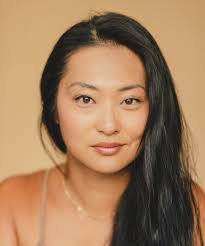
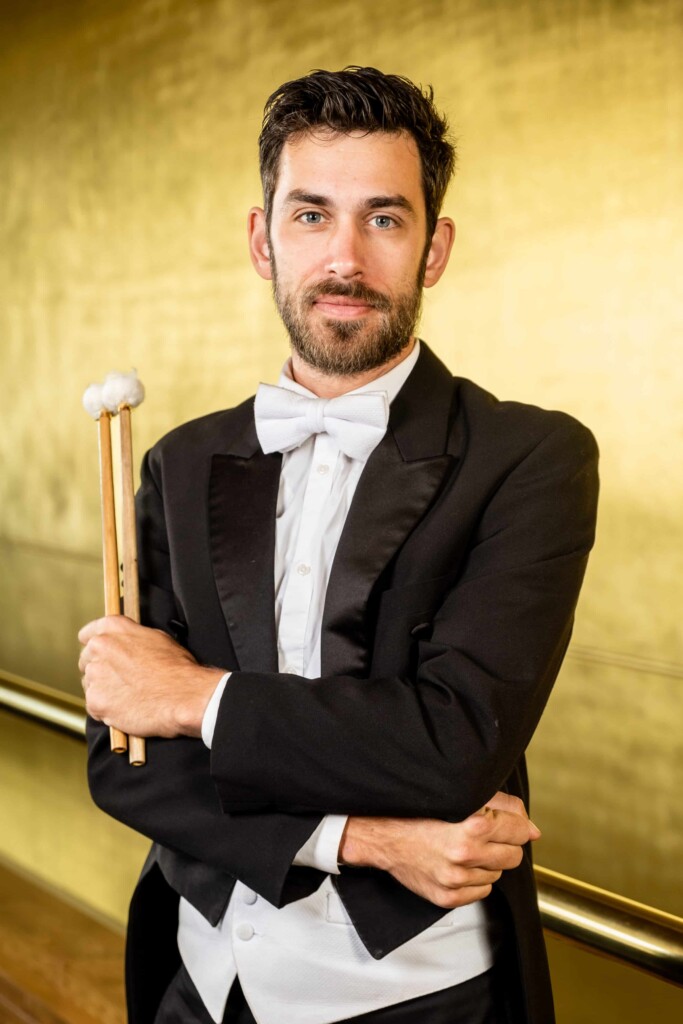
Soprano Jin-Xiang Yu, Utah Symphony percussionist Eric Hopkins, and pianist Kimi Kawashima, NOVA’s artistic director, will play the world premiere. Eight percussion items are required for the work, including vibraphone, triangle, suspended and finger cymbals, egg shaker, snare drum, and medium and low tom.
“I wanted to compose something that would fit in with the ideas of Lost Freedom without covering the exact same territory,” Rudman said in an interview with The Utah Review, “so I reached out to Kendra [Preston Leonard] and asked if she had anything that she thought would fit with the theme and she sent me these poems.” Rudman added that the poems stretched in ways different from the texts that Leonard previously had contributed to their collaborations.
With Leonard’s extensive research and annotations accompanying the poems, Rudman quickly saw a clear path for setting the text to music, which matched the instrumental specifications that NOVA outlined for the commission. Leonard‘s libretti were consistently framed by issues of social justice, which often extended to focused explorations of gender, disability and neurodivergence.
The poems for Exsilium are stark and profound in their frames of social justice. The poetic language is tight, sparse and unequivocal about the inhumanities of ostracism. Rudman’s score crystallizes the linguistic tenor anticipated in each of Leonard’s poems.
From Sanctuary, the opening song, indicates starkness in tempo and textures, followed by Marginalia, marked falsely bright, with the realization of the elusive safe harbor of the American Dream. The third song, Ceding, is deceptively calm, with moments of whispered menacing underscored chants layered with plaintive and prayerful textures. The closing song, Goods, is heavy and tense throughout, with alternating intervals of slight acceleration which emulate a train’s movement, leading to a heartrending anticlimactic moment.
Rudman, who also leads the emerging composer workshop for the Women Composers Festival of Hartford, talked about the rich constructive outcomes in her collaboration with Leonard. In a Twin Cities Arts Reader tribute published shortly after her death last month, others noted similar sentiments: “Kendra Preston Leonard balanced what many academic advisors term an impossible triad: prolifically writing and publishing scholarly works while continuing to perform and write libretti for the stage. As a scholar, she completed a doctoral thesis on music in screen adaptations of Shakespeare plays, and published numerous book chapters and articles on subjects as varied as the musical depiction of women in Star Wars, the musical innovations of Ruth Crawford Seeger, and power plays in elite music education in France.”
Leonard was well known to many musicians in Utah, especially those from Opera Contempo, who worked on recent projects involving a libretto she had written. The most recent example happened this summer at the Great Salt Lake Fringe festival, when Opera Contempo presented several scenes from the opera This is Jane by composer Angela Elizabeth Slater which features a libretto by Leonard. The opera harkens back to the late 1960s, when the Jane Collective was formed. The organization aided more than 11,000 women to secure safe abortion before the U.S. Supreme Court decided the landmark case Roe v. Wade in 1973.
Reflecting on a friendship that spanned 15 years up to Leonard’s sudden passing this summer, Rudman met her for the first time when the composer was a student in New York City. Rudman knew her first as a musicologist but a few years later, Leonard shared a libretto for a song cycle, asking if the composer would like to set the text. That 2017 work was Four Songs for Lady Macbeth for mezzo soprano with clarinet, cello, and piano. Other collaborations followed including two chamber operas (Marie Curie Learns to Swim and Neither Created nor Destroyed) as well as several other vocal works. either written as a cappella or with accompaniment.
Their largest scale collaboration was a full-length opera Protectress, which is in progress for a potential production perhaps as early as sometime next year. Excerpts from the first act were performed by Opera Contempo in 2023. Protectress situates the Medusa legend and the story in Protectress rotates around Medusa’s attempts to have her voice of agency restored, unlike the account in Ovid’s Metamorphoses where Medusa was petrified into silence. Medusa seeks to persuade Athena to reform her ways and end the vicious harassment.
“The thing that really stood out about Kendra, which she also would have said about herself, was that she didn’t have any ego about what she wrote,” Rudman said. “She was very open to the exchanges and suggestions that come with collaboration. It was a partnership with the deepest levels of generosity. She mentored people through her teaching as well as informally. She helped many up-and-coming composers which is a great way to perpetuate the legacy of her mentorship and wisdom.”
A pair of works by Kenji Bunch, whose Apocryphal Dances received its Utah premiere at a 2024 NOVA concert, is slated for this season opener. Featuring Jerry Rapier, producing director of Plan-B Theatre as narrator, Lost Freedom is being presented for the second time in Utah. Commissioned and premiered by the Moab Music Festival in 2021, the work incorporates actor George Takei’s childhood recollections of his family’s incarceration in three Japanese internment camps during WWII. The work also is scored for string quartet, percussion and piano.
The companion piece is Minidoka, a 2016 solo viola piece which Bunch performed in the same 2021 Moab concert where Lost Freedom was premiered. The earlier piece reimagines the experiences of the eponymous Japanese internment camp, which was located in Idaho.
Three Schubert pieces round out the program, including Quartettsatz, a single-movement string quartet piece the composer completed at the age of 22. Mark Steinberg has persuasively paralleled the piece’s emotional stakes to the tragic myth of Pyramus and Thisbe, which was chronicled in Ovid’s Metamorphosis. It slides in perfectly with the concert’s Lost Freedom theme, as Steinberg notes: “The stranglehold of authority, the physical presence of the wall, the violence of nature, the impossibility of omniscience: all these are external obstacles interfering with the purity of love.” He adds, “But still the shadows they cast upon that love, spawning yearning and hope, introduce a fragility and an aching quality to that love that we recognize as deeply human. The renunciation of life as a reaction to thwarted love also exalts this love.”
Anchoring the ‘lost freedom’ metaphor, two Schubert lieder round out the offerings: Based on a 1783 poem by Christian Friedrich Daniel Schubart, Die Forelle, is about someone watching a fisherman snag a brook trout; An die Musik celebrates music’s capacity to comfort people in troubled times.
In addition to the aforementioned musicians and performers, string players Alex Martin and Yuki MacQueen (violin), Joel Gibbs (viola) and John Eckstein (cello) will be featured.
Nov. 15: …to the hands
Commissioned more than a decade ago by The Crossing choir in Philadelphia, Caroline Shaw was one of seven contemporary composers asked to write a response to one of the seven cantatas baroque composer Dieterich Buxtehude wrote in the 17th century for his cycle, Membra Jesu nostri patientis sanctissima. Each cantata focused on the feet, knees, hands, side, chest, heart or face of Jesus during the Crucifixion.
Shaw, a 2013 winner of the Pulitzer Prize in Music, composed an 18-minute suite emphasizing the hands. Set to be performed by the locally-based, exceptional Sound of Ages chamber choir, the work closes with a movement entitled, “I will hold you,” which incorporates Buxtehude’s refrain from his Ad Manus, “In media manuum tuarum” (in your hands). Indeed, the work’s inclusion as a gesture of musical solace connects eloquently to the creative brief of the preceding Lost Freedom concert.
One of Utah’s greatest string duos, violinists Alex and Aubrey Woods, will perform Jacquet de la Guerre’s baroque Sonata for Two Violins in B-flat Major. Pianist Jason Hardink, a former NOVA artistic director, will play two 20th century pieces for harpsichord: Parcours by French composer Odette Gartenlaub, who won the Premier Grand Prix de Rome in 1948, and Xenakis’ Naama, for amplified harpsichord.
Other performers for this concert will include Kameron Kavanaugh (conductor), Walter Haman (cello) and Sam Handley, (electric guitar).
Jan. 31: The Napoleon Complex
The curated musical juxtapositions for the first NOVA concert of the 27 portion of the season evoke the historical parallels of the Napoleonic complex between the 19th century and contemporary times. Similar to Beethoven who once saw the emperor as an enlightened leader of heroic potential that later became total disillusionment and disdain, we see the similar Napoleonic complex manifestations in the Big Tech era. The once soft-spoken, awkward innovators have become monstrous geopolitical actors bordering on tyrannical.
Written in the wake of Napoleon’s takeover of Vienna, Beethoven’s String Quartet No. 11 in F minor, op. 95 (Serioso) will be performed. Noting the unmistakable labeling of the work, Orrin Howard cites an 1810 letter Beethoven wrote to a friend: “If I had not read somewhere that no one should quit life voluntarily while he could still do something worthwhile, I would have been dead long ago and certainly by my own hand. Oh, life is so beautiful, but for me it is poisoned forever. [Beethoven had referred to suicide in his famous Heiligenstadt “testament” of 1802, soon after he learned that his deafness was progressive.]”
Written in the midst of WWII, Ode to Napoleon by Arnold Schoenberg takes the text of Lord Byron’s Ode to Napoleon Buonaparte, which he wrote in 1814 shortly after the emperor’s abdication. The poem was originally published anonymously, but it became quickly evident who the author was. Scanning the score, it appears that Schoenberg was driven to set the text in a musical burst of white heat. The work features a reciter of impeccable musicianship, which for this concert will be bass-baritone Timothy Jones, accompanied by string quartet and piano.
Schumann wrote four sets of three songs under the title of Romance & Balladen and the second set (op. 49) fits with the concert theme. Set to the verses of German poet Herman Heine which represent conflicts among nations, between brothers and within one’s own emotions, the trio of songs with piano accompaniment will be performed by Jones. They include Die feindlichen Brüder (The Enemy Brothers), about two knights knights who loved the same woman and fought each other to their deaths, and Die beiden Grenadiere (The Two Grenadiers), which features a soldier who kept his allegiance even as Napoleon was defeated. The song includes a snippet from La Marseillaise.
Rounding out the slate is an eight-minute work for prepared piano and percussion by Ted Hearne. One of Us, One of Them (2005). Written when he was 23, the work presages Hearne’s acclaimed politically dynamic artistic expressions on modern-day tyrannical practices of mass surveillance and the subjugation of one’s rights of freedom and privacy.
In addition to Jones, other performers for this concert will include pianists Kimi Kawashima and Viktor Valkov, along with Hugh Palmer and Jennifer Kozbial Posadas (violin), John T. Posadas (viola) and Walter Haman (cello).
Feb. 21: Intersections
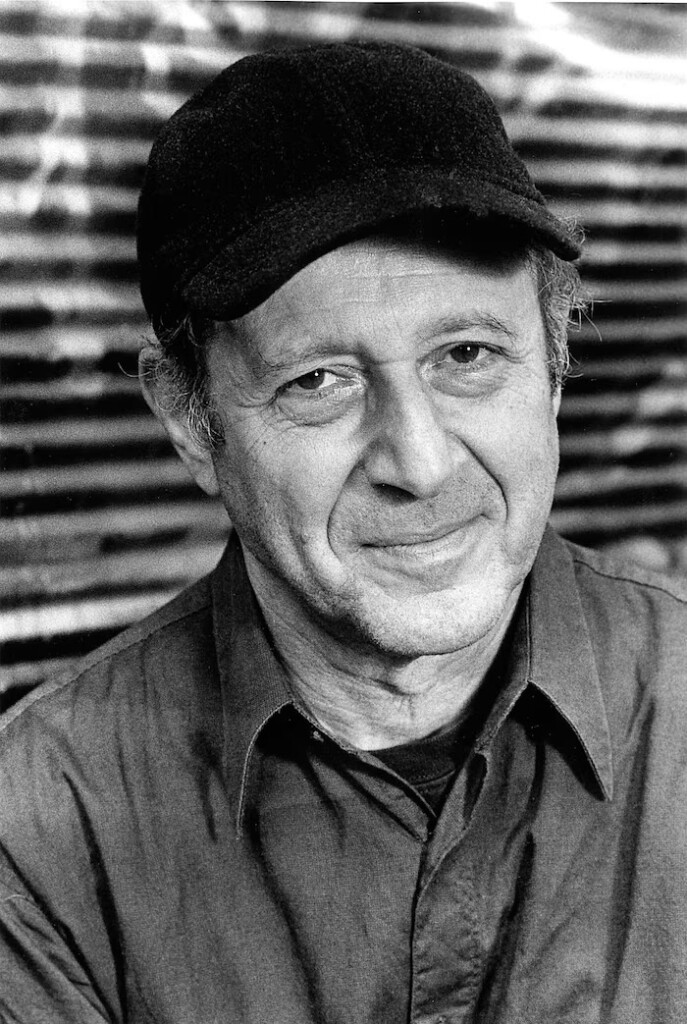
The juxtapositions of classical, neoclassical and minimalist music comprise what should be a pure audience pleaser. Among the works will be the Mallet Quartet (2009) by Steve Reich, one of the titans of minimalism, for four percussionists. Reich’s work stimulated a still-intense wave of chamber music being written for percussion instruments, especially those commissioned by Sō Percussion, which performed last season in Libby Gardner Hall as part of the UtahPresents’ music series and Third Coast Percussion, which included the Reich piece on its 2017 Grammy-winning album.
Other gems on this program will be Debussy’s Ariettes oubliées, a set of six Verlaine songs composed between 1885 and 1887, which will be sung by soprano Celena Shafer. Also, Fry Street Quartet, NOVA’s resident chamber ensemble, will perform Mozart’s String Quartet No. 16 in E-flat Major, K. 428. Rounding out the slate will be Stravinsky’s Octet for brass and winds, which he completed in 1923 and revised some three decades later. This performance will feature the brass and winds section principals from the Utah Symphony.
April 25: Déjà Vu
Completing the bridge to the 50th anniversary season for 2027-2028, NOVA’s season finale includes new works as well as pieces so familiar that they need no introduction, to be performed by numerous heavy-hitters. Soprano Deanna Breiwick, internationally known artist who has performed with the largest American opera companies on both coasts, will make her NOVA debut in the series’s ongoing explorations of Bach cantatas: Mein Herz schwimmt in Blut, BWV 199. Now based at Valparaiso University, Haruhito Miyagi will return to Utah for this concert, performing on harpsichord and organ for both scheduled Bach works.
Utah premieres include works by Oswald Huýnh, a Vietnamese-American composer and bassoonist, and Lei Liang, a Chinese-born American composer who was a winner of the Rome Prize (2011), Grawemeyer Award (2021) and a finalist for the Pulitzer Prize in Music (2015) and is a distinguished professor of music at University of California-San Diego.
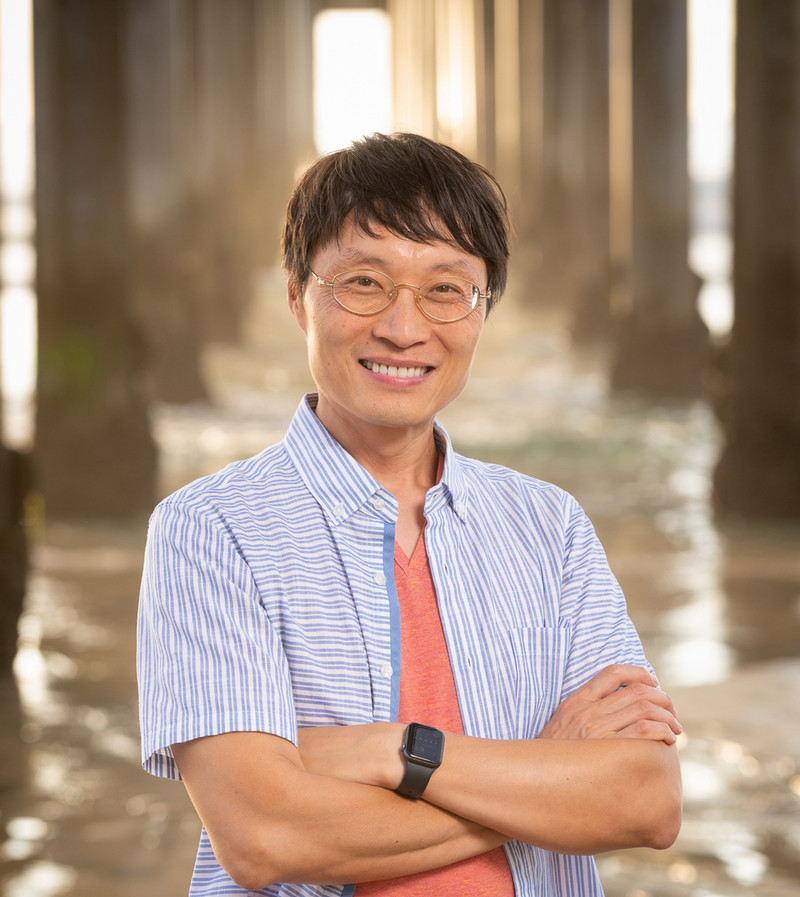
Liang’s featured work is Déjá Vu (2019) for violin and percussion, to be performed by violinist Will Hagen and percussionist Eric Hopkins. The work signifies a fascinating conversation in an unlikely and innovative pairing of instrumentalists.
Huýnh’s work will be Ngũ Hành (2021) for solo marimba. The title encompasses the five fundamental elements found in classical Eastern philosophy. Hagen will be joined by Laura Ha in the performance of Bach’s Concerto for Two Violins in D minor, BWV 1043.
Gallery Series
NOVA also will offer two gallery concerts this season at the Utah Museum of Fine Arts.
Oct 25: Russian Resistance
An all-Russian program featuring composers of the current and last century will feature the Utah Symphony’s Fremont String Quartet, comprising the section principals of the orchestra’s strings, as well as Caitlyn Valovick-Moore (piccolo), Alex Purdy (tuba), Jason Hardink (piano) and Corbin Johnston (bass).
Music by three of the Russian composers (all women) is appearing for the first time on any NOVA event: Lera Auerbach (T’filah, 1996); Galina Ustvolskaya (Dona Nobis Pacem, 1971) and Sofia Gubaidulina (Allegro rustico, 1963). Rounding out the offerings will be Shostakovich’s String Quartet No. 3 in F Major, Op. 73.

March 21: Encounters with Beethoven and Green
One of NOVA’s most successful projects is matching a very familiar classical composer with a contemporary composer. Such will be the case here, with one of Beethoven’s late string quartets (No. 12 in E-flat Major, Op. 127), joined withworks by American composer Brittany J. Green (Lead me Home, 2021; i get out, 2023, for double bass and electronics). Also on the program, which features the Fry Street Quartet and percussionist Michael Pape, will be Kaija Saariaho’s Ciel Étoile (1999).
Green is among one of the composers whom NOVA has commissioned for the upcoming golden anniversary. In 2022, Green’s Thread and Pull (2022), a quintet for violin, viola, cello, bassoon and piano, received its Utah premiere.
For tickets and more information, see the NOVA Chamber Music Series website.