
REPERTORY DANCE THEATRE LINK SERIES: THIS WILL DESTROY YOU
If one needed a forceful example of dance’s capacity to convey intense emotions, This Will Destroy You, an evening-length work directed by Molly Heller, was presented recently by RDT’s Link Series. The cycles of grief, labor, care, and unresolved voids were evoked in ways that superseded the limitations of using words and language to communicate feelings that often are viewed as so uncomfortable to hear that they border on taboo.
The tableaux featured choreography and performances by Heller, along with Stephanie García, Marissa Mooney, Tara McArthur and Ursula Perry. Video images were edited and crafted by Kellie St. Pierre, which viscerally heightened the atmospherics, magnified by Nick Foster’s score (with Keeley Forsyth’s Start Again) and costumes by Roxana Sevilla.
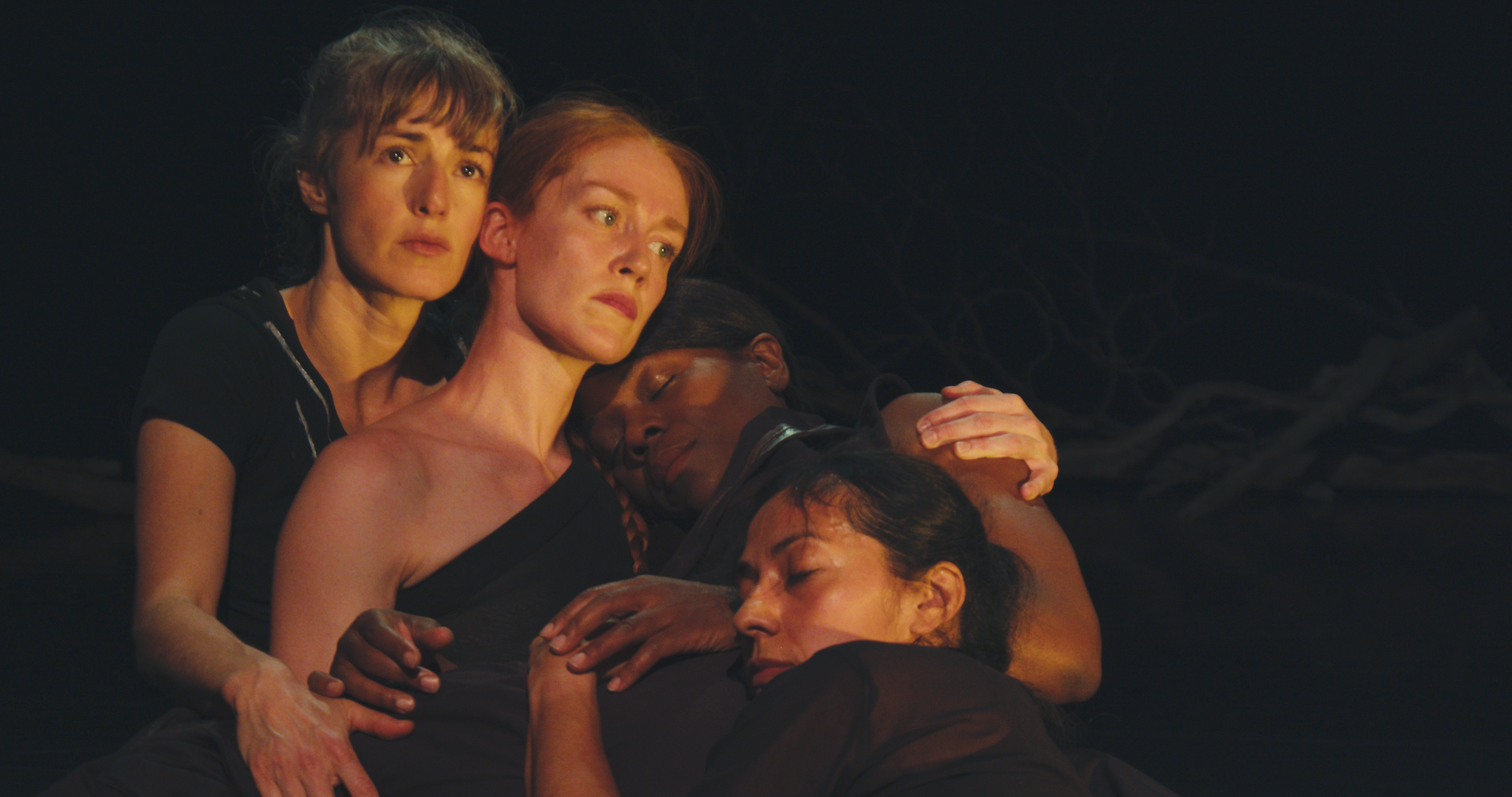
Put simply, the evening was a secular metaphorical choreographic interpretation of an excerpt from the fourth verse in Psalm 23 — valley of the shadow of death. And, it was gripping and mighty in every section.
Earlier this year, Heller curated Grief Work, the exceptional multidisciplinary exhibition at the Material Art Gallery in South Salt Lake. As The Utah Review noted at the time, the show puts an impressively diverse lens on the creative expression of grief, a topic, one that many find difficult to communicate. We live in a sociocultural environment that generally encourages individuals to move on as quickly as possible from the vulnerabilities of loss, which can occur in many forms. In This Will Destroy You, the dancers compelled us to sit wholly absorbed with these vulnerabilities.
Palliatives are never as convenient as we might hope or exclusively sufficient when we encounter these shadows. Nearly a dozen years ago, Heller addressed this in her master of fine arts degree project: “It is in the act of being witnessed and witnessing that I feel my existence. I believe that we are all part of the same mystery and collectively we search for meaning. On our individual paths that march towards the great unknown, we occasionally experience moments of clarity – a quality of light that serves to inspire others to stay ‘in-life’ and to find their path with heart,” she explained.
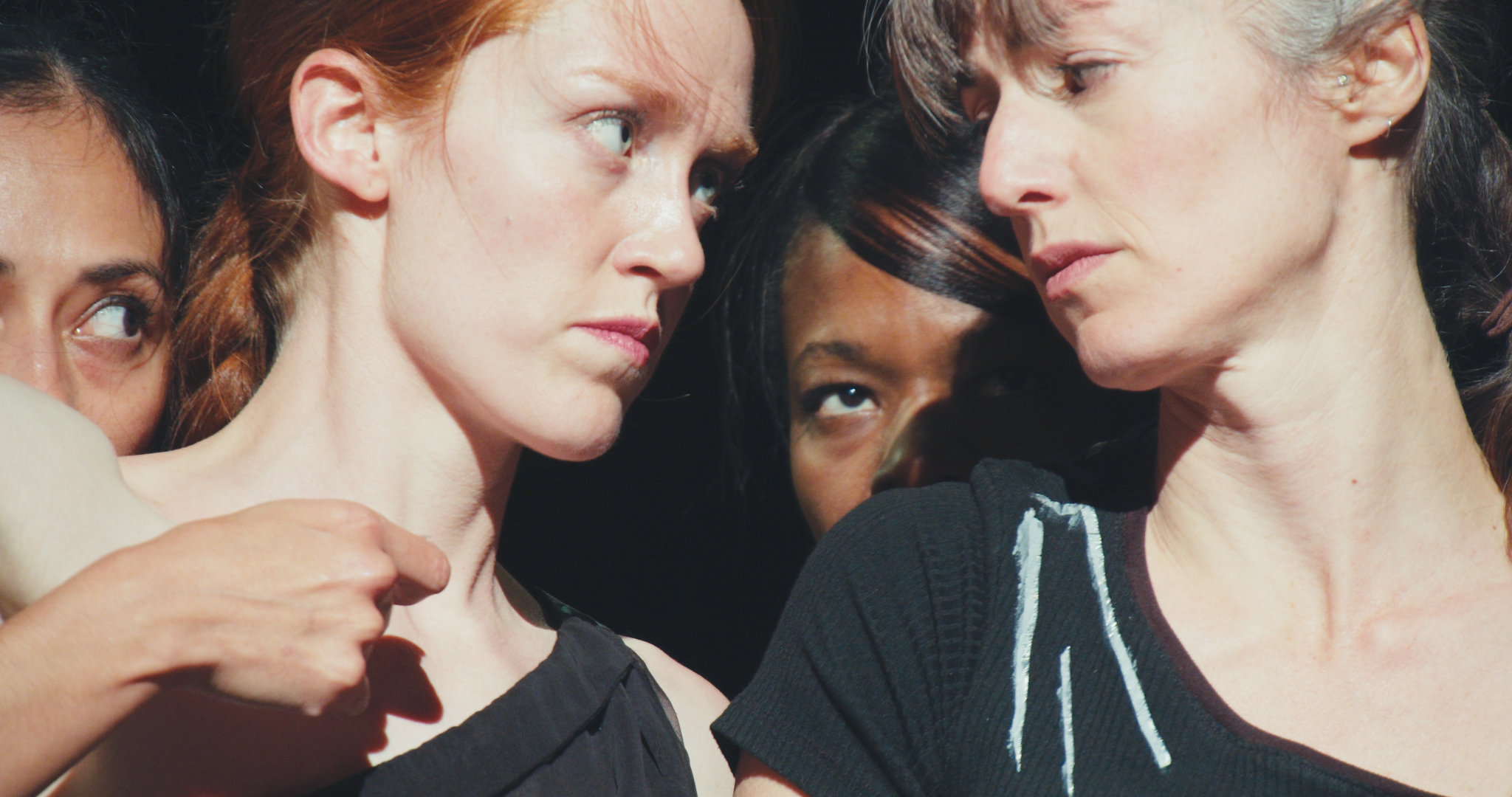
But darkness also can test our resolve to refresh our resilience. Reflecting upon her own family experiences which was incorporated into her thesis choreographic project (This is your Paradise), Heller added, “Trauma can confuse that path, and damage the heart, which I believe is the driver of life. From my past experiences with trauma, I realize that finding connections with others, and creating opportunities for connection, promotes healing.”
This is dance’s greatest expressive virtue. We cannot deny that in many manifesting iterations, grief, unfortunately, has become ubiquitous, even when we try to mask it with the smallest bits of optimism and hope. We try to comfort ourselves that we can move on, but more often loss has found far more shapes and forms than we can abide in being complacent or assured that once again we might find joy, reconciliation, and resilience to persevere. Dance bares all.
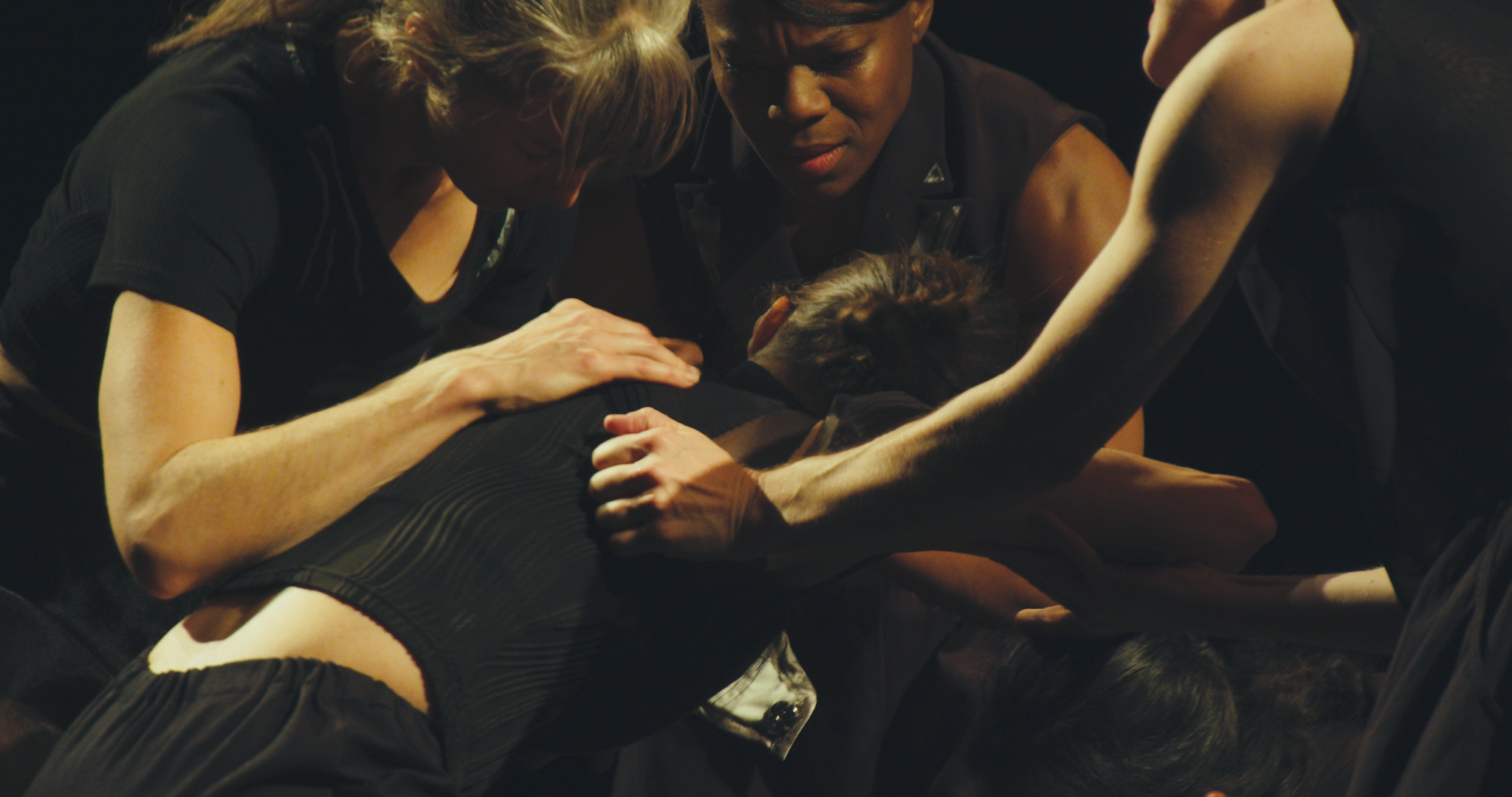
To scaffold upon the message of Grief Work, This Will Destroy You reinforces the words The Utah Review offered six months ago: With the grave and tremendously disheartening news that we encounter without relief every day, this show definitely struck a nerve. Our public engagement and even personal interactions with grief often are awkward, discomfiting and formidable, generally to the point of even seeming to be a social taboo. This performance validates what Heller already had figured out years ago as a graduate student about trauma and grief: “It can be a throughway to access our potential as humans, to access the microcosms and macrocosms that we are constantly negotiating. It is a calling to separate from our habitual created realities, realities that often serve to trap us within societal molds and expectations.” This Will Destroy You embodies the companion to and the counterpoint to Heller’s Grief Work.
NITYA NRITYA FOUNDATION’S 10TH ANNIVERSARY FESTIVAL: ROUGE GESTURES/FOREIGN BODIES, NAVA DANCE THEATRE
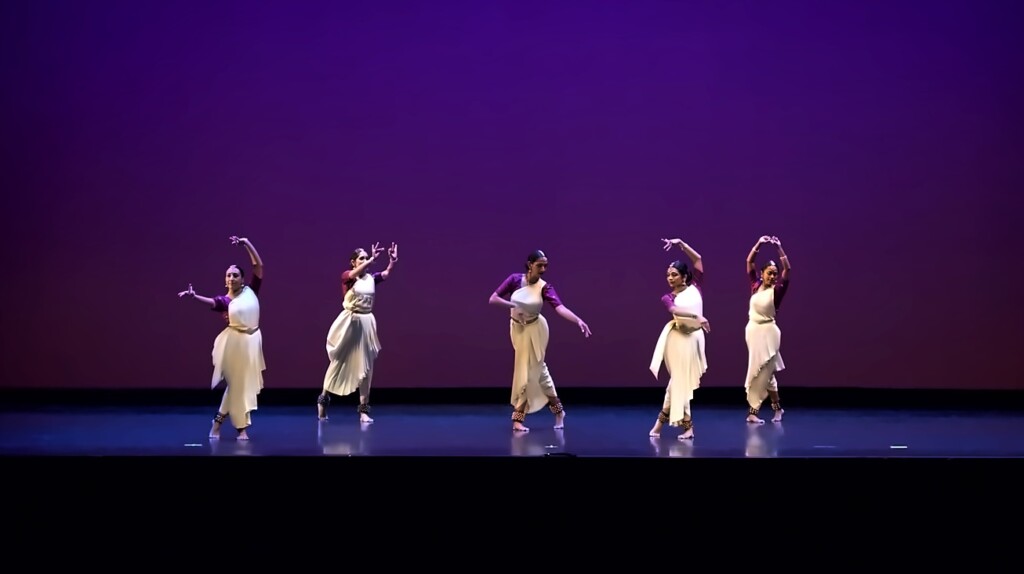
During one of the most extensive weekends of events ever held in Salt Lake City focusing on Indian classical and contemporary dance and music, including Bharatanatyam repertoire (pronounced Bah-rah-the-na-tee-yum), Nitya Nritya Festival hosted Nava Dance Theatre from the Bay Area in an evening-length performance that was a tour de force showcase of the contemporary extensions of the Bharatanatyam movement language.
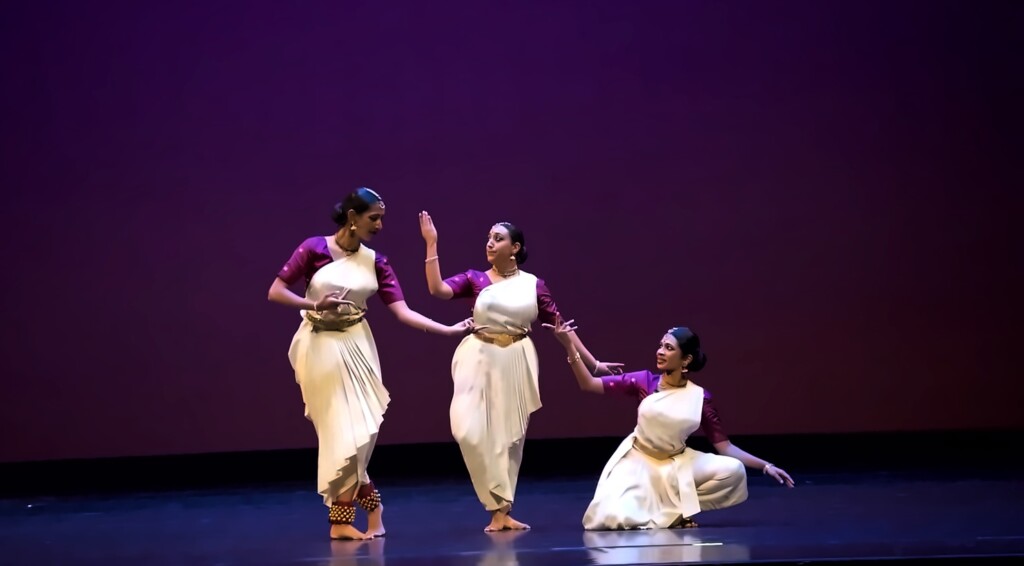
Directed by Nadhi Thekkek, Rogue Gestures/Foreign Bodies, with five dancers, offered tight synchronized precision in gestures, hand movements and rhythmic dance theater choreography that moves in complex uneven patterns. Holistically, these dance elements emphatically chronicled the historical experience of women who immigrated to new lands and experienced the joys and heartbreaks of securing their sense of belonging in foreign homes. The work is based on themes of collective strengths, originally inspired by the oral histories of Indian nurses who arrived as a result of the 1965 Immigration and Nationality Act.
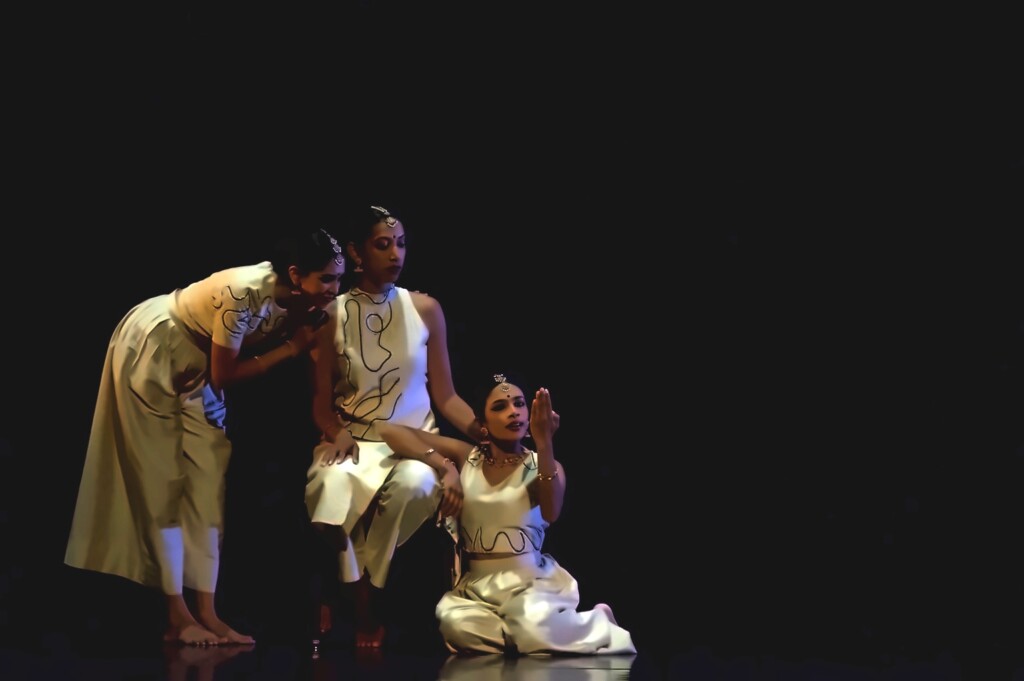
Photo Credit: Aiswarya Josyula.
As noted previously in The Utah Review. Nava Dance Theatre epitomizes the flexibility of the classically rooted Bharatanatyam choreographic language in sustaining its foundational artistic identity while exploring contemporary expressions of improvisation, an element that has always been integral to the Indian classical arts. The quintet of dancers unequivocally proved the expressive powers of contemporary Bharatanatyam for its precise parallels to the tasks and objectives that immigrants face. That is, not of assimilating per se but of enhancing while preserving their integral identities in a completely foreign space and time.
Nava Dance Theatre wisely chose its creative brief, relying on primary research collected from recorded testimonies of Keralite women who became nurses and in the process found not only community solidarity but also the opportunity to remake gender roles for men as well as women. This work’s realistic grounding is its greatest virtue, Joy and confidence in independence and solidarity are met with the equivalent counterpoint of grief and heartache as well as humor and optimism.
In the artistic canon celebrating American immigration, Rogue Gestures/Foreign Bodies is essential, especially as we deal with hostile vitriol that attempts to subvert the most significant core element of the best potential of the American experience. Way too often, the media frame the South Asian immigration experience in America on the stakes of technology and STEM fields.
Many Americans do not realize that the omnibus 1965 immigration legislation signed into law by Lyndon Barines Johnson has never been updated or replaced with a new act that reflects the new opportunities for immigration. In the 1960s, the legions of Keralite nurses represented the still-relevant lessons for a diaspora that stretches great distances. Contrary to our current politics, new generations of immigrants aspiring to come to America for reasons not previously evident or applicable can enhance the virtues and expand upon those lessons.